Ally Zetterberg on Writing the Women Who Actually Live in Monaco
Looking beyond the stereotypes of luxury and celebrity to capture the everyday citizenry of a storied country
When I say “Monaco woman,” what image comes to mind?
Perhaps it’s a model stretched out on the deck of a yacht, champagne (or green detox juice) in hand. Perhaps it’s a sunglasses clad woman carrying a Birkin bag worth more than most people’s monthly salary. Or perhaps, if Monaco’s modern history comes to mind, it’s the late actress turned princess and style icon, Grace Kelly.
But what if I told you that the woman you’re most likely to pass on the streets of Monaco is none of those things?
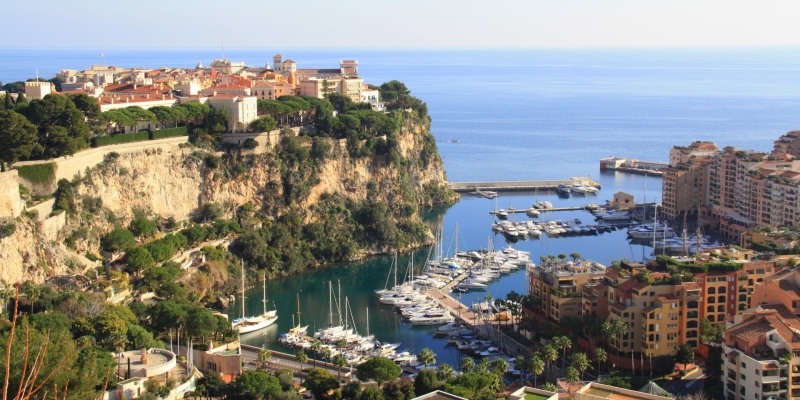
This morning, I dropped my children off at school and headed towards the Larvotto Beach, starting my walk home. I passed the port and decided to pick up a few things from the fresh produce market in Condamine.
It is a week after the Formula 1, construction workers were dismantling the grandstands and clearing away the traces of the Grand Prix, and all the tourists and celebrities have left. With their departure, and the absence of crowds at 9 a.m., something became obvious to me.
The people I met on my walk and at the market were nothing like you’d expect.
To begin with, Monaco, a place that sells youth, beauty, and luxury to the world, is also one of the oldest societies on earth. More than a third of its residents are over sixty-five. Women, who tend to live longer than men, become especially visible among that population.
A significant proportion of Monaco’s citizens are also women because generations of foreign women married Monegasque men and became part of the country’s fabric, under a scheme which gave citizenship to women who married a Monegasque man but not to a man who did the same.
Women also occupy a substantial share of parliamentary seats, about forty-six percent, which is way above the EU’s average of 33. 6 percent or indeed United Kingdom’s forty-one percent. Despite its reputation as a traditional and male-dominated financial playground women currently take up space across all its sectors. Thousands of women also work in the domestic economy as nannies, carers, and housekeepers, crossing the border each day from neighboring towns. Others arrived decades ago and chose to spend their later years here.
Yet all these women are almost entirely absent from fiction. As a crime writer, I find that absence fascinating.
Monaco may be one of the most recognisable places in the world, but it remains strangely underwritten. When it does appear on the page, it is often reduced to a collection of clichés: royalty, Formula 1, yachts, billionaires, beautiful women. The setting functions as a glamorous backdrop rather than a place with its own psychology.
Crime fiction, in particular, has largely overlooked the possibilities, I feel.
The ingredients are certainly there. Extreme wealth, secrecy, international residents and a tiny population. A place where power and privacy mix. Monaco is a country small enough to feel like a village yet it attracts people from every corner of the world.
And yet, despite these elements, we have no established Monaco noir.
The United Kingodm has its cosy crime and police procedural legacy. Scandinavia transformed itself into an entire crime-fiction subgenre, exploding onto international bestseller charts. The French Riviera has inspired countless mysteries and thrillers. Monaco, despite its fascination for outsiders, remains largely unexplored.
Part of the reason, I suspect, is that writers are drawn to the fantasy rather than the reality of Monaco.
There is a tension at the heart of Monaco: visibility and invisibility. It is a place obsessed with appearances, yet many of the people who make the country function remain unseen. It celebrates youth while being home to an unusually old population. It projects glamour while depending on thousands of ordinary cross-border workers.
Crime fiction has always thrived on the gap between image and reality. The polished surface hiding something darker beneath. The secret that exists behind the perfect façade.
Monaco offers that in abundance.
Perhaps Monaco’s women remain absent from books because so few writers spend time looking beyond the postcard version of the principality. There is only so much story that can be drawn from a stereotype. Real life is what fuels fiction. Life is what makes us writers write.The real women of Monaco are more complicated than the fantasy. They are older, stranger, more resilient, and more interesting.
For crime writers, that feels like a missed opportunity.
I’d encourage other writers to look more closely. To move beyond the yachts and casinos and to write the women who actually live in a place, rather than the women outsiders imagine they might find.
Come visit, stroll from Larvotto to Condamine on an ordinary Tuesday morning and tell me what you observe. It might well surprise you.
***


Ally Zetterberg
Ally Zetterberg is a British-Swedish writer who grew up in rural Sweden before stumbling on a modeling career that took her all over the world. She somehow ended up in the South of France, where she now lives with three children, a dog, and a cat. She has a degree in psychology and is passionate about writing characters who feel real and who bring a complicated human experience to the page even in the most unlikely circumstances.