Twenty-One Years After the Verdict, His Town Finally Understood Him
McCracken Poston Jr. on the trial that divided a town and the diagnosis that brought a man back to the community.
I used to believe that a not-guilty verdict would settle everything. I was wrong. In January 1999, after a bizarre trial with twists and turns that would not be believed except for the transcript, a jury in Ringgold, Georgia, acquitted Alvin Ridley of murdering his wife, Virginia. The evidence showed that she had epilepsy and died during a seizure. The verdict saved Alvin from prison, but it did not entirely restore him to the town where he had spent his life. The jury had decided the state failed to prove his guilt beyond a reasonable doubt. Ringgold, Georgia, however, still considered him strange, even scary.
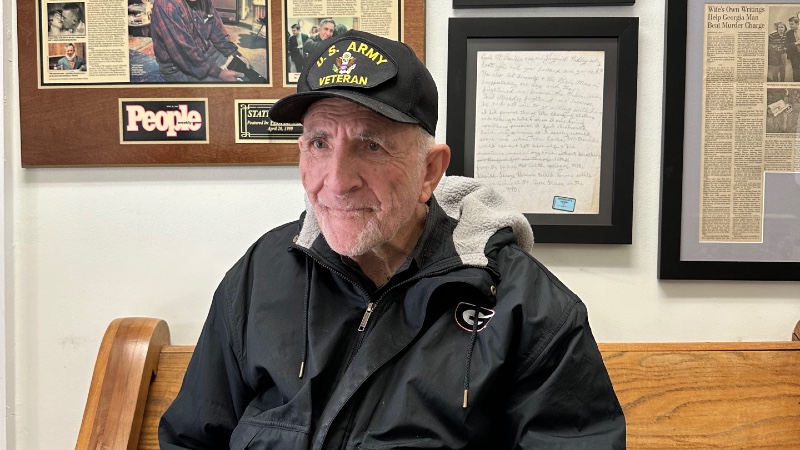
For the younger generation, Alvin was derisively known as the “Zenith Man,” after the shuttered, crumbling TV shop that Alvin guarded like it was Fort Knox. He was irritable, rigid, reclusive, and almost impossible to communicate with when he felt threatened, which was most of the time. He remembered slights for decades, mistrusted almost everyone, and couldn’t explain himself in ways that anyone found reassuring.
When he called 911 in October 1997 and reported that Virginia had “stopped breathing”, most people in town were astonished that he had a wife. She had not been seen in public for almost thirty years. The town already possessed the ingredients for a murder story: a difficult man, an unseen woman, an isolated house, and years of rumors. Alvin Ridley was already a bogeyman to many, even before the rumors of captivity and murder.
Alvin’s behavior supplied what was mistaken for confirmation. It was even used against him at trial that he did not grieve as expected, resisted questions, and withheld helpful information. Everything that made him different was interpreted in the most damning light.
But the jury saw remarkable defense evidence and acquitted him. In addition to temporal lobe epilepsy, Virginia had hypergraphia – the compulsion to write and document the most mundane daily observations. It took me over a year to gain access to his house, where I found the treasure trove of Virginia’s thirty-year looseleaf diary. She explained everything: why she didn’t want to go out, why she didn’t attend her own father’s funeral, and more. A trial verdict, however, can relieve criminal responsibility without changing a small town’s folklore. Alvin came home free, yet people continued viewing him through their story.
Then, twenty-one years after the trial, at age seventy-eight, Alvin was diagnosed with autism spectrum disorder. One of the trial jurors, now a nurse in Alaska, recommended that he be tested. While I knew little of autism during the trial, twenty-one years later her suggestion made sense to me.
When that diagnosis became public, it did something the verdict had not been able to do. It gave our town a new language for understanding him. And the new context reached well beyond the courthouse. The diagnosis did not make Alvin innocent. The evidence had established that. Nor did it excuse everything unpleasant he had ever said or done. Autism is neither an all-purpose explanation, nor is it evidence of or against criminality. It did place past behaviors that had once seemed sinister into a human context. His rigidity no longer automatically meant calculation. His halting, combative exchanges did not have to mean deception. His literal thinking, resistance to change, obsessive habits, and explosive reactions could be understood as traits of a man who had spent nearly eight decades navigating a bewildering world. The first thing I did was apologize to my friend. I explained to him that autism was an information processing issue, and that while he was not processing me while I was defending him, I was equally struggling with processing him.
Slowly, the town began to reconsider Alvin Ridley. At first, it was the people who knew autism from a family experience. Then, it was the teachers, who knew it from vocation. Our weekly lunches, awkwardly observed by others in the same restaurants who kept their distance, started to be interrupted by people wanting to talk to Alvin Ridley.
This was no sudden civic conversion. Folks in small towns rarely change their minds in unison. I had posted his diagnosis online. Ringgold talked. People revisited what they remembered and compared the Alvin they had encountered with the man they were now learning about. Stories once offered as proof of menace began to sound different. And it sparked something I had been trying to create for two decades: my book, Zenith Man: Death, Love, and Redemption in a Georgia Courtroom, published in February 2024. I had carried the story for nearly twenty-five years. It presented the evidence that freed Alvin, the friendship that developed between two very different men, and, in its epilogue, the final piece of the puzzle in Alvin’s autism diagnosis.
Most importantly, Alvin lived to see it. Before publication, I had read each chapter to him at our now thrice-weekly lunches. He held the book and saw readers respond to his story without treating him as a monster or a joke. He signed books, rarely acknowledging the people in the line, but remembering afterward what each one had said. Things like “You used to fix my Mama’s TV, Alvin!” Several jurors and even some of Virginia’s relatives stood in line with their books. The town’s embrace reached him in time. After the autism diagnosis, Alvin’s spirit seemed lifted. He gave up on his old beefs and stopped citing his usual list of conspiracies. The book, however, also made him a rock star, basking in actual adoration.
Alvin died on July 2, 2024, at eighty-two, four months after his newfound stardom. By then, the frightening TV repairman was giving way to a more complicated figure: an autistic man misunderstood, wrongfully accused, acquitted, and finally recognized as someone whose differences had placed him in extraordinary danger.
The most visible sign of that change now stands at 7819 Nashville Street, now designated “Ridley Building.” It occupies the footprint of Alvin’s former television shop. Inside is Caffeine Addicts, a coffee shop that has also become a folk-art gallery and the repository of Alvin’s old TV sets, oscillators, and trial evidence.
People once approached Alvin’s shop cautiously, even in the years it was shuttered and padlocked. Today they bring friends, children, laptops, and coffee orders. They sit among vintage Zenith sets, photographs, trial artifacts, and artwork inspired by Alvin and Virginia, and even art by Alvin and Virginia. Some know the case well. Others come for coffee and discover it on the walls.
The collection includes “Lost Sheep Found”, a Rev. Howard Finster work, a portrait by Travis Knight, gourd art by Teresa Womble, a mosaic by Will Towns, and artwork connected to NPR’s Snap Judgment, all featuring Alvin in his signature (medically unnecessary) neck brace that manifested the constitutional provision that he insisted existed to his hapless lawyer: “The Constitution says you don’t have to go to court if you are sick or hurtin’!” After the acquittal, he never wore the neck brace again.
These objects do not turn Alvin into a saint, nor should they. They preserve his peculiarities while asking visitors to look again. That distinction matters, as the lesson is not that every eccentric person is secretly lovable, or that a diagnosis erases the difficulty of living or working with someone. The lesson is that strangeness is not evidence of guilt. A person’s inability to appear innocent in the expected way cannot be allowed to substitute for proof.
Alvin’s late-in-life diagnosis also widened the meaning of his story. To me, it reframed it and explained our now legendary lawyer/client conflict. Millions of adults may be living with undiagnosed autism. They encounter police officers, lawyers, judges, employers, physicians, neighbors, and even coworkers who may misinterpret their behavior. What happened to Alvin was extreme, but the mechanism was ordinary: difference was mistaken for bad intent, and as guilt.
Alvin left his entire estate to establish a scholarship for local students on the autism spectrum. As I am managing his estate, I hired a HazMat team to help clean out the house (Alvin had become a hoarder in his years without Virginia), and a hired goat landscaping company is now clearing the overgrowth from Alvin and Virginia’s former property. The clean-up has become part of the town’s continuing curiosity about them. But the real restoration is taking place downtown, over coffee, as people encounter the evidence of a life they once thought they understood.
Ringgold has not erased its old story about Alvin. It has begun to tell that story more honestly. The verdict gave Alvin his physical freedom in 1999. His diagnosis, announced twenty-one years later, allowed the town to reconsider the man it had judged long before his trial. The subtitle of my book mentions death, love, and redemption. I originally thought the redemption belonged to Alvin and maybe even me. Now, when I walk into the old Zenith shop and see people gathering beneath artwork devoted to the man they once avoided, I understand that much of the redemption belongs to the town, too.


McCracken Poston, Jr.
McCracken King Poston, Jr., is a criminal defense attorney and former state legislator in the Georgia House of Representatives. He gained national attention for his handling of several notable cases that were featured on CNN Presents, Dateline NBC, A&E's American Justice and Forensic Files. He lives in Ringgold, Georgia. Visit him at McCracken King Poston, Jr., is a criminal defense attorney and former state legislator in the Georgia House of Representatives. He gained national attention for his handling of several notable cases that were featured on CNN Presents, Dateline NBC, A&E's American Justice and Forensic Files. He lives in Ringgold, Georgia. Visit him at McCrackenPostonJr.com or @RealZenithMan. or @RealZenithMan. His new book, Zenith Man, is now available.