An Aria to the Mad Scientist
"[A] mad scientist is a veritable cornucopia of incendiary incidents. They’re forever pushing the plot forward."
There’s a term you’ll hear in fiction writing, the “inciting event.” Loosely stated, it’s an event that kicks the protagonist out of their quotidian state, unsettles their personal world—or, perhaps, the greater sum of humanity of which they are a part—and forces them to act.
Sometimes, there can be a cascading effect when it comes to such events. Sometimes, what feels at first blush to be the inciting event is in fact precipitated by the true inciting event. Was the bank robbery the inciting event? No, it was the cancer diagnosis the robber’s wife received that forced her husband (with his long-buried criminal past) to return to his old crew and to bad habits.
Each genre has its own realm of standard inciting events. Some of the more common are: murder of a loved one (revenge arc), the mysterious invitation, a protagonist’s past comes back to haunt them… We’ve all read and loved novels that use these flashpoints to generate narrative momentum and up the stakes.
Have I myself utilized various inciting events? Of course, as has almost any writer seeking page-turning propulsion. But it’s also quite common for me to utilize an inciting character type. Those stock but malleable characters that tend to pop up in all sorts of books. Some of them are generally benevolent. The kindly uncle with or without a dark past. The kindly next-door neighbor who knows where the bodies are buried (often literally).
Some types are much less benign. The femme fatale. The contract killer. The elderly couple who are far more dangerous than they initially appear.
For me—for the stories I write—my most common inciting character, who keeps turning up in my work like a doomy bad penny, is the Mad Scientist.
Why do I so often gravitate to that type? Well, as I said above, if inciting events are a needful hallmark of narrative progression, a mad scientist is a veritable cornucopia of incendiary incidents. They’re forever pushing the plot forward. How? In as many ways as a novelist can dream up. They create conundrums of every type—physical, moral, psychological, philosophical—and force other characters to react to, cope with, and survive the threats they’ve set in motion.
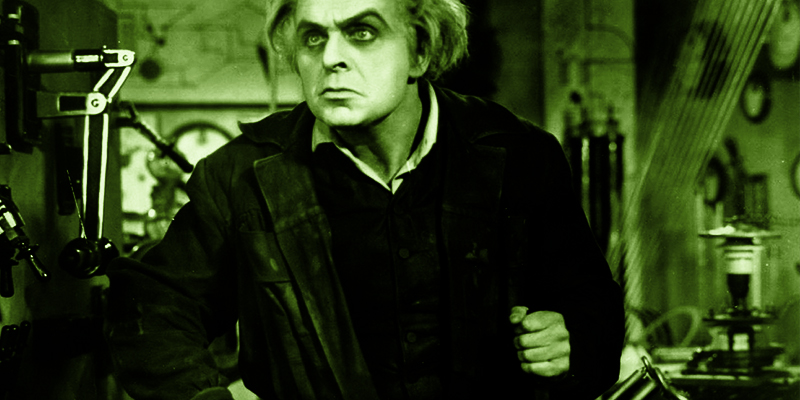
A list of mad scientists in literature would exhaust the limits of this short essay and be rather pointless anyway, as anyone reading this can summon a handful without prompting. Perhaps, the most famous—the ne plus ultra, the template—is Victor Frankenstein. Mary Shelley’s second most famous creation embodies everything that so fascinates both writers and readers about the character type. Victor is brilliant and ambitious (to the point of being out of touch with humanity and its moral concerns), he’s blindered, headstrong and isolationist and romantically doomed… and maybe, most crucially (or to me this is so), he really wants to help.
This is the most fascinating element of the character type, what makes it so rich on an emotional level. The ideas of many a mad scientist at their most core definition are often good. Or they aspire to be so, at least. They could conceivably benefit mankind. Broken by the death of his mother, Victor Frankenstein’s goal was to banish disease, deny death, and create a new order of life. Was that all bad? On the range of human endeavor from penicillin to the atom bomb, I’d tender that it sat somewhere between those two poles. But like all mad scientists (this being the crucial facet of the type), Victor was so blinkered by his superiority complex, his singlemindedness, that he never gave any thought to the ripple effects of his ambitions: how it could all go so spectacularly and horridly awry.
Well, that was fine. Mary Shelley had it covered.
Take John Hammond, billionaire owner of Jurassic Park. Wouldn’t it be nice, he must’ve thought, to build a secure park on an isolated island (islands—ideally volcanic ones—are the known habitues of mad scientists and a great deal of evil geniuses, too), where dinosaurs are conjured back into existence via DNA trickery… and if someone should happen to mention that there may be chaotic effects to his plan that he couldn’t possibly forecast, well, in best mad scientist fashion (what a sad lot for a character type that they must always act so relentlessly to type, no better than a train on rails), it was Hammond’s duty to fob off such dire warnings as so much poppycock. And then… well, we know the rest.
But was Hammond’s concept bad? Was it wrong? I’d argue that in another writer’s hands it may’ve been positively utopian. Jurassic Park opens to much fanfare and goes on to rival Disney World as a tourist destination, just as Hammond forecasted. But this was a Crichton book, so we knew that wasn’t going to happen. Frankly, it wouldn’t have been nearly as fun.
What about Dr. Moreau and his island of human-beast hybrids? I suppose one can argue that there wasn’t much noble good to be mined from that particular experiment. H. G. Wells himself labelled the novel “an exercise in youthful blasphemy,” but the world was a great deal more puritanical in those days. Wells, like Crichton, was a devotee of the mad scientist character, as evidenced by The Invisible Man, The Time Machine, When the Sleeper Wakes, and of course, Moreau. If Moreau’s experiment wasn’t expressly good, and it’s hard to find how it might benefit mankind (or animal-kind), he emblemized all else that we love and hate about the character type: the odd charisma, the unfailing belief in oneself, the Promethean hubris that it takes to force the disastrously magnificent consequences that such narratives demand.
When you think about it, factually good science—by which I mean science that has actually been put into use in the real world, benefitting humanity—is kind of… boring.
Jonas Salk, Banting and Best, Alexander Fleming… the fathers of the polio vaccine, insulin, and penicillin… have books been written about them? Sure. Biographies. Have films been made? Dry documentaries.
Have any of them had the cultural impact and cache of Victor Frankenstein, who has been endlessly imitated in the years since Mary Shelley wrote him into existence?
Bad science, morally grey science, mad science that goes haywire and berserk, is fictively fascinating. Good and ethical science… you may as well watch paint dry.
So here’s to the Mad Scientists. May they go on gerrymandering with the stuff of life on their isolated islands, inciting ever more dire events, until the sun collapses into a wormhole.
***

Nick Cutter
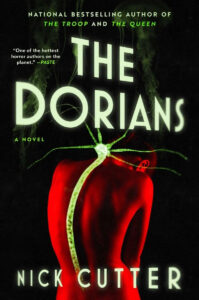
Nick Cutter is the author of the critically acclaimed national bestseller The Troop (which is currently being developed for film with producer James Wan), The Deep, Little Heaven, The Queen, and The Handyman Method, cowritten with Andrew F. Sullivan. Nick Cutter is the pseudonym for Craig Davidson, whose much-lauded literary fiction includes Rust and Bone, The Saturday Night Ghost Club, and, most recently, the short story collection Cascade. His story “Medium Tough” was selected by author Jennifer Egan for The Best American Short Stories 2014. He lives in Toronto, Canada. Cutter's latest novel, The Dorians, is now available.