

Anna Maloney on Writing Badass, Believable Older Women in Thrillers
The author of The 10:12 explores the promise of elderly sleuths' experience and invisibility
It is now common to see young women depicted on screen and in books fighting skillfully and killing people—often much bigger men. That’s a welcome break from past depictions of their broken, semi-naked bodies, laying victim to yet another misogynistic murderer.
But unless they have possessed supernatural powers, it can be a stretch to believe these young, pretty, and slight of stature women are efficient fighting machines. So then how does one write plausible kick-ass heroines over fifty for readers who want something more real but also inspiring?
Thrillers have always played a part in reflecting the realities of society, but longer life, better health in later years, as well as new opportunities for women in senior roles, in the police, military, and judiciary, have all given the older woman protagonist a platform not seen in past years.
As a writer well into the latter half of my life, and someone who writes for film and TV as well as for book readers, I wanted to write a main character who has lived as long as me and had similar experiences, but at the same time I wanted to give her some scary life events I hope I will never have. At the same time she needed to be believable.
Older heroes have been popular in crime and thriller novels for many years, and with good reason. An older hero allows the writer to create a character with knowledge of how the world and its people work. Backstories can feed into the plot, while character traits and a tragic history that’s hard to shake off can be very useful. Younger heroes may have these things too, but a longer life can help make these traits seem more probable or relatable, certainly to the aging demographic who love the genre.
Notable older female protagonists in crime and thrillers appeared in the “Golden Age.” Agatha Christie’s Miss Marple (first novel The Murder at The Vicarage, 1930) and Josephine Tey’s Miss Pym (Miss Pym Disposes, 1946) use their brains to solve crimes, just as Poirot uses his little grey cells.
More recent examples include Ann Cleeves’ dogged and wise detective Vera Stanhope, and retired spy Elizabeth Best in Richard Osman’s The Thursday Murder Club. With these works, it is more about brain than brawn. These may have been inspiring women, but brain only took me so far in my own writing.
Sara Paretsky’s V.I. Warschawski (debut Indemnity Only, 1982) stands out as a female fighter as well as a sleuth, who often takes a bit of a battering in her search for the truth, but then, at least initially, she’s young enough to take it. In the 2010 novel Hardball her age dropped from the sixty it would have been if the book followed “real” time, to fifty-three. This helped retain a degree of plausibility, and all without plastic surgery.
V.I. of course is not the only aging fictional character to cause these issues for a writer. Reacher would be in his seventies now, Harry Bosch has heart problems, and Rebus pops back out of retirement occasionally. Writers handle it in different ways. Some fudge it and ignore the passing of time while others reach back to write prequels. In my debut thriller The 10:12 I decided I wanted to be clear about my protagonist’s age and make it an element of the story.
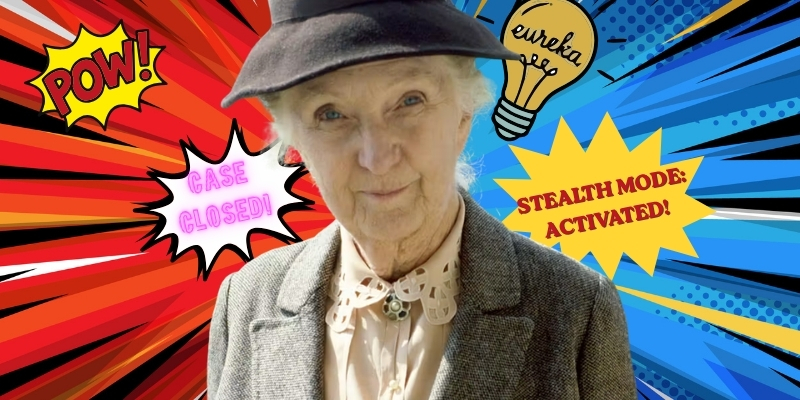
Putting V.I. to one side, I believe that older women have a special skill when it comes to fighting crime and evil. While Poirot draws attention to himself by his mode of dress and his “foreignness,” Miss Marple uses her invisibility as an older woman, and the assumptions about what she might be capable of, to her advantage. She sits quietly and ignored in a corner, listening and watching.
Perhaps she was the inspiration behind a campaign run by MI5, the British security service, some years ago. On the basis that they were unnoticed and not perceived as a threat, they recruited middle-aged women to carry out surveillance. Maybe they still do. Secretly.
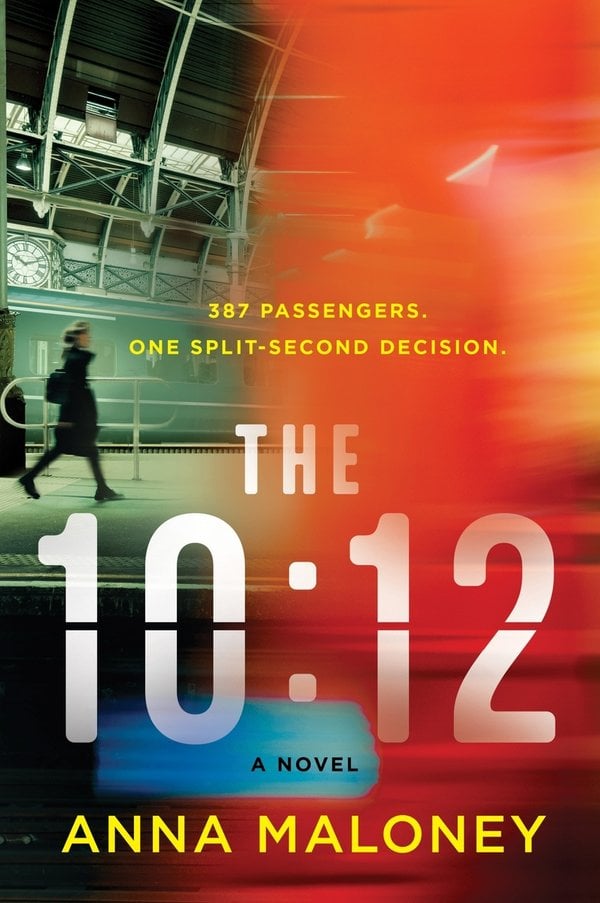
That campaign was in the back of my mind when I created Claire Fitzroy, a grey-haired fifty-something art lecturer in The 10:12 which begins with a hijack on an intercity train. Assumptions about her age and appearance means she surprises people by her actions, not least her opponents, and means that in some quarters her behavior is judged differently than if she’d been a man. Where some people see heroism, others see something darker.
A more straightforward older heroine in the book is retired police officer Gill Kaplan. While Gill follows the rules, Claire tends to make up her own. Neither of them is aggressive in Jack Reacher style, but both use physical force while demonstrating more attitude and smarts than combat skills. As a police officer Gill probably had combat training, but she’s not a trained fighter. Nor is Claire, although we learn she has acquired some useful skills.
It was important to make their physical actions believable in terms of their age and experience. The women are relatively fit and highly determined but are also smart and know their limitations. They act decisively, but with the knowledge that things might not work out the way want them to.
There’s also pleasure in writing an older female protagonist with an unapologetic attitude. We’ve all met women like Claire. They might not be the most compassionate or the most fun to hang out with, but they know their own minds. Claire is not sweet and compliant, and not particularly tolerant. She’s furious at being described as having menopause rage, which she regards as reductive and dismissive. She sees double standards in how her actions are judged. And she has her own secrets.
The 10:12 is partly about the people who step forward in a crisis, and people who step back. (And those people who just want to film it on their phones.)
In real life, the people who step forward are not always who we imagine. The group of fictional passengers on the train who challenge the hijackers includes ex-military but also students, digital marketers, a person with learning difficulties and an accountant. They are female, male, nonbinary, multiethnic, and aged from sixteen to sixty offering various skills but a common attitude—we must try and stop these people harming others. They are not tokenistic but based on the true stories about the bravery of ordinary people when confronted with the unexpected.
Just like those people, my characters can’t know for sure what the outcome of their interventions might be. Or if they’ll even survive.
Claire is mentally tough and opinionated but she’s not fearless. She suppresses fear to think clearly and act. At one point she decides to leave the relative safety of a locked toilet to discover what’s happening in the train carriage.
At a recent crime writing event where I was a guest, the audience had a lively discussion about what they would do. Later that day, I was in a crowded hotel lift and at one floor, a fifty-something woman turned as she stepped out and said firmly “I would have left the toilet” before walking off and leaving some confused lift passengers, and one laughing writer.
*
Other books to explore with older kick-ass heroines
Killers of a Certain Age, Deanna Raybourn. Four retired female assassins in their sixties
The Old Woman with the Knife, Gu Byeong. A female assassin, sixty-five, in present day Seoul.
Vera Wong’s Unsolicited Advice for Murderers, Jesse Q. Sutanto. Vera, seventies, investigates murder.
***

Anna Maloney
Anna Maloney grew up in London, part of a large Irish family. She has written for television (one BAFTA win), film, and radio; taught screenwriting; and works as a script consultant. She has worked in television, journalism, and public relations and is a qualified children's playleader, and sometime usherette. A synopsis and sample of her debut novel THE 10:12 won the UK Crime Writers’ Association Debut Dagger Award. She lives in southeast London and can often be found swimming at her local outdoor pool while working on a plot problem.