Archaeologists, Nuns, and More: 8 Mysteries and Thrillers with Unique Protagonists
Brianna Labuskes recommends Rachel Howzell Hall, Alex Segura, Margot Douaihy, and more
The detective protagonist stands tall in our crime and thriller landscape, from Poirot to Bosch they are the cornerstone to this side of the genre. But more and more we’re seeing writers curious about what can be gained by having a protagonist with a different perspective. Can a midwife solve a mystery better than one of those grizzled detectives?
The answer in real life, of course, is obvious, but in fiction the question may unlock an entirely fresh and fun layer for readers who want to side-step into the crime instead of running at it straight on. Maybe a mid-wife knows secrets about a marriage the police could never get out of the living spouse. Maybe a comic book creator understands the narrative beats of a super villain arc in a way that stumps a by-the-book detective. Maybe a digital archeologist can dig up mementos that no one else thought would unlock a key part of the mystery.
That was what I was thinking about when I came up with up with the idea to base a series around a crime scene cleaner. Olive Hunt sweeps into crime scenes after all the evidence has been collected and the fingerprint dust has settled. She has no interest in trying to “solve” the homicides—she is way too busy scraping dried brain matter off the walls.
But there is no one more detail-oriented than her and she sees plenty that other people just miss. For one thing, her mother had contamination OCD and taught her how to clean with the intention of sanitizing every single centimeter of any room. Secondly, if she did overlook something as small as a blood drop, it becomes a bio-hazard and her job could be in jeopardy.
I was so fascinated by the idea of what someone would like that would add to an investigation and what would happen if her cleaning skills unearthed a clue that the detectives on the case missed. What other ways could she nimbly navigate the plot while the traditional detective was left handcuffed by the rules.
The possibilities in discovering evidence at the scene themselves were endless—she notices glass shards from a broken window that were nearly all cleaned up but not quite; she has to move furniture where a victim’s phone might have gotten caught; she finds a bullet casing behind a night-stand. (The last two came from real-life examples from crime scene cleaners.)
I knew the benefits of having her as the protagonist wouldn’t just stop at the logistics of evidence, though. Olive can talk to people more easily without them getting defensive or guarded. She can walk into a hotel room and notice it was cleaner than it should be—which makes her realize the killer was organized. And more than anything, she views the dead as her responsibility—born from the idea that she’s erasing the last remnants of them from the earth—and thus is more invested in bringing them justice than someone who might just be collecting a paycheck.
There are so many ways her position as a crime scene cleaner enhance her ability to not only solve the crime but connect to people along the way. Here are some other great examples of protagonists who can view the crime through a unique and fresh lens.
*
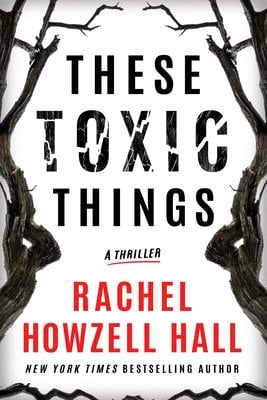
Rachel Howzell Hall, These Toxic Things
Mickie Lambert is a digital archeologist who makes memory boxes for clients. They want a scrapbook of their lives created by photos and videos and recordings, anything important in their digital footprint (made possible with some new tech imagined by Howzell Hall). Mickie doesn’t dig into dirt, but rather a person’s life, finding and then preserving the “artifacts” they treasure. Nadia Denham is obsessed with this kind of memorabilia and commissions a box from Mickie. Only, Nadia is soon found dead with a bag over her head.
Mickie uses the skills she has through both experience and her “narrative studies” degree to build a story about what actually happened to her client. Mickie’s ability to unearth the important clues in a lifetime worth of moments allows her to discover secrets and relationships the detectives might have overlooked.
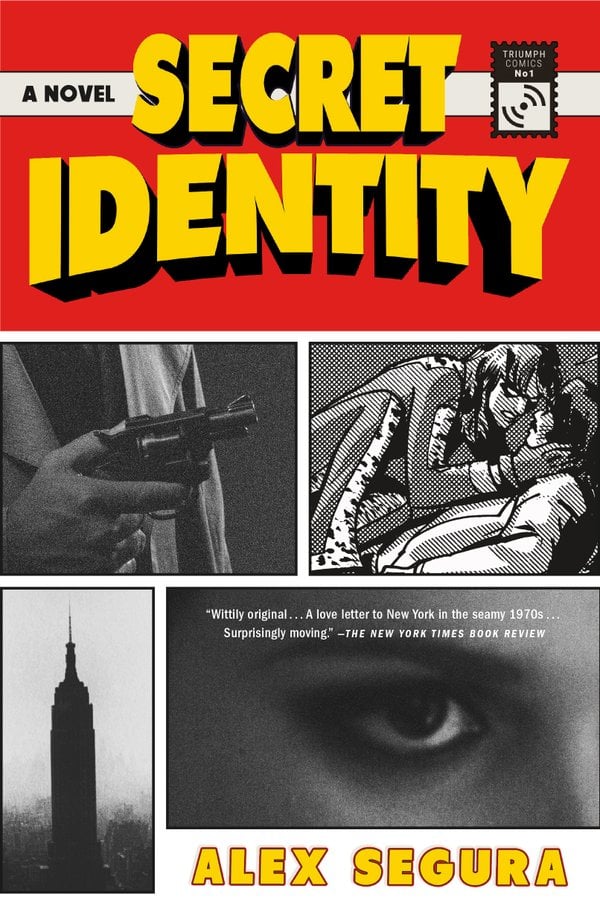
Alex Segura, Secret Identity
Carmen Valdez is working at Triumph Comics—but not in her dream job as a comic book creator. No, she’s toiling away as a secretary at the b-level publishing house set in 1975, waiting for her big break. When Triumph asks one of Carmen’s colleagues to create their first female character, she offers to help him make the Lethal Lynx actually authentic. The catch is that he wants her to keep quiet about her involvement. The problem: he soon ends up dead.
Now, Carmen is the only one who knows she’s the true creator of the house’s now-very-popular comic book character. Carmen uses the beats of her beloved comic books to solve the mystery in this voice-y, atmospheric noir where we also get a bonus comic book for ourselves in between chapters.
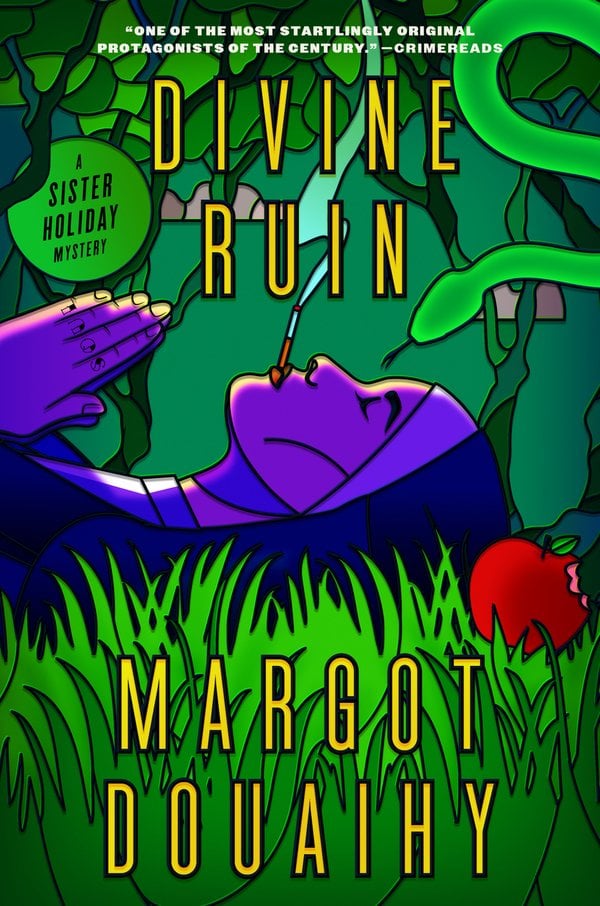
Margot Douaihy, Divine Ruin
The Sister Holiday Series
One of the most unique protagonists to hit the crime fiction landscape in recent years can be found in Scorched Grace, and the following two books in Douahy’s series. Sister Holiday is a chain-smoking, gold-toothed, tattooed, queer nun who teaches at a Catholic school and solves murders in her free time.
In the most recent book in the series, Divine Ruin, one of Sister Holiday’s students overdoses, and she becomes determined to find out who is supplying the kids with fentanyl before the deaths escalate. Sister Holiday taps into her own struggle with addiction, along with her renewed faith, as she hunts down the drug dealers and prepares to take her vows at the same time.
Charlotte McConaghy, Once There Were Wolves
Biologist Inti Flynn just wants to reintroduce gray wolves into the Scotland Highlands. She doesn’t want any trouble with the locals, but she also knows the fear-mongering machine over the wolves supposed danger to humans and livestock has riled up everyone in town.
The tensions reach a boiling point when a farmer turns up dead and it looks like a wolf was the culprit. The locals are in incensed that their warnings were ignored and downplayed, while Inti remains convinced that they have the wrong suspect. The wolves were framed, and she’d going to prove it. To do so, Inti taps into her childhood, where she was raised by a father who cared more about her surviving in the wild than fitting in with society.
Had this been a detective, would he have thought twice when he saw someone had been mauled to death? But Inti’s vast respect and understanding of her wolves means she knows the obvious answer isn’t always the one that’s right.
Arielle Lawhon, The Frozen River
This might look like historical fiction, but at the heart this story is a murder mystery that’s genuinely compelling and twisty. It’s 1789 and a dead body has just been fished out of the titular frozen river. Midwife Martha Ballard, as one of the town’s few health professionals of the day, is called to examine the body. She immediately recognizes the man as a respected member of the town—but also as someone who has rape allegations against him.
From her position as the area’s midwife, she knows the ins and outs of marriages, the illicit relationships being conducted, the fears of her patients who are navigating being a woman in a strict, patriarchal society. She also acts as a secret-keeper to many of the women in town. Because of all that, she’s able to solve the crime—possibly linked to a horrific and intimate act—in a way the magistrate has no chance at being able to.
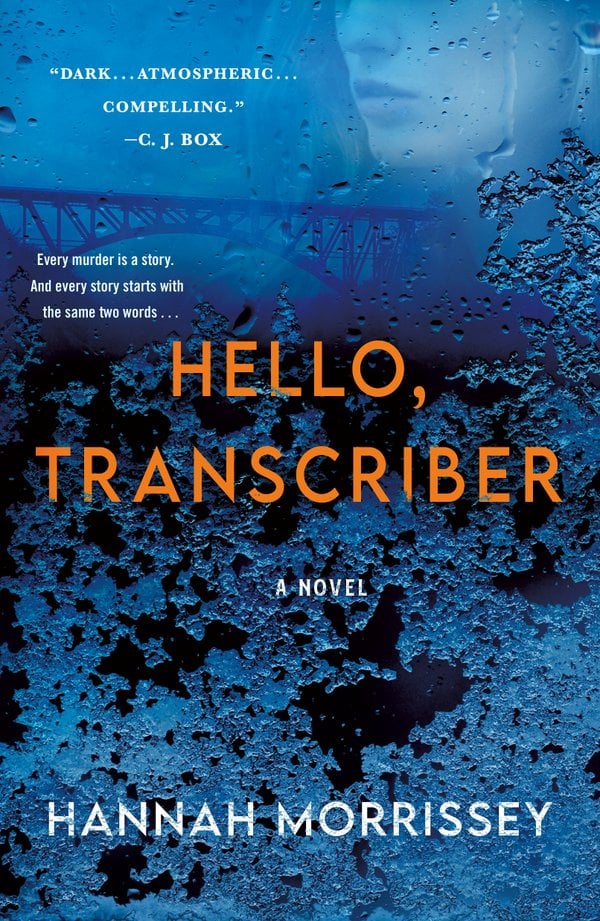
Hannah Morrissey, Hello, Transcriber
In Hello, Transcriber, Hazel Greenlee is one of those invisible people in the crime solving system. As a transcriber, she’s in charge of listening to detectives’ recordings and turning them into typed reports. Through this she can hear the sometimes disturbing, sometimes juicy details of new cases. When she types up the notes from a new death in town, she’s left bewildered. How did a nine-year-old die from a drug overdose?
The question leads her to finding out about The Candy Man, and she becomes entangled with both the lead detective on the case and the unfolding investigation.
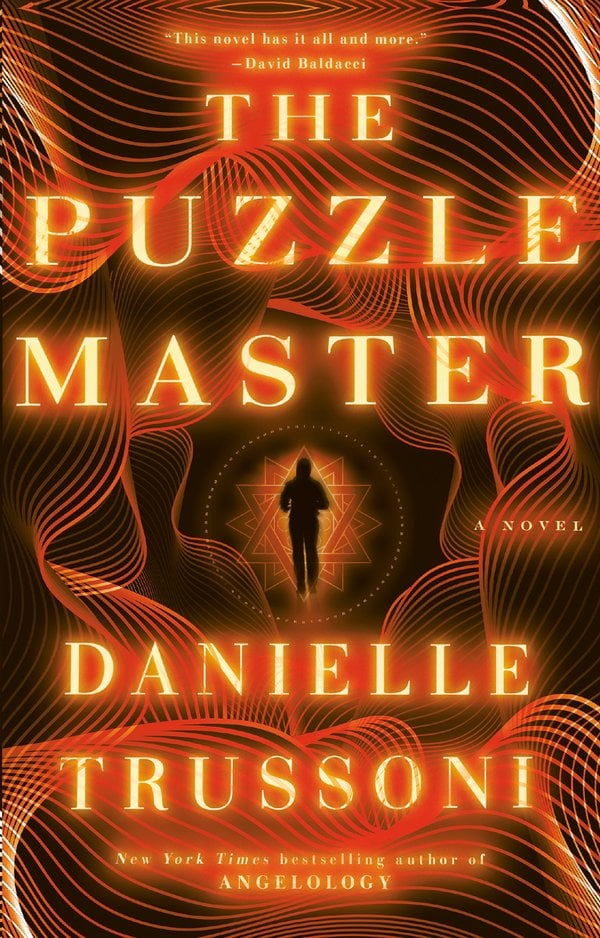
Danielle Trussoni, The Puzzle Master
What else are thrillers but puzzles for readers to solve? That’s never more true than in The Puzzle Master, where the protagonist, Mike Brink, comes out of a traumatic brain injury with acquired savant syndrome. The “gift” lets him solves puzzles with incredible ease. That is how he encounters Jessica Price, a woman who was arrested for a brutal homicide but who hasn’t spoken a word since her arrest five years earlier. The only chance at an insight they have is when she draws an indecipherable cipher and call in Brink to come try to solve it.
The book incorporates letters, letters and journals letting the reader play puzzle master right alongside the protagonist.
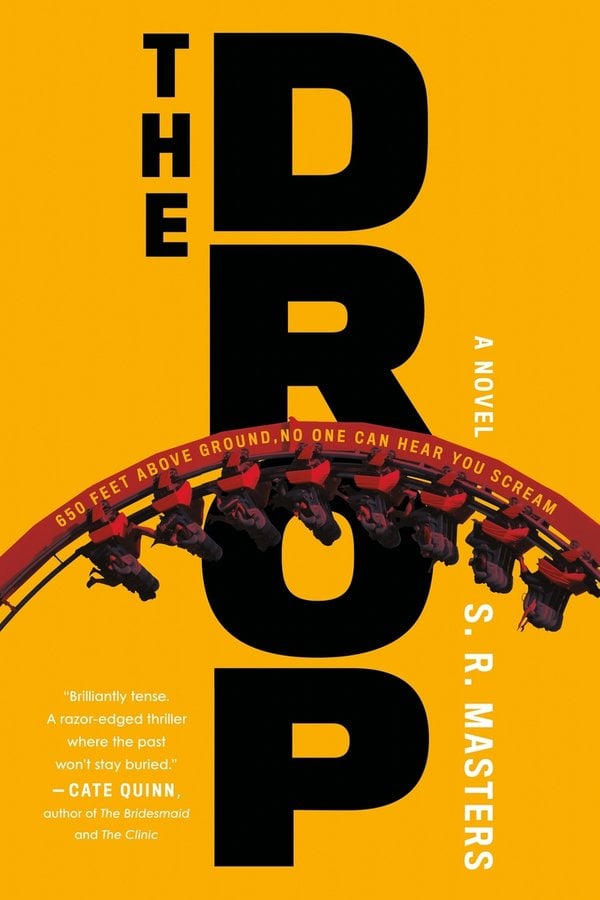
S.R. Masters, The Drop
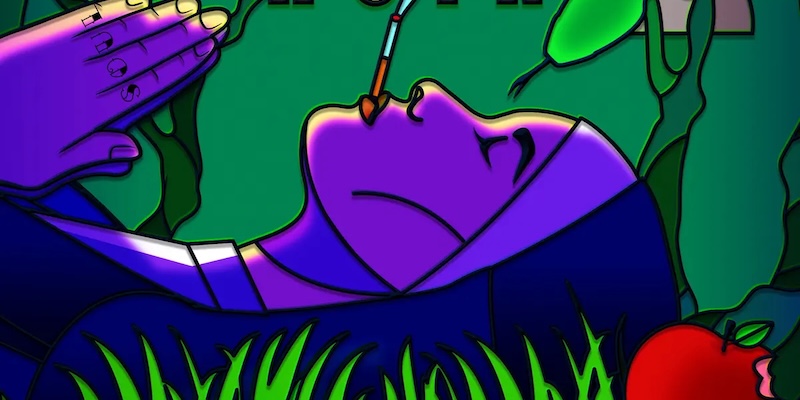
A theme park influencer’s day is turned on its head in this thriller that asks us: just how niche can a job get? Cady shows up for an exclusive, private test ride of a new roller coaster only to find every member of her group of old college friends was invited, too. All is going well until the friends get stuck on the ride at the top of a 650-foot climb—locked in, baking in the desert sun, with no water or phones and no one around to hear them scream for help.
While Cady might not use any of her theme-park-influencer savvy to solve the murder, her unique job gives us the killer set-up in the first place, which is worth the price of admission.
***


Brianna Labuskes
Brianna Labuskes is the Washington Post bestselling author of five thrillers. For the first decade of her career, Brianna worked as a journalist for national news organizations covering politics and policy. Her new book, The Lost Book of Bonn, is now available.