
Baby Daddy: A Story of 1986
Michael Gonzales reflects on fears and relationships in NYC.
In the winter of 1973 when Roe vs. Wade was issued, I was a nine-year old kid who barely knew what was being discussed on the evening news or how it would affect me years later. Too young to have heard the horror stories of illegal abortions, of women bleeding to death or getting infections that put them in the hospital for months, the subject wasn’t one ever brought up at home. A few years later, when I was a young teenager, I had a friend who got his girlfriend pregnant when they were both 13. Though he was distraught and confused, they had the child, a daughter, who was mostly raised by the grandparents.
As I got older I began seeing other young men becoming daddies when they were still teens as well as some who equated fatherhood to manhood, verbally expressing you couldn’t possibly be a “real man” if there were no children as evidence. Though there is much more to being a father than parading the kid on the block, basketball court or barbershop while declaring “I’m a dad” to their friends, but for many young men that seemed to be enough.
When my two-year younger brother Carlos and I were kids, my Aunt Katie used to bring her infant granddaughter Peaches with her while visiting. Carlos always wanted to help change the diapers, warm the formula, apply the baby powder or sing a lullaby while I got as far away from the child as possible, preferably with a book or magazine in hand.
From the time I was 8-years-old, I knew I wanted to be a writer. That fall, under the guidance of my godfather, Uncle Hans, I wrote my first short story, a rehash of crime comedy The Gang That Couldn’t Shoot Straight. Receiving a typewriter a few months later, I knew from that moment my life would be different from those around me. I wanted to attend college and write for magazines and travel the world and live the urbane lifestyle romanticized in Esquire, Playboy and cool Sinatra songs; but first I had to graduate from high school.
After mom moved us from Harlem to Baltimore a few months before I entered 10th grade, there was never a steady girlfriend. Afraid of getting some young lady pregnant and being forced to stay in Charm City for the rest of my life. I took it so far that I barely dated. There was one blind date with a pretty Western High girl who got tired of waiting on me to kiss her and simply became the aggressor; then there was Yara, a preacher’s daughter whom I dated for a few weeks, but we never went beyond back staircase smooching in school. Of course there was a bit of temptation, including Harmony Hart, who kept insisting that she wanted to get me between the sheets, but that never happened.
After graduating in 1981, I returned to the Big Apple. Staying with grandma while attending college at the Brooklyn campus of Long Island University, I finally started dating and having sex with a woman who would be my first heartbreak. During the two and half years that we were together there were always condoms. A few years later, I began to get careless with wearing protection.
Surprisingly most women didn’t care including mocha hued downtown diva Melissa Goodis, a Detroit native I hooked-up with in 1986. A tall, shapely woman who wore glasses, she had moved to New York City a few years before after graduating from Wayne State University. Living in a studio apartment on East 24th Street between 2nd and 3rd Avenues, she had a closet full of designer clothes and shoes as well as well-stocked bookshelves.
Introduced by a mutual friend, when we first met Melissa was dating a Euro Party Boy, but, after getting her pregnant, he paid for her abortion and vanished. Years before “ghosting” was a term, he simply disappeared. I looked after her during that time, went to the Polish diner for tripe soup and spent hours in her apartment smoking cigarettes, drinking coffee and talking. With music in the background, we were the sepia version of a couple in an early Godard film.
A year later, I too got Melissa knocked-up, though she was in denial. I not only knew that she was pregnant, but also knew when it happened. In addition to my day job working with kids at a homeless shelter, I was writing music articles for the downtown arts paper Cover. They had a big bash Christmas party at the Ritz, which today is Webster Hall, with open bar and food. Later that night, while retrieving our garments from coat check, a drunken Melissa and I found the room unmanned. For some reason we thought that would the perfect place to make love.
Two months later Melissa called me at work and asked if I would stop by Kentucky Fried Chicken on my way home. Getting off a 4pm, I took the train to 14th and 3rd Ave and fulfilled her request. However, a couple of days later when she asked again for more fried chicken, my spidey sense started tingling. “You’re pregnant!” I blurted, tossing the red and white bag on the kitchen table.
Caught off-guard, Melissa chuckled. “You’re crazy.”
“You’ve never eaten Kentucky Fried twice in the same week,” I countered. That night, in addition to the chicken, I also brought home a home pregnancy test. The following morning the test was negative, but I refused to believe that little plastic liar. A few days later Melissa called me after a doctor’s appointment. “You’re right,” she mumbled.
For forty-five minutes I sat in a daze while I thought about becoming a father. My homeboy Kevin, who worked down the hall, had gotten his girlfriend pregnant when he was 14. I once asked, “What did you do when you found out?” He laughed. “Man, I was just a kid. I ran in the apartment, threw myself across the bed and started crying.” Though I understood the feeling, at 24 I couldn’t just start bawling. As the guys used to say, it was time to “man up.”
I vowed to allow Melissa to make the decision. I wasn’t ready to be a dad, but if we had a kid I would be the best father possible. That night while having sushi on 3rd Avenue, as we sat cross-legged on the floor in the authentic Japanese section of the restaurant, Melissa said, “I decided to get an abortion.”
“Are you sure?”
“Sure I’m sure. What are we going to do, raise a kid in a studio apartment?” Melissa was three years older than me, but besides her last pregnancy with Euro Party Boy, I wasn’t sure how many times she had done it before. I wasn’t upset by her decision, but I didn’t want her to be in danger. No matter how casual she was, I was concerned.
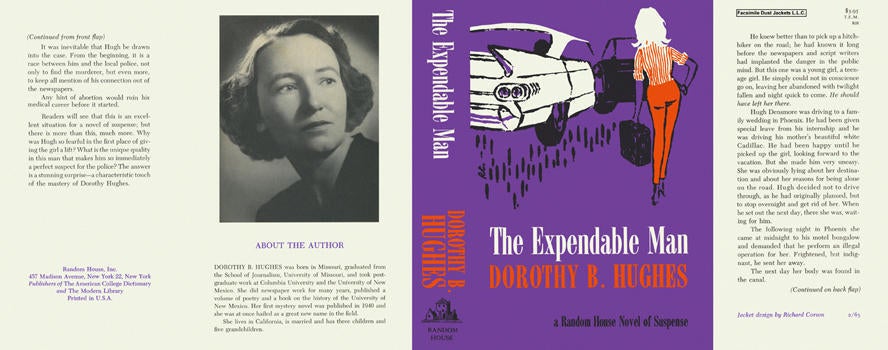
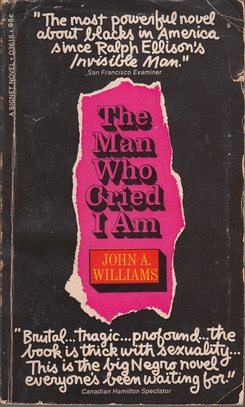
Indeed, three of my favorite books that included The Man Who Cried I Am by John A. Williams and Song of Solomon each have disturbing abortion scenes that included a bloody death in the former while in the latter a cruel man forced his pregnant wife to drink castor oil, hoping for an induced abortion, and later punching her in the belly. Even more graphic was the last published manuscript by crime writer Dorothy B. Hughes titled The Expendable Man, where a drunken abortionist (Doc Jopher) performs his procedures in a dank, dirty room while under the influence of cheap wine. Though each novel was set at a time before Roe vs. Wade was law, recalling them was still disturbing.
***
A week later, Melissa and I woke up early to make it to the clinic by 10 o’clock. Sitting in the cab zooming up 3rd Avenue, I began literally twiddling my thumbs the way my anxious grandma did. “You’re more nervous than I am,” Melissa said. The medical office was on the Upper East Side somewhere in the 50s. I knew the neighborhood well. Two years before, though I was assigned to the 6th Avenue store, I sometimes worked at the Miss Brooks Coffee Shop location on 3rd and 56th alongside Melissa’s younger sister Rain.
Upstairs at the clinic we went to the front desk. As Melissa checked in, I scanned the room, which was filled with sad-faced women and their supportive friends. Besides myself, there were no other men. “They do this shit and leave you to deal with it,” an illegal abortionist said in “Philly,” a Regina Bernard Carreno short story published in 2025 in the Killens Review of Arts & Letters. While I wouldn’t read those words until decades later, I suppose that has always been true.
We sat down in the hard plastic chairs in the waiting room and I reached for Melissa’s hand. Although we had dated for over a year I never felt closer than at that moment. Leaning her head on my shoulder, we remained silent until her name was called. “She’s going to be at least two hours,” the nurse instructed. “You can go out and come back later.”
My mind drifted as I wonder what exactly happened when Melissa entered the room where the procedure was done. Were the nurses and doctors gentle, did they comfort her with soft words and a pillow as classical music played in the background? Like most men, I had no idea what happened once that door was closed.
The walking cliché that I am, I headed straight to the nearest bar and ordered a double Jack Daniels and Coke. Downing the strong cocktail quickly, I ordered another and stared blankly at the TV set. Midday Live with Bill Boggs was on channel 5. At 2 o’clock I returned to the clinic to find Melissa waiting patiently. On the elevator ride downstairs she whispered, “Somebody smells like they’ve been drinking without me.”
I smiled. “Sorry, but I had to have a few.” An hour later we returned to Melissa’s studio where she went to bed and I went to the Polish restaurant a few blocks away for their hearty chicken noodle soup, a ritual I carried out for a week. Melissa and I stayed together for two more years, before breaking-up in the spring of 1989.
***
As I got older, there were those instances when I was doubly reminded of my childlessness, especially if I was with my homeboy Scotty when he was picking up his son from school or hanging with my buddy Ian at his boy’s soccer game or sitting on the living room couch while my friend Asha fussed with her daughter about tutoring lessons or chilling on a park bench with Nicole while her baby girl played on the slide. Certainly, while there are days that I regret not having children, but I never viewed Melissa’s abortion with remorse, considering that neither of us was mature or secure enough to take on that responsibility.
However, thirty-five years after Melissa and I went to a safe, clean doctor’s office for her abortion, the Supreme Court overturned Roe vs. Wade throughout the country and, according to The Guardian, “unleashed a wave of state-level abortion bans.” Though this was an issue that conservatives fought for decades, I never thought it would actually happen.
In some states women have been arrested for having miscarriages and placed in prison cells. Meanwhile Texas and Idaho have even tried to ban women from traveling to different states for abortions, hoping their friends and neighbors will snitch on them if they do.
By turning back the hands of time, abortions are once again in danger of returning to the unstable hands of quacks and other menaces more concerned with making a quick buck than the well-being of the women in their care.

Michael Gonzales
Harlem native Michael A. Gonzales is a cultural critic, short story scribe and essayist who has written for The Paris Review, The Village Voice, Wax Poetics, The Wire UK, Maggot Brain and Pitchfork. His fiction has appeared in Under the Thumb: Stories of Police Oppression edited by S.A. Cosby, Taint Taint Taint, Dead-End Jobs: A Hit Man Anthology edited by Andrew J. Rausch, Black Pulp edited by Gary Phillips and The Root. Upcoming stories will appear in The Book of Extraordinary Femme Fatale Stories edited by Maxim Jakubowski, Get Up Offa That Thing: Crime Fiction Inspired by James Brown edited by Gary Phillips, Killens Review of Arts & Letters and Obsidian Literature & Arts in the African Diaspora.