6 Unforgettable Psychological Thrillers
Sara Foster on some standout books from a genre on the rise.
If I had to sum up psychological suspense in one word, it would be ‘intensity’. In the most spine-tingling of these stories, high stakes meet a cascade of plot twists and distinct narrative choices that ensure the reader can’t do anything except hold on tight and enjoy the ride. Authors have a lot of tools available to them: from unreliable narrators to isolated settings, but in the best psychological suspense stories, the narrative voice will be so distinctive and well-chosen that the books are unforgettable. Here are six of the best:
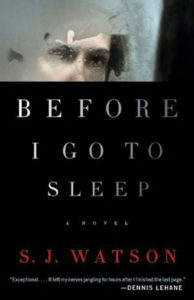
Before I Go to Sleep by S J Watson
Christine Lucas wakes up every day with no recollection of the past two decades of her life, still believing she’s in her early twenties. Ever since she had an accident, her memory resets each time she falls asleep, and she has no idea that she once had a son who died in Afghanistan. However, Christine has begun keeping a secret journal, determined to rediscover who she is – and is beginning to realise, with growing horror, how little she can trust those around her – even her husband.
The story is told in intimate first-person present tense, with neither the reader nor Christine able to determine what’s true. In this way we are pulled squarely into Christine’s world, experiencing her terror in real time.
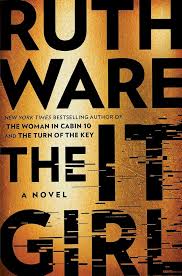
The It Girl by Ruth Ware
Ten years after Hannah’s vivacious friend April was murdered during their first year together at Oxford, Hannah is visited by a journalist who tells her that she helped frame the wrong man for the crime. As Hannah begins to doubt her own version of events, she’s also going through the rigours of her first pregnancy, making her especially vulnerable, particularly when all the old friends she turns to for help begin to seem like suspects.
Author Ruth Ware uses a dual narrative to let the reader fully in to the events of the past, so they can help to solve the mystery as well as watch Hannah’s desperate race for the truth in the present.
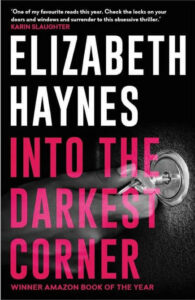
Into the Darkest Corner by Elizabeth Haynes
Catherine was once an outgoing and confident young professional – but that was before she met Lee, a mysterious charmer, who ended up stalking her relentlessly and became violent – although nobody believed her at the time. Four years later, Catherine has moved to a new city, and although she’s still suffering from PTSD, she’s trying to start again, even meeting a new neighbour who offers her hope for the future – until the phone rings.
Into the Darkest Corner uses dual timelines to show the devastating effect of stalking on Catherine’s psychological state, meaning that the reader experiences two different versions of the same person, by seeing her before and after she’s terrorised. As we know what she’s been through, we can’t look away from Catherine’s emotional torment when the danger intensifies.
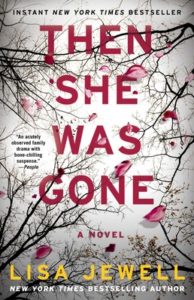
Then She Was Gone by Lisa Jewell
When fifteen-year-old Ellie Mack disappears after going to the local library, her mother Laurel’s life is forever changed. For a long time, Laurel drifts through her days, becoming detached from her family and eventually divorcing her husband. Finally, when Ellie’s remains are found ten years later, Laurel begins a new relationship with Floyd, a charmer, but on meeting his daughter Poppy she’s struck by how similar the girl is to Ellie. And as she begins to investigate, she learns that her daughter’s fate was darker than she ever imagined.
Lisa Jewell is unafraid of mixing things up in her story, and tells this one through multiple points of view at different points in time – including Ellie’s. This pulls the reader fully into the narrative and keeps us acutely aware of who is hiding things and who might not be telling the truth.

What Happened to Nina? by Dervla McTiernan
The novel begins with twenty-year-old Nina Fraser sharing the story of her relationship with her boyfriend Simon Jordan and a weekend they spent at his parents’ cabin near Stowe, Vermont. The chapter finishes with Nina going downstairs to tell Simon their relationship is over — and that is the last we hear from her. Simon returns home alone, his explanation for Nina’s absence full of inconsistencies, but while Nina’s parents push for answers, Simon’s powerful family hires expensive lawyers and a PR firm to wage a take-down media campaign against Nina and her family.
McTiernan makes a brave narrative choice in the first half of the book, letting the reader in on what has happened – which works brilliantly, because this knowledge heightens each of the desperate character’s emotions, as we wait to see if justice will finally be served. And when the ending comes, the story takes another highly original turn, showing that McTiernan is a master when it comes to plotting.
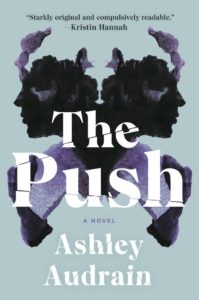
The Push by Ashley Audrain
Blythe Connor wants to be a wonderful mother to baby Violet, particularly because she comes from a line of troubled women. However, in the thick of motherhood’s exhausting early years, Blythe becomes convinced that something is wrong with her daughter, and that she doesn’t behave like most children do. Her husband Fox thinks she’s imagining things, but when their son arrives, things only get worse, because Blythe finds it easy to love him – and her troubling, unnatural feelings about Violet become impossible to ignore. After a tragic event, both Blythe and the reader are left asking if Violet is truly terrifying, or if Blythe’s own distress has made her incapable of seeing her daughter clearly?
Ashley Audrain’s clever use of the second-person voice means the narrative has an unforgettable impact. Blythe narrates as though talking to her husband – putting the reader in Fox’s shoes, as she repeatedly demands to be heard.
***

Sara Foster
Sara Foster was born and raised in England and moved to Australia in 2004. She has published eight other novels: Beneath the Shadows, Shallow Breath, All That Is Lost Between Us, The Hidden Hours, You Don't Know Me, The Hush, The Deceit, and When She Was Gone. She lives near Perth, Western Australia, with her husband and two daughters.