
Beyond "Man vs. Beast": Natalie Moss on the Outdated Trope of Nature as Monstrous
The author of The Night Hunter enjoins us to depict animals more accurately in fiction
Far from being cooked up in English classrooms to torment essay-writing students, “man versus nature” is one of our oldest storytelling conflicts. You can trace it from cave paintings and early myths of The Odyssey into the modern era with classics like The Old Man and the Sea, or, perhaps less of a classic, Cocaine Bear.
It’s a compelling narrative: the vulnerability and fragility of humanity on one side and nature on the other, locked in some elemental struggle.
But it’s also one we should probably outgrow.
Humans are not separate from nature. It’s a distinction that doesn’t reflect ecological reality. The idea that we stand apart from the natural world isn’t just inaccurate. At worst, it’s downright dangerous.
You don’t need to look hard to find the colonial mindset embedded in narratives that frame nature, be it land, wildlife or the environment, as something to be conquered, dominated and controlled. Nature is the obstacle. The threat. And this is not just a literary device; it’s a worldview. And it has real-world impacts.
By playing just two notes on a piano, I can conjure up the sea for you. How?
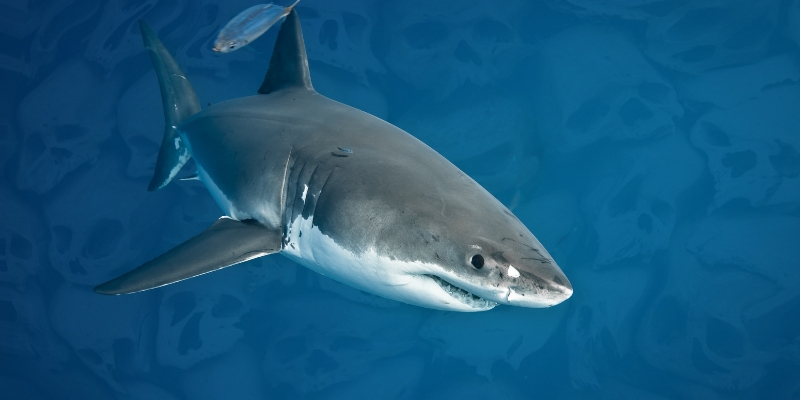
Jaws is an insidiously influential film. While I can’t fault its powerful dialogue and haunting score, it also conjured the myth of the man-stalking shark that haunted the public psyche of beachgoers across the world.
It’s a gripping story, too bad it’s just not true. Sharks don’t stalk humans. Most of them don’t even like eating humans.
Less than a fifth of shark attacks lead to fatalities, and yet the mythical monster sticks. While overfishing is the biggest culprit for shark population decline, the “Jaws Effect” is material.
George Burgess, former director of the Florida Program for Shark Research, has been quoted saying that large‑shark numbers off the eastern U.S. dropped by roughly fifty percent in the years after the film, attributing part of that due to the “collective testosterone rush” fueled by trophy-hunting for sharks. Other research has found, these anti-scientific perceptions have influenced real government policies that allowed killing of sharks for no justifiable reason, despite little evidence that it improved beach safety.
Perhaps counterintuitively, the more we anthropomorphize animals, the easier it is for us to discard them as villains with wild agendas, grudges, and dark motivations that only humans can possess. In doing so, we flatten the beautiful complexity of animal behavior.
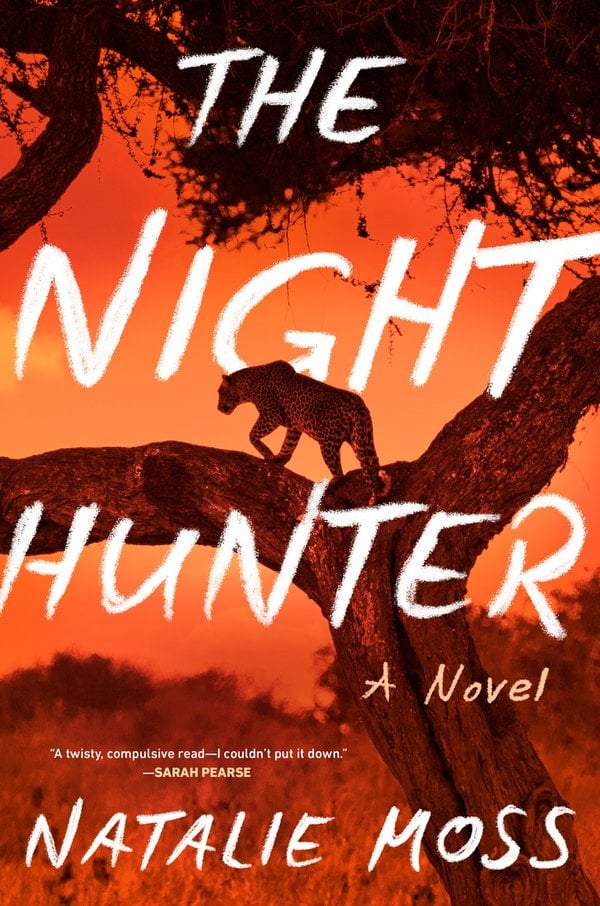
It’s an idea I struggled with in writing my debut, The Night Hunter. Having gone on regular safaris since I was a kid, I wanted to capture the personalities of the animals I had grown up observing on the page. It’s hard not to anthropomorphize entirely, and I think it would be wrong to do so. Buffalos typically exhibit stubborn behaviors. Elephants have been known to mourn their dead. And I’ve seen a baby rhino playfully run around with the zoomies. These comparisons matter because they become the bridge to empathy and understanding.
But for me, there was a line. I needed my readers to see, well, the “humanity” in the cast of animals that played a role in my book. And yet, I was careful not to ascribe deeper motivations to them. These animals aren’t choosing sides. When things go wrong with the wild animals, as they inevitably do, it isn’t because of wickedness. It’s because of unnecessary proximity, disrespect, and human error.
They aren’t there to play heroes or villains. On the contrary, my characters were the ones who had to learn to understand their impact on the wild world and make their decisions about what they were going to do about it.
The fact is, ‘Man vs. Nature’ no longer describes the world we live in. We live in a time where human intervention has irreversibly changed the Earth’s surface. We have become the force of nature. We are, perhaps always have been, caught in the web of it.
That shift matters for the kinds of stories we tell and read. The central tension is no longer survival against a hostile wilderness, but survival within systems we have already changed. But it doesn’t all have to be like the depressing end of those old Attenborough documentaries. We need narratives now more than ever to inspire, keep hope, and simply re-cultivate our love of the natural world–now more than ever, and there are plenty of approaches to it.
Paolo Bacigalupi’s The Water Knife provides a chilling warning of a not-too distant future about the conflicts around dwindling water sources. Barbara Kingsolver’s Flight Behavior charts a young woman’s journey to exploring the interconnectedness of wild creatures through an unusual migratory phenomenon of monarch butterflies.
Other stories, like the recent phenomenon God of the Woods, by Liz Moore, which follows the stories of different individuals in a community after the disappearance of a girl from a campsite, simply remind us of the beauty of the natural world, and follow the characters’ journeys towards sustainability and self-reliance within it. And lastly, my personal favorite, Charlotte McConaghy’s taken different approaches to environmental fiction ever since she turned her eye to the adult space.
But close to my heart is her second book, Once There Were Wolves. Instead of the cautionary tale of a dystopian future (although she does this in other novels), this book considers a very-near future world with a positive twist. It follows a crew leading the reintroduction of wolves into Scotland. It’s a real positive intervention that’s close enough to feel realistic, and instilled in me a fragile, beautiful hope.
***

Natalie Moss
Natalie Moss is a Filipina South African born and raised in Manila, Philippines, and has gone on safaris since she was three years old. An Oxford graduate, Natalie has lived in seven countries, including Australia, Vietnam, Papua New Guinea, South Africa, and Spain, and has now settled in London. She’s an avid reader of thrillers and crime fiction, and is obsessed with solving the puzzle of a good mystery. She is the author of The Night Hunter.