
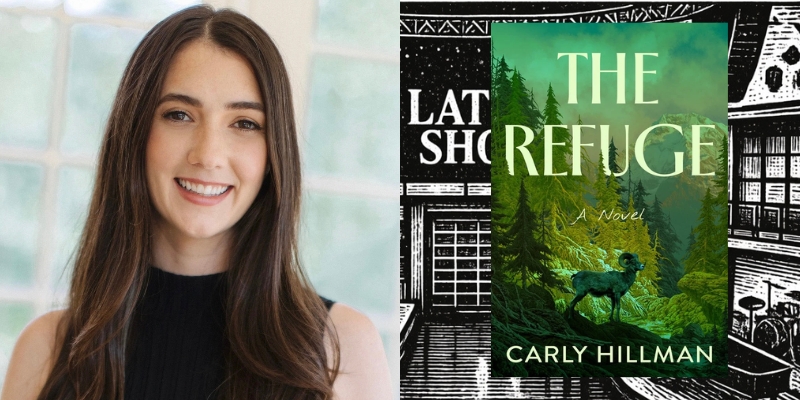
Carly Hillman on Going from Producing Colbert's Late Show to Writing a Crime Novel
The author of The Refuge shares a moment of unexpected inspiration
I wasn’t planning on writing a book. Here’s what I was planning: I was going to go for a hike, enjoy a day out in nature, have dinner with a friend, and hopefully go to bed early. Instead, I came back from that hike with a notebook scribbled full of plot ideas, a strange mystery burning in my mind, and an (unbeknownst to me at the time) eight-year writing journey ahead of me. What happened?
I don’t think I will ever quite understand that day. I wish I was the type of person who believed in magic unexplainable moments. That would be more fun than my reality, living by logic, spreadsheets, and color-coded grocery lists. But what happened that afternoon cannot be explained rationally.
As I looked out across the grassy expanse, suddenly, I could see a scene: a little girl hiding in the field, no discernable past, hoping to start her life over here in paradise. The image just…arrived. Who is she? I asked myself. How did she get here? What happens next?
The questions kept coming, and strangely, so did some answers. By the end of the hike, I had an outline scratched in the notebook I had serendipitously thrown in my bag that morning. I knew how the girl got there, what she’d been through, and how her story ended. But there was one big thing I didn’t know: I didn’t know what I was going to do about it.
You see, I couldn’t write fiction. I had a job I loved, working at The Late Show with Stephen Colbert where I produced the interviews. Sure, I loved writing. But I had not gotten an MFA. I had not published short stories. I had not stayed up until the early morning obsessing over a character’s dialogue. I had only skimmed Ulysses in college.
In short, I was no novelist. As an English Literature major, authors were my heroes. They were the creatives, the people who possessed the magic ability to make worlds come alive from nothing. I was just the person who might help them prepare for an interview on a late-night talk show.
Most of the eight years between that hike and my publication day were spent not writing. The idea sat in that notebook in a drawer, and the characters lived only in my head. I thought about them a lot, wondering what their life looked like and how they moved through the world. I imagined that I would write about them one day, when I felt qualified. I waited for that day to come. And I kept waiting.
I almost started earlier, once. The characters lived so vividly in my mind, and I had spent years thinking about them. Didn’t I at least owe it to them to try to write them into existence?
I sat down in front of a stark blank word document, and four hours later, at two in the morning, I had the first chapter. I emailed the pages to my now-husband, who had an extremely appropriate response: he was excited, encouraging, told me it was great, and gave me a few notes. He couldn’t wait to see what happened next.
But for someone with imposter syndrome, that was not enough. What was I expecting? Fireworks celebrating that I had finally started The Big Thing I Dreamed Of? A call from each of the Big 5 publishers to say that they’d heard the next great mystery novel was on the way? The notebook went back into the drawer, this time, for three more years.
My writing journey was ultimately one about confidence. About doing the thing you want, before anyone is asking it of you. I thought a lot about the guests I produced on The Late Show, people at the absolute top of their field who had gotten there not because someone begged them to audition or to write or to run for office—but because they believed in themselves enough to try. I wasn’t a novelist, I realized. But I definitely would never be one if I didn’t, well, write a novel.
That’s what inspired me to open the word document with that first chapter again, imagining years of dust drifting off my computer screen. And I started to write. No one asked me to. No one gave me permission. I just…wrote. And I discovered something surprising: I loved it. I loved obsessing over dialogue. I loved closing my eyes and imagining what it smelled like in scenes. I loved my characters. I loved lying in bed at night imagining what moment I would tackle in the morning.
Recently, I found the notebook that I had brought with me on that fateful hike. As I flipped through, struggling to read the notes chicken-scratched across the pages, I was shocked by how much of the plot stayed the same. Moments I had described in four words were now full chapters. Little details I had imagined were now character-defining traits. And that first image, the little girl hiding in the grass, was my opening scene. The origin of my mystery novel remains a mystery, even to me.
My journey may have gone in reverse with a book idea that made me a writer, but the destination is the same: I’m an author. I write fiction. And I still have only skimmed Ulysses.
***
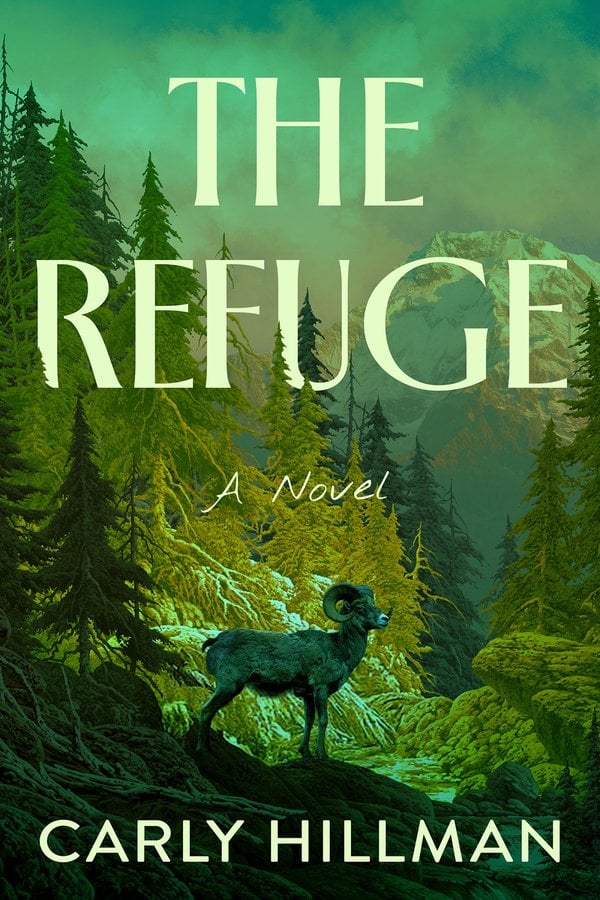

Carly Hillman
Carly Hillman is a writer and Peabody Award–winning television producer. She worked at The Late Show with Stephen Colbert, where she produced the interviews, for ten years. She earned a degree in English from Harvard University, graduating with honors. Carly now lives in Philadelphia with her husband, their daughter, and their cat named Sponge. She is the author of The Refuge.