

Catherine Fogarty on Reopening the Cold Case of a Murdered Montreal Teen in 1960s LA
From the introduction to The Girl with No Name: The Story of Jane Doe #59 and My Relentless Search for Her Killer
“The past is a dream. Its memory still lingers. Tomorrow, a wish that may never come true.”
–Reet Jurvetson, West Hill High School Yearbook 1967
*
In the fall of 1969, a young, unidentified woman was found brutally murdered in Los Angeles. Without a name, she was called Jane Doe #59—the fifty-ninth unknown female death in the year 1969. It was a year like no other in the city of Los Angeles, when a rash of gruesome, unsolved killings had the City of Angels gripped in fear.
The only possible clue to Jane Doe’s identity was a label in her jacket that said “Made in Canada.” However, no one in Canada had reported a woman missing who matched her description. Without knowing who she was, it would be almost impossible to find her killer. The case quickly went cold.
Three decades later, a detective in Los Angeles working in a newly formed cold case unit decided to use modern scientific testing and the internet in a renewed search for the identity of Jane Doe #59. However, it would take several more years for the detective’s unwavering determination to pay off.
It was only when someone in Canada recognized a chilling photo of a de-ceased woman on a national database of unidentified murder victims that she was finally identified. A DNA match with a family member ultimately confirmed the identity of Jane Doe #59. Her name was Reet Silvia Jurvetson. She was a nineteen-year-old from Montreal, Canada.
Reet’s murder was a savage crime that occurred only three months after one of the worst killing sprees in Los Angeles history, when pregnant actress Sharon Tate and four other innocent people were butchered. Was Reet Jurvetson another victim of Charles Manson and his family of drugged-out misfits? This was a long-held theory by some, but the original investigators believed her murder was much more personal. A “crime of passion,” they called it, likely carried out by someone she knew and trusted. The mystery of her identity had been solved, but her killer’s name remained lost to time.
Uncovering who Reet was also revealed another lingering mystery. For years, Los Angeles investigators searched through missing person bulletins and, decades later, online databases, but there was never a match. Someone, somewhere, had to be miss- ing her, they thought. However, they were mistaken. Once Reet was identified, there came the startling realization that no one in her family had ever filed a missing person report after her unexplained disappearance in 1969.
In the summer of 2021, fifty-two years after Reet’s murder and five years after she was publicly identified, I produced a podcast about the story. As a Canadian with a home in Los Angeles, I have written several true crime podcasts about Canadians who pursued their dreams in La La Land, only to face tragic endings.
Los Angeles has long been a sun-soaked destination for those chasing fame and fortune. But Reet came to LA for different reasons. She was a young woman seeking independence, adventure, and romance. She was in love, and a special someone was waiting for her in Los Angeles.
But love wasn’t what she found when she arrived in the City of Angels, and tragically she would never go home again. Her all-too-brief life was reduced to a police case file number and a bankers box collecting dust in a warehouse among thousands of other cardboard boxes in a city with a soaring murder rate. The overworked homicide detectives still searching for her killer eventually moved on or retired.
I moved on too. There were more stories, murders, and victims— producing a true crime podcast is not for the faint of heart. But something about Reet haunted me: the girl with the deep-set eyes and sweet smile, someone with so much to live for. I thought about her often and would occasionally search for her name on Google, hoping for updates on the murder investigation. There were none. Then, I rewatched a compelling documentary about Reet’s story, produced by the CBC’s The Fifth Estate in 2016. I had already viewed it while writing the podcast, but on this occasion, I scrolled down to read the viewers’ feedback below the video on YouTube.
After reading dozens of comments, I suddenly realized why I couldn’t let this story go. I had the same nagging question that so many others did: Why didn’t Reet’s family file a missing person report? Why didn’t they search for her?
Family members of the missing or murdered typically stop at nothing to find the answers they seek. They pursue every lead, offer reward money, put up posters, and hound investigators. Their lives are on hold until a loved one is either found or justice is served. Faced with a lifetime of grief, solving the mystery of what happened becomes their personal crusade.
But not in Reet’s case. According to her sister, it was a different time, and the family assumed that Reet was an adult exploring an independent life. Yet, as years passed without any contact, didn’t they wonder where she was? Didn’t they care?
In revisiting Reet’s past, I knew there was more to the story than just a young woman seeking independence from her family. I would be seeking answers to some difficult questions about family dysfunction and estrangement. What family doesn’t have issues? What teenager ever listened to their parents? I certainly didn’t. Still, nothing about the family’s inaction made sense. I needed to know more. But as I headed down this perilous path, I recognized a potentially familiar family dynamic and realized I risked exhuming parts of my own buried past.
Once upon a time, much like Reet, I was an independent, spirited young woman with ideals and beliefs that conflicted with my parents. I was the “problem child,” the “black sheep.” For that, I paid a heavy toll. I was kicked out at seventeen and sent to a psychiatrist to be “fixed.” A lifetime of conflict and estrangement followed. But I survived, and I thrived. Now, many years later, having found a modicum of peace with the past, I still had to ask: If I had disappeared like Reet, would my family have searched for me? I think I knew the answer in my heart, and it was this long-dormant heartache that drew me to Reet. I was determined to tell Reet’s story and find her killer.
In retracing Reet’s short life and reexamining every possible lead in her murder, I agreed with the original police assessment: I was sure that the monster she encountered was someone she knew, someone she trusted, and I believed the killer was still out there.
Today, many cold cases from decades ago are being solved thanks to advances in DNA technology and the efforts of genetic genealogists, who have become essential resources in uncovering answers to these mysteries. Aging killers who thought they had escaped justice are finally facing the consequences of their mur-derous actions. But how do you find a killer more than half a century later without DNA? In the Reet Jurvetson murder case, there was no physical evidence from which to extract the killer’s DNA, which gave it little chance of ever being solved. Yet I was still determined to try.
The cold case technically remained an open file with the Los Angeles Police Department, and that is where I chose to begin my search. Could I persuade a retired cold case investigator to retrieve the time-worn murder file from storage? Would he trust me enough to share information, some of which had never been made public before?
Knowing that cold case detectives from Los Angeles had travelled to Montreal when Reet was officially identified in 2016, I hoped that, as a Canadian, I could reinvigorate the investigation by acting as a conduit between investigators in Montreal and officials in LA. However, as an anglophone living in Toronto, I quickly realized I needed help. Support would soon arrive in the form of a recently retired Montreal cold case detective who had the investigative acumen this case required.
My plan was to get the cold case investigators in Montreal and Los Angeles talking—two seasoned detectives who could communicate with their own shorthand and expertise. I ran the risk of being left out of the loop, but that was a gamble I was more than willing to accept if it meant a killer would be caught. My expectations were low. After all, we were chasing a phantom who had over half a century’s head start.
Yet as the investigation unfolded, I made an unexpected discovery—there was a man with an intriguing past whose world might have intersected with Reet’s in Montreal and Los Angeles. Who was this mysterious man? Where was he in November 1969, and more importantly, where was he now?
Strangely, my elation at uncovering a possible person of interest in Reet’s murder did little to impress the California cold case detective. The more I learned about this person, the more elusive the LA detective became. Emails went unanswered, and months passed without further co-operation between Los Angeles and Montreal detectives. I was confused. Weren’t we all working toward a common goal—to find answers to a decades-old murder and seek some form of justice for Reet?
As I continued to dig deeper, I struggled to focus on that very goal. There were many times I almost abandoned what I’d started. Frustrated by closed doors, complacency, and a seemingly impenetrable blue wall of silence, I felt defeated. Was I naive to pursue this cold case that had languished for years without proper attention or resources? Was Reet’s murder destined to be just another sad statistic?
While my frustration grew over the apparent lack of interest in solving her murder, I turned to Reet for comfort. Sitting in front of my laptop, often into the late evening, it was just the two of us. Many people in Reet’s life had let her down, and it felt as though she was being pushed aside and forgotten once more. I wasn’t prepared to let that happen. Regardless of the outcome, I became increasingly committed to telling Reet’s story because her tragic narrative reflects that of many other lost girls and women.
Reet’s short life and cruel death profoundly affected me when I wrote that podcast back in 2021. I mourned the girl I never knew, while finally embracing the girl I once was. We were the rebellious ones, feisty and unafraid. Though I eventually found my voice, Reet’s voice remained forever silenced. Can I speak for her? No. But I can try to tell the world who she was and why her life mattered.
Emboldened by Reet’s own youthful fearlessness, I continued my search for answers about her murder, refusing to let anything or anyone stand in my way. My instincts kept telling me I was on the right path and there was still more to uncover. And I was right. In an unexpected turn of events, I found myself working with the most unlikely of partners to solve Reet’s murder—another woman who risked losing a lot the further she sought the truth. Together, in our unlikely alliance, we uncovered secrets and lies no one could have ever predicted.
***
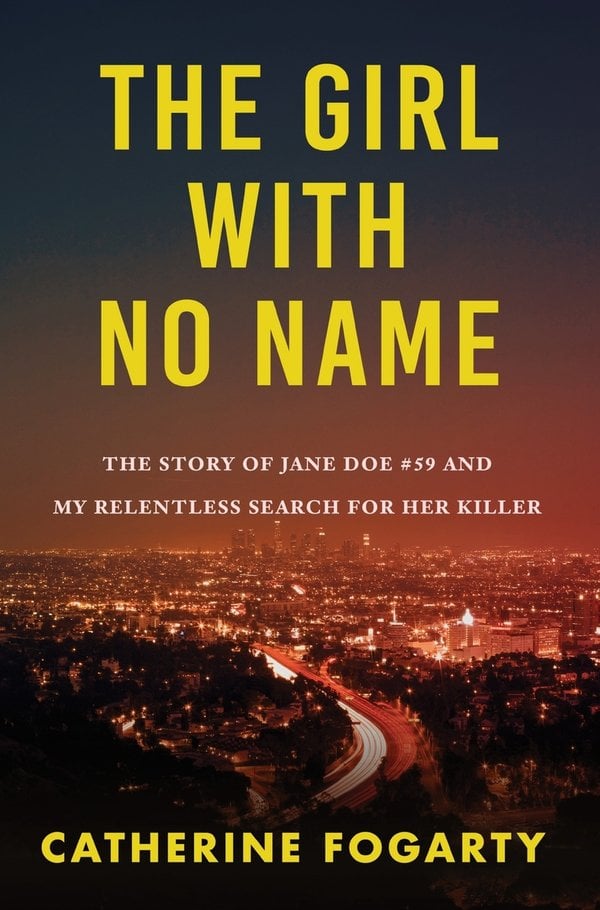
Excerpted from The Girl with No Name: The Story of Jane Doe #59 and My Relentless Search for Her Killer by Catherine Fogarty © 2026. Published by HarperCollins Canada. All rights reserved.

Catherine Fogarty
Catherine Fogarty is an accomplished television producer, writer and director. She is the founder and president of Big Coat Media, an award-winning production company that has produced the award-winning HGTV series Love It or List It. Catherine is also the writer, producer and voice of Story Hunter Podcasts, a narrative true crime podcast. Catherine’s first nonfiction book, Murder on the Inside: The True Story of the 1971 Kingston Penitentiary Riot, was shortlisted for the Speaker’s Book Award and the Brass Knuckles Award for Best Nonfiction Crime Book of the Year, and won the Marina Nemet Award in Creative Writing from the University of Toronto. Her second book, Someone You Know, a collection of Canadian true crime stories, was a national bestseller. Originally trained as a social worker, Catherine holds a BA in sociology/anthropology, an MA in social work, an MBA in human resource management and an MFA in creative nonfiction writing from the University of Kings College. She divides her time between Toronto and Los Angeles.