
Charles Ardai on Noir, Comics, and the Ongoing Adventures of Hard Case Crime
The venerable writer and publisher is carrying the mantle for classic crime fiction, and he's busier than ever.
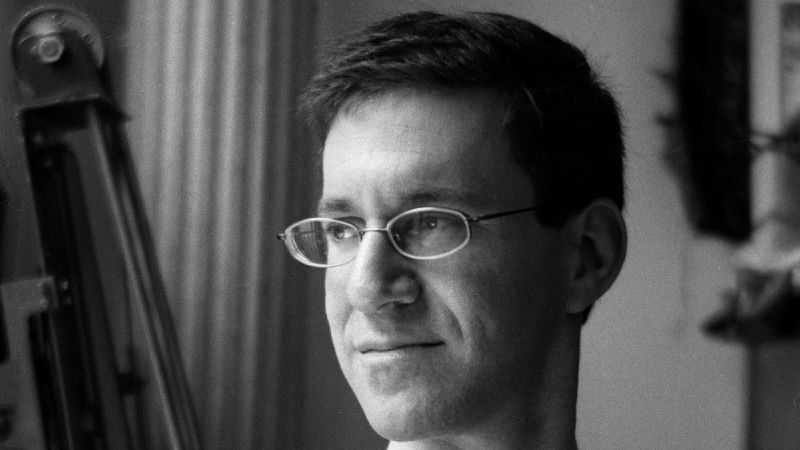
Charles Ardai is the editor and publisher behind Hard Case Crime, which since 2004 has published new books and reprinted old books by legendary writers and newcomers and forgotten ones, from Lawrence Block to Joyce Carol Oates, Christa Faust to Erle Stanley Gardner, Steven King to James M. Cain. Ardai is also the Edgar and Shamus award winning writer of novels like Little Girl Lost, Songs of Innocence, and Fifty-to-One, and the story collection Death Comes Too Late. Since 2021 Ardai has been writing comics starting with the miniseries Gun Honey, about Joanna Tan, who can supply any weapon anywhere, for a price. The comic has gone on to have both sequels and spinoffs. The collection of the most recent, Heat Seeker: Exposed comes out this month, and next month sees the release of a new miniseries Gun Honey: Doubles Down.
Ardai and I exchanged emails to talk about the challenges of writing comics, the joy he’s found from working in a new form and a new genre, and some of what we can expect from the Hard Case Crime imprint next.
You wrote about the anagrammatic origin of Gun Honey in the comic’s first collection, but I wonder if you could talk about where the idea of Joanna and her job and how this story evolved.
Ah, yes, the anagrams! As I’ve explained, “Gun Honey” is an anagram of the name of my friend Euny Hong, an excellent writer in her own right; meanwhile, “Dahlia Racers,” the heroine of the Gun Honey spinoff Heat Seeker, is an anagram of “Charles Ardai,” and the Russian dictator in the upcoming Gun Honey: Doubles Down, “Dmitri Vulapin”…well, you can figure that one out on your own.
Having come up with the title Gun Honey thanks to the anagram, I asked myself what a book called Gun Honey might be about. A female character, presumably, and one who has a talent for doing something with guns. But a talent for merely using guns seemed far too obvious – how many stories have we all read about secret agents and assassins and such? So I thought: what if she doesn’t use guns, she supplies guns for other people to use? That seemed more promising. Fresher, at least. So I built from there: Joanna Tan is a refugee from Singapore, grew up in a criminal family, fled to the U.S. when her family was killed, and reinvented herself as a weapons expert: she’ll get you whatever weapon you need, when you need it, where you need it, no matter how difficult, if you pony up her not inconsiderable fee. But when a U.S. government agency offers to do so, she turns them down. She’s a criminal, but she draws the line at working for the government. And when I had all that in my brain I decided there was enough there to make a good story.
What made the idea a comic as opposed to a novel when you first thought of it?
It could’ve worked as a novel – and I might write a novel about the character someday. But what happened was that the publishing company we work with to put out our Hard Case Crime novels, Titan Books, also has a division that publishes comics and graphic novels, and we’d been putting out Hard Case Crime comics with them for a few years, and I’d promised Titan that I’d write a comic for the line myself at some point, and when the idea for Gun Honey came to me, I happened to be looking for a way to fulfill my promise to them. And I thought that a very beautiful female weapons expert, inspired by characters like Modesty Blaise and Barbarella, could work nicely in the visual medium of comics – especially when you add in picturesque international locations and big, cinematic stunts.
Joanna of Gun Honey and Dahlia of Heat Seeker are interesting characters and they have unconventional jobs. Joanna supplies guns, Dahlia helps people disappear. Neither of which is always technically illegal.
Well – supplying guns may not be illegal, but getting one into a maximum-security prison is, or a taser into the Vatican, or an undetectable single-shot pistol into the Kremlin, as Joanna is called upon to do in the upcoming series. If all you want is a regular old .22 for pinging tin cans in the back yard, you can go to your local gun dealer. You only go to Joanna if you’ve got something a little more difficult in mind.Dahlia’s another story: she’ll help you disappear if you’ve been marked for death, and she generally does that by faking your death, using techniques of disguise and deception, and you’re right that’s not inherently illegal. But the people she’s trying to deceive are killers, and they don’t take kindly to being crossed – so there’s no shortage of crime going on around her, and she wouldn’t survive very long if she refused to cross over into criminality herself from time to time.
How have you been finding comics? Because writing a comics script and collaborating with an artist is such a different thing than writing prose. What’s been the biggest learning curve for you?
I love it! I’ve been a comic book reader since I was a kid– The Flash was my book, growing up– and getting to write comics was a big bucket-list item for me. You should see the ear-to-ear grin on my face when my comp copies come in and I get to see my characters having the sort of four-color adventures I’d’ve killed to read when I was a pup. Is there a learning curve? Sure. As a novelist, you can make each chapter however long you want, but a comic book issue has to be exactly 22 pages, not 21, not 23; and you can only fit so many panels on a page and so many speech balloons in a panel. There are all these constraints – it’s a little like writing a sonnet, which can’t have 13 or 15 lines. But constraints can be exciting too – they’re a challenge, and no one who comes up with anagrams for fun would shrink from that sort of challenge. As for collaborating with the artists, that’s the best part: I dream up a location, a situation, a set of events and days later I see them come to life, often looking way better than I’d even imagined. When you write a TV script, you’re always getting notes from the network or being told the budget won’t permit what you had in mind – but with comics, you’re not limited by budget and no one interferes. Anything I dream up, these guys can draw!
It can be like a sonnet. There is a way in which comics are about unlimited possibilities of setting and design, but also about limitations of size and space.
A comic page is smaller than a sheet of printer paper, and each panel on the page is smaller still. We think of the movies as “the big screen” and TV as “the small screen,” but in some ways comics are the smallest screen of all! And yet: in those tiny little panels, you can fit the whole universe, if you use them right. I’m always asking myself: what’s something we’ve never seen before? What would make my readers’ hearts race or jaw drop if they turned the page saw it? It’s one of the most purely enjoyable writing challenges I’ve ever faced.
The characters of Joanna and Dahlia are different and that plays into their stories and not just their characters, but how have the artists, Ang Hor Kheng and Ace Continuado, helped to shape the comics?
Both artists are wonderful, and their styles are very different: Ang’s style is a meticulous, detailed pen-and-ink look reminiscent of a young Frank Frazetta – lots of crosshatching, lots of deep shadows – while Ace’s style is this very clean, dynamic line with tons of motion, almost like a movie storyboard. And the different styles do shape how the two characters come across. Joanna is more brooding, darker; Dahlia more reckless, wilder. I’ve said that Joanna is more Christian Bale and Dahlia more Tom Cruise – I suppose I could’ve said that Joanna is more Daniel Craig, Dahlia more Roger Moore. They both get into deadly scrapes and escape by the skin of their teeth, but Joanna sweats a little more, and bleeds more too. Dahlia has a bit more Errol Flynn derring-do to her.
You mentioned the deeply under-appreciated Modesty Blaise and she was a character I was reminded of, and working in a different genre seems to have excited and energized you.
A different genre and a different medium, yes. Our prose novels are more in the tradition of Raymond Chandler and James M. Cain and David Goodis: detectives and adulterers and murderers and thieves, down on their luck and scrabbling to survive. Moving into the comics medium freed me to explore the adjacent but very different tradition of James Bond and Mission Impossible: less desperate, moody noir and more kinetic, sexy action/adventure. My heroines do have their moody noir moments, but they’re couched amid big set pieces that take us to the Black Sea or the Italian Alps, and we’re never far from a fusillade of gunfire, a leap from the back of a moving motorcycle, or a femme fatale slipping out of her clothing. I do find it energizing — who wouldn’t?
Heat Seeker: Exposed is your sixth comics miniseries and you’re about to launch the seventh. And you’ve added characters and the world has grown. How much planning do you do for the comics?
I wish I could tell you I planned it all out from the start, but I’d be lying. When I wrote the original Gun Honey, I had no idea how well it would do or whether I’d ever get to write a second. I think we were all floored when Issue #1 wound up being the top-selling indie comic of the year! So a second series became a must, but even then I had no idea if there would be a third, and I didn’t know if fans would tolerate my introducing a second lead character in a spinoff, so I’ve been seat-of-the-pantsing it the whole time. I only think far enough ahead to be sure I have a good story to tell in the particular 4-issue series I’m writing at the time. As long as I have a good premise and a good ending and some twists along the way, I know I’ll be able to give readers a fun read this time around. Next time will take care of itself next time.
Does that differ from how you’ve written other work? The John Blake novels for instance?
Actually, funnily enough, no. I’m kind of a seat-of-the-pantser at heart, I guess. I belong the old school of pulp fiction writers who pounded at their manual typewriters with the landlord at the door demanding the rent – no time for grand plans, or even second drafts. You tore the sheet of paper out of the typewriter, handed it to your editor, he set it in hot lead, and your words were on the newsstand a week later. When I wrote Little Girl Lost, my first John Blake novel, I didn’t have any idea that John would return for a second. Then I had the idea for Songs of Innocence, so he did. But neither of those books had a second draft. The words came out of my head onto the page and that’s the way they appeared in bookstores. I’d be ashamed of it, but Little Girl Lost was nominated for the Edgar and Shamus Awards and Songs of Innocence won the Shamus, so I guess it worked out okay.
One of the highlights of the Hard Case novel line has been the covers and you have a lot of different covers for the comics, working with different artists and photographers. Did it feel like a natural extension of how you’d been working and thinking? Or does part of you still go, we need how many variant covers?
The covers are a crucial part of Hard Case Crime’s identity – our books are not just a certain type of crime fiction, they’re also physical artifacts that have a certain look. And that’s true for both our traditional novels and our comics. The difference is that we use a wider range of styles on our comic book covers – they don’t all need to look like a 1950s painted paperback novel cover, we use pinup art styles reminiscent of different eras – and that while each of our novels has just one cover painting, as you say we might have a dozen different “variant” covers for some issues of a comic. The sheer volume of cover commissions in the comic world can sometimes be daunting – and costly! – but it’s worth it, because I love giving a wide range of artists the opportunity to draw my characters and fans seem to love having a variety to choose among or to collect. If people wanted fewer covers, they’d let us know and we’d publish fewer. But we hear the opposite: they enjoy the covers, and we’re happy to keep them coming.
Is there anything you can say about upcoming Hard Case comics, either new work, or maybe some reprints of older comics?
I introduced a character in Heat Seeker; Combustion named Evie Parker, who began as an adversary but (spoiler alert!) wound up falling in love with Dahlia, and they’re now living together, raising a sort of surrogate daughter as a couple. And Evie has turned out to be so much fun to write that I’m giving her a spinoff series of her own. I’m still writing the scripts and haven’t even settled on a final title for the series yet, but I’m very excited about this one. Evie is a professional soldier, a trained killer who has been genetically altered so she can’t feel pain – but she’s also a huge geek whose dialogue is peppered with references to Star Trek and The Princess Bride and comic books, of which she’s an avid reader. She’s a bit of a wish-fulfillment character – all comic book heroes are, right? – but she’s also complex and funny and interesting, and I sit down at the keyboard each day excited to find out what she does next.
Hard Case did publish a great collection of your short fiction a couple years back, are you still writing prose or working on something new?
I’d like to! But comic books have consumed me for the past few years – the success of Gun Honey has just kind of sucked me into a comic-book-creating vortex. But as vortexes (vortices?) go, that’s not a bad one to find oneself in. The book you’re referring to, Death Comes Too Late, collected (to celebrate Hard Case Crime’s 20th anniversary) 20 of my short stories, including the Edgar Award-winning “The Home Front” and I was really grateful to get to do it. I’d love to write another novel. Maybe this is the year for it – I definitely have ideas. Just haven’t had the time to sit down and focus on it.
In 2026 the Hard Case Crime novel line is releasing four books, two each by Max Allan Collins and Joyce Carol Oates. But after a quieter 2025, the imprint is still going strong with more new books and reprinting of older books?
We have intentionally scaled back the number of books we publish each year – at our peak we were putting out a new title every four weeks, and it was exhausting, since Hard Case Crime is a one-man labor of love (two with my co-founder Max Phillips, who does all the graphic design for our covers, but it’s just me on the editorial side), and even I only work on it part-time while also trying to find time for my own writing and other projects. So now we’re generally only doing four books per year, and that enables me to focus more closely on each one. We’ve never before filled a year’s calendar with two books each by two authors, but that’s the way the dice fell this year: we got the chance to work with Joyce Carol Oates to bring out several of her “Rosamond Smith” novels in time for the 40th anniversary of that pseudonym’s creation, and Max Allan Collins came up with two ideas for novels that both had to come out in 2026: a sequel to Dashiell Hammett’s classic The Maltese Falcon, which entered the public domain in the U.S. on January 1, and a new novel about his hit man character, Quarry, to commemorate the 50th anniversary of the character’s first appearance, back in 1976. (No other American mystery novelist has ever written a series of books about the same character for 50 years before – Agatha Christie did it in England, with Hercule Poirot, but no American has!) So this year it’s Oates and Collins, Collins and Oates. But 2027 will be four authors again: in addition to one more from each of Collins and Oates, there will be a lost pulp crime novel by the 91-year-old science fiction grandmaster Robert Silverberg, and a delicious and unusual volume by mystery grandmaster Ellery Queen!
A lot has been written about the death of the mass market paperback, which is of course connected to the rise in ebooks, but I am curious what that’s looked like from your perspective as a publisher and editor, and how has this changed the way the imprint works and the business side of things?
We started out publishing mass-market paperbacks, those wonderful pocket-sized volumes that resembled the sort our parents and grandparents carried on trains and read in motel rooms and that famously were sold in wire spinner racks in drugstores throughout the 1940s, 50s, and 60s. But the format started to change in the 70s and 80s – more brick-sized bestsellers with all-type covers, fewer slender noir crime stories with painted covers – and then started to die in the 90s and 2000s as the economics of the business and the distribution channels changed. Eventually, stores stopped wanting to carry these low-priced, pocket-sized books (though I don’t think readers ever stopped enjoying them), and as a publisher you could find yourself shipping a thousand copies to Wal-Mart or the airports and getting 700 or 800 or even 900 of those copies returned, destroyed, for a full refund. No one can stay in business with a 70% return rate (never mind 80% or 90%), and in fact the first publishing partner we worked with, the venerable Dorchester Publishing, which put out books only in the mass-market format, did go out of business.
When we hooked up with Titan Books after Dorchester’s demise, they made it clear it would be trade paperbacks and hardcovers only – but every publisher that offered to work with us said the same thing, so it wasn’t really a choice. We had to publish in a larger format or not publish at all. Meanwhile, ebooks have become a big part of any book’s sales, as you say – but we find this is a somewhat smaller effect for us, since our fans seem to really love our books as physical objects, with the art on the cover being as important a part of the package as the words on the page. So while we do see sales in ebook and we’re grateful to get them, physical printed copies are still the lion’s share of what we put out into the world. If that ever went away – and with enough time it might – I don’t think I’d want to do Hard Case Crime anymore. Another different line of books, maybe – but Hard Case Crime is first and foremost about ink on paper, and remembering a time when that’s the only thing “book” meant.
This is not one of my favorite books you’ve done, but I loved the “double” book you did of Lawrence Block’s Strange Embrace and 69 Barrow Street. Any chance you’ll do that for more books?
We did one other: a pair of novels by Robert Bloch (author of Psycho) titled Shooting Star and Spiderweb, which we published in a paperback edition. That was years ago, so you might have to hunt down a used copy if you want to get it. We had a lot of fun doing both those volumes, but it’s unlikely we’ll do more — stores don’t really seem to like them, plus you have two front covers and no back cover, so no place to put descriptive copy (if it’s a paperback, meaning no flaps) — and for good measure, one of the front covers has to get defaced with a bar code! And I’m not even sure readers especially love the format. But it was a part of the vintage paperback tradition — Ace was famous for its “Ace Doubles” line — so I’m glad we got to explore it a couple of times.
You’ve published new books by younger writers, reprinted older books by writers, a collection of the crime stories of Ray Bradbury, never before published books by James Cain, Lester Dent, Samuel Fuller, Mickey Spillane– are there still people or projects you’re thinking about, hoping to work with? I guess I’m asking whether how you think about the line has changed as you’ve done so much of what you set out to do, and what you want to do going forward?
It’s true, we have now done much of what we set out to do – when we started out I had a list of my favorite undeservedly forgotten novels and authors, and we’ve brought pretty much all of them back into print. In addition to the authors you mentioned, we’ve gotten to work with Stephen King and Michael Crichton and Brian De Palma, gotten to unearth lost work by Erle Stanley Gardner and Gore Vidal – giants. And we’ve also gotten to champion new voices and won awards and all the rest. If it ended tomorrow, I’d be content. More than content – when it all began, I thought for sure that Hard Case Crime would last a year or two, Max and I would have half a dozen or a dozen books on our shelves we could be proud of, and that would be that. Now, here we are, twenty years and well over a hundred books later. It’s remarkable – and it’s plenty. But as long as there are still fun things to do and readers are excited to discover them with us, why not keep it going? There are writers, both living and dead, that we haven’t gotten to publish and would love to – not as many as there were in 2004, but some! Sometimes I hear from them (the living ones, of course), and they say, “I have an idea for a Hard Case Crime novel, if you’ll just be patient until I have a break in my schedule…”
We can be patient. Pulp fiction may be written best at a white-hot tempo, but any hardboiled detective also knows the job is sometimes a waiting game. So we sit in our favorite corner, sip from a rocks glass, and watch through the slatted Venetian blinds for a furtive figure to show up with a manuscript in his hands. The sun may be going down – but it’s not down yet!

Alex Dueben
Alex Dueben has written for The Believer, Vulture, The Millions, The Los Angeles Review of Books, The Brooklyn Rail, and many other publications. He is the writer and editor of the artist monograph Hurricane Nancy, and his debut novel is forthcoming.