Ciphers, Codes, Challenges: 8 Thrillers That Feature Puzzles
S. C. Godfrey recommends Stella Sands, Janice Hallett, Jeff Macfee, and more
When I was a kid, my aunt Julie kept fascinating books on her coffee table. Sometimes children’s books, sometimes art books, they were always spectacular stories that drew me in like a magnet every time I visited her. One year, my aunt had the intriguing and visually gorgeous book, Masquerade by Kit Williams. Williams is a British artist whose full spread paintings are pleasingly lush, but the story was the true gem: each page was a riddle in both text and illustration, and the overall riddle lead to a real, actual treasure buried in the English countryside.
Alas, the treasure was found long before I met the book, by a clever riddle-solving reader in the 1980s. But the idea of a book with riddles and a real outcome kept a firm hold on my imagination.
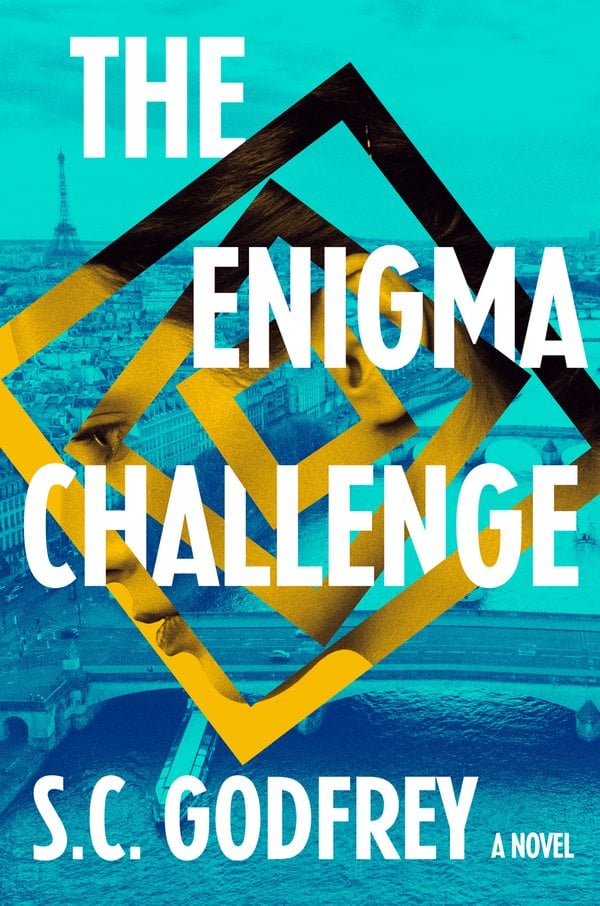
When I sat down to write my novel The Enigma Challenge, the idea of puzzles in a book was right there, with characters who discover codes in a book that lead to treasure, albeit in their world. At first, I planned to create puzzles similar to Masquerade’s, or hidden riddles coded within illustrations, but I decided that it wouldn’t be fun without the whimsy of artwork.
Instead, I focused on codes and ciphers, creating a high-stakes world in which the punishment for not cracking the codes is that your identity is deleted—wiped; every digital trace of money and credit and personhood gone.
Not being much of a puzzler myself (I had never managed to solve the puzzle in Masquerade), I set out to learn all I could about codes and ciphers. What I learned while creating various substitution ciphers is that while I do enjoy giving my mental muscles a yoga-like stretch, I want to be in the mood for it. Sometimes we want the puzzles to be solved for us by clever fictional sleuths.
So with that, here are eight thrillers with puzzles and codes. Dan Brown is not included here, although we salute him for his contribution.
*
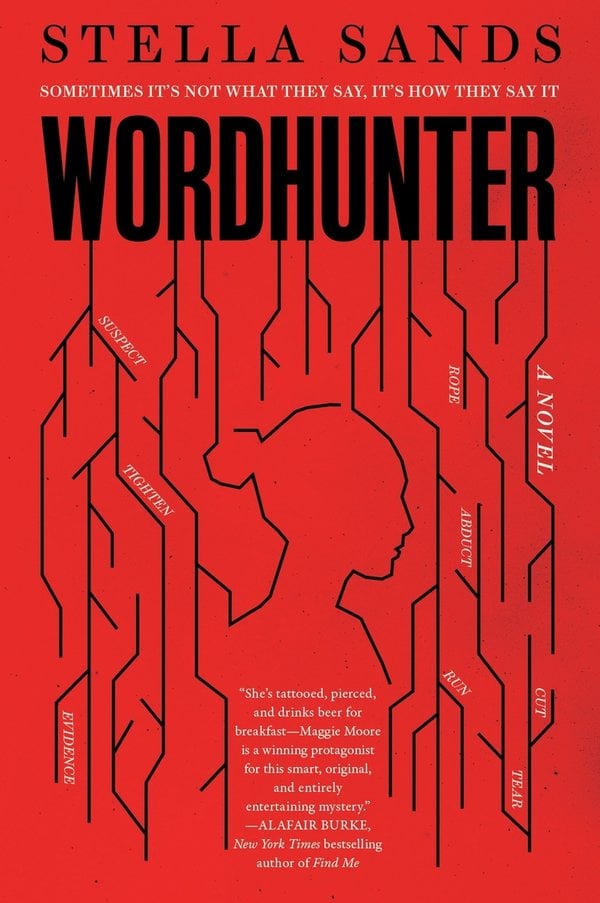
Stella Sands, Wordhunter
Maggie is a genius linguist who can identify nearly anyone based on their syntax and sentence structure. With that incredible skill set, she’s tapped by the police to help find a kidnapped woman and soon sees similarities between the case and that of her childhood best friend, Lucy, who disappeared when they were kids. Maggie, who gives Lisbeth Salander vibes, is a compelling genius and the story is a twisty, thrilling delight.
And as a bonus, Sands’s follow up, Codebreakers, featuring Maggie and her detective partner, releases on August 11, 2026.
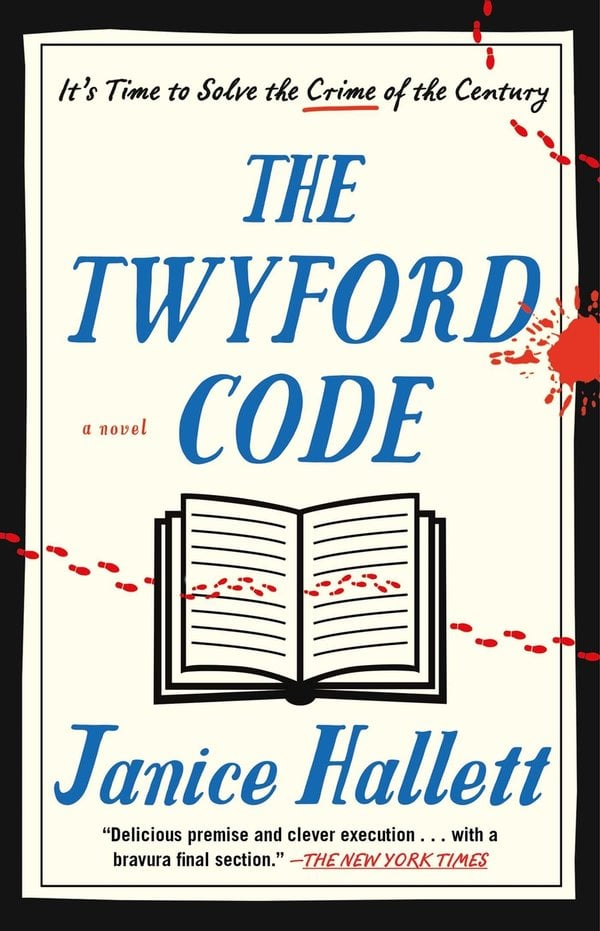
Janice Hallett, The Twyford Code
The setup for this mystery is intriguing: a boy named Steven finds a children’s book with its margins are full of strange markings. His English teacher thinks there is a secret code that run through the (fictional) author’s books, and then she disappears. Now, Steven is grown and freshly out of prison, and he wants to investigate whether the children’s book author really did create a code—or did she?
The narrative is told through Steven’s audio recordings and letters, featuring codes and acrostics and plentiful red herrings.
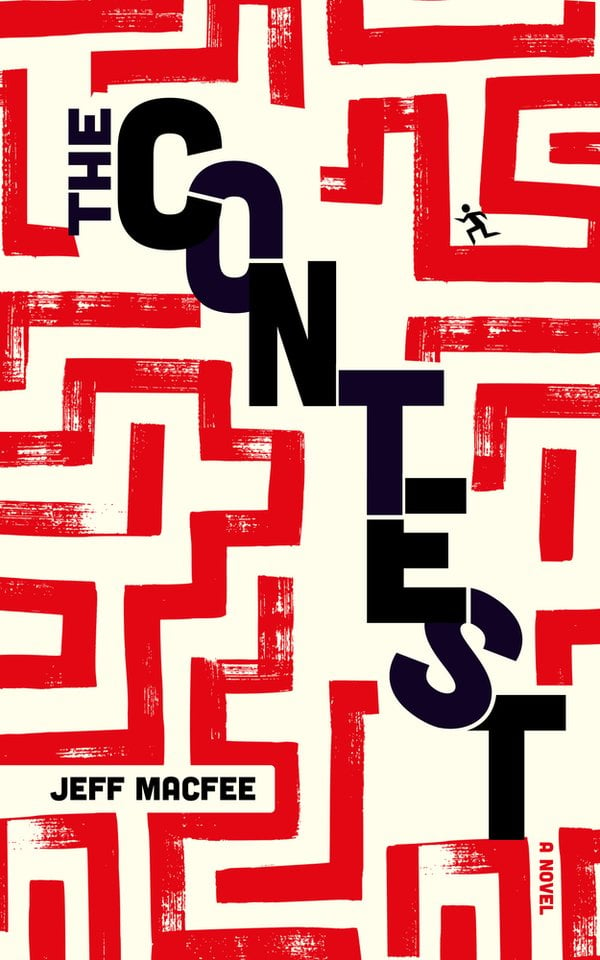
Jeff Macfee, The Contest
As a kid, Gillian Charles was a puzzle-solving prodigy, but lost a big contest. Now she’s an adult and needs cash to help her ill mother, so when she’s asked again to compete, she can’t say no—but there’s a catch: she needs to help uncover who’s cheating the game. Naturally, people she knew from childhood are there and things are much more complicated on the adult playing field.
The novel is like an escape room paired with a side of Squid Games and The Queen’s Gambit, and the contest world in this story scratches a competitive itch while still remaining a cozy mystery.
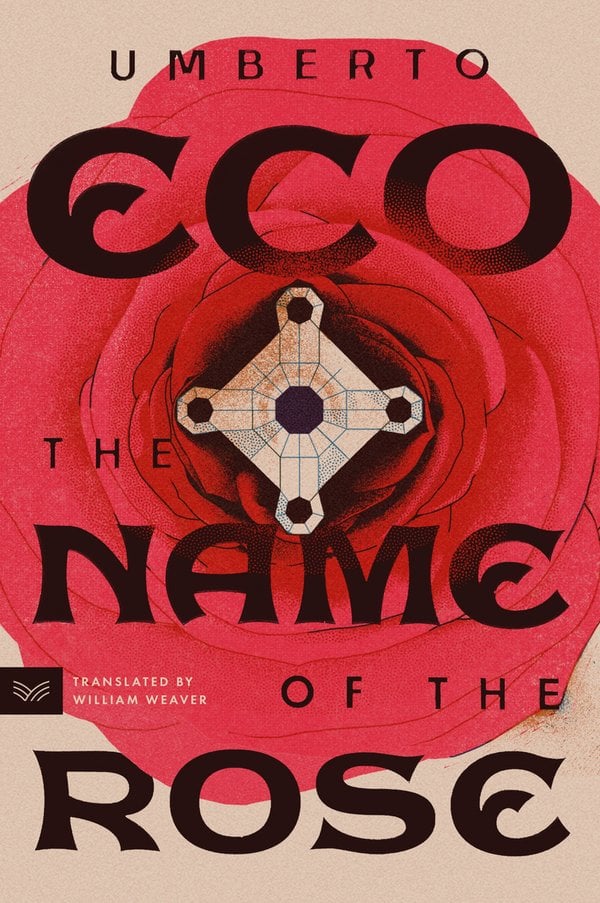
Umberto Eco, The Name of the Rose
This classic is set in 1347 Italy, where Brother William is probing accusations of heresy at an abbey when a series of deaths occur. William assumes the role of medieval Sherlock Holmes and uncovers a series of cryptic clues wrapped up in the biblical Revelations. The story weaves in a mysterious labyrinth in the abbey’s magnificent library, invisible ink, substitution ciphers, and secret manuscripts.
Eco was a scholar and it shows; this epic combines historical fiction with murder and theology that ultimate questions what the ideas of truth and knowledge.
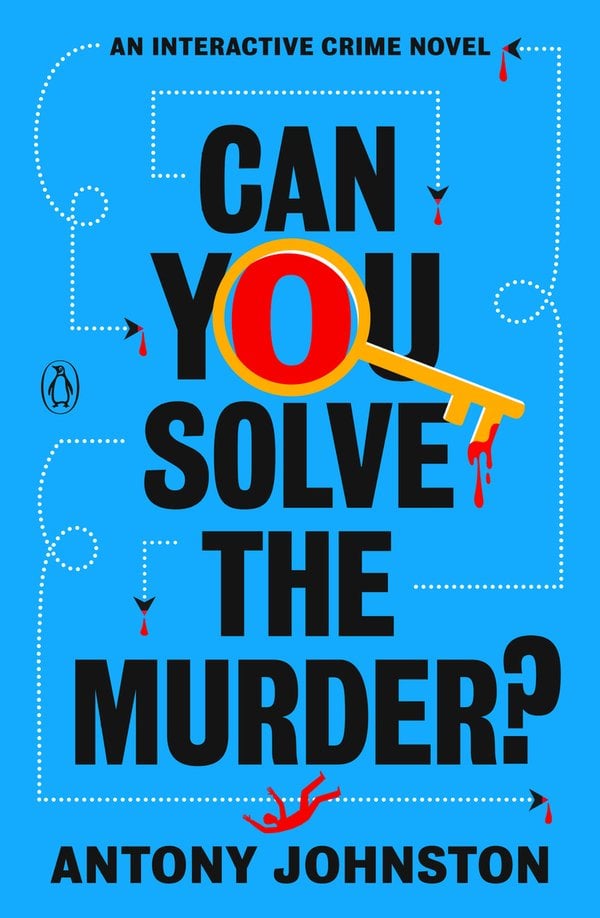
Antony Johnston, Can You Solve the Murder?
A delightful choose-your-own-adventure novel that lets you, the reader, interact with the crime-solving. You start with the news that there’s been a murder at a wellness retreat in the English countryside, and upon arrival find the body of a local businessman with a rose in his mouth. He’s seemingly been stabbed and fell from a balcony. Intriguing! Now you have to decide how to conduct the investigation and who to talk to—and every one of your choices affects what happens next.
For more code-related thrills, see Johnston’s novel The Exphoria Code, which centers around encrypted messages in ASCII art.
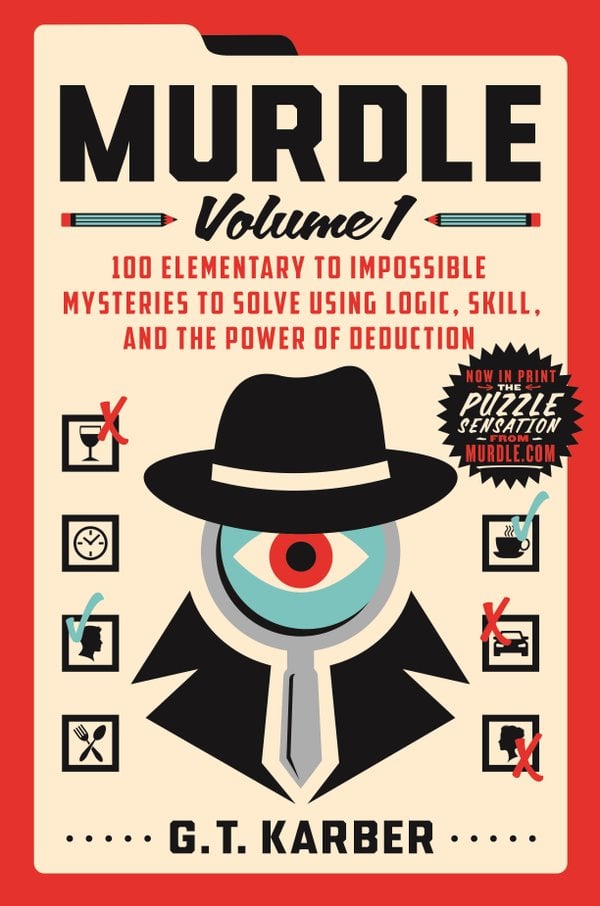
G.T. Karber, Murdle
The blockbuster word-puzzle game that focuses on–you guessed it–murder. Logic puzzles direct you to solve the crimes by figuring out who committed them, where, and with what weapon. As with Can You Solve the Murder?, Murdle is a reader-driven, paper and pen activity, without sacrificing story.
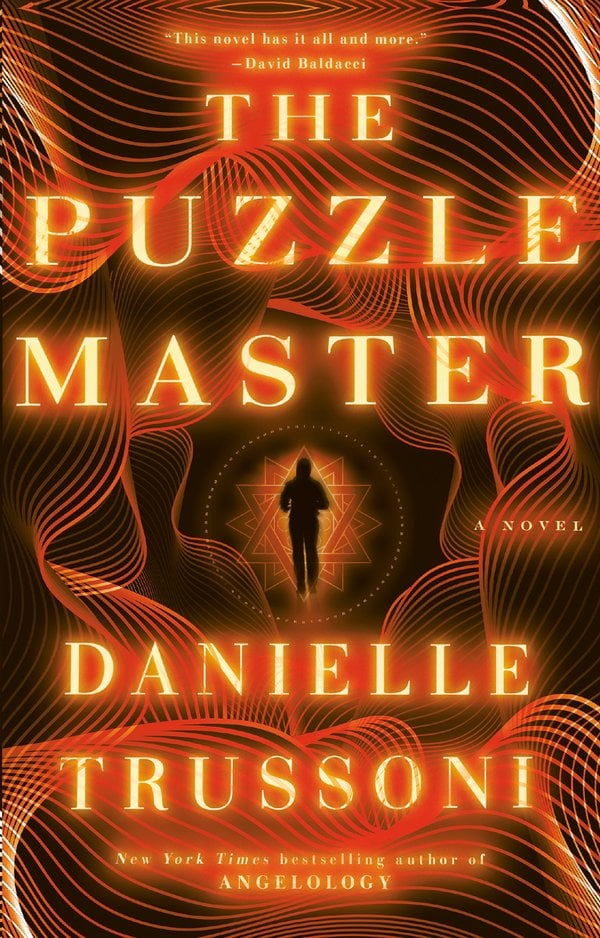
Danielle Trussoni, The Puzzle Master
The hero, Mike Brink, has a brain injury that’s turned him into a puzzle-solving savant. Now, he might be the only one who can solve a mysterious puzzle drawn by a woman who doesn’t speak—and who happens to be serving thirty years for murder.
The puzzle will, it’s believed, lead to the explanation of her crime, and perhaps her exoneration. But Brink is pulled into a much bigger puzzle and it’s deliciously dangerous. Brink’s clever mind spins as he navigates truth, dreams, and diaries to solve a mystery rooted in thirteenth century mysticism and the very core of creation.
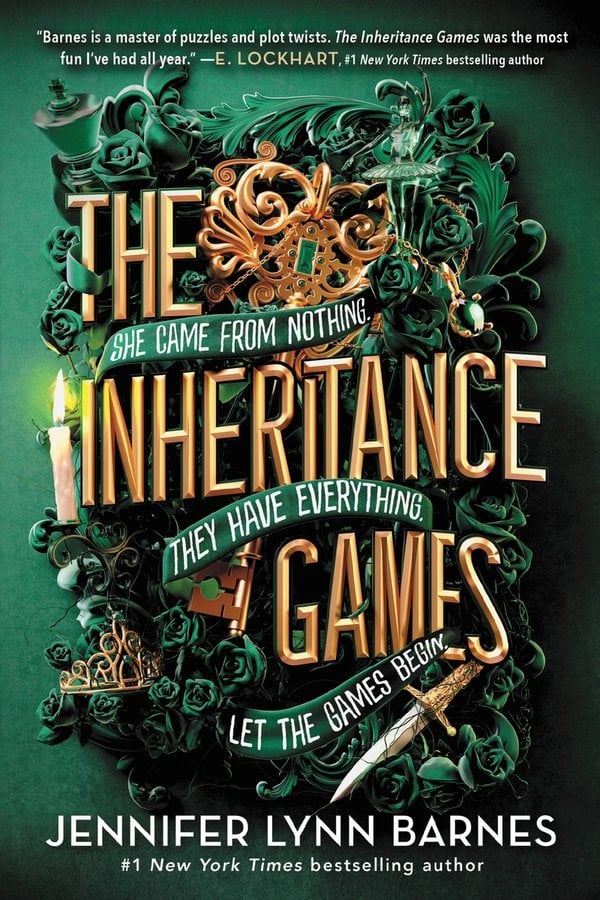
Jennifer Lynn Barnes, The Inheritance Games
This is a YA novel that has great adult audience appeal, delivering a solid game-like read. Teenager Avery Grambs is focused on excelling in high school and winning a scholarship to escape the poverty she lives in, but then she’s told billionaire Tobias Hawthorne has left her, and only her, his entire fortune. She has no idea who he is, but he has three adult children and a bunch of adult and teenager grandchildren who are none too pleased with this news.
But to receive the inheritance, Avery has to live in Hawthorn House for a solid year without leaving—and it’s filled with puzzles, clues, and secret passages galore, reflecting Tobias’s love of a puzzle. Hawthorn’s four grandsons all live there too, and you’re never quite certain whether they’re attracted to Avery or resent her. Soon, Avery finds herself playing the old man’s games, as he intended, and coping in this new world of twisty puzzles.
The whole series is deliciously primed to please our love of puzzles, and Barnes delivers a pleasing blend of romance, intrigue, and mystery.
***

S. C. Godfrey
S.C. Godfrey spends her days dreaming up fast-paced, exciting thrillers, reading as much as possible, and feeding a murder of crows. She lives in the Bay Area with her family. The Enigma Challenge is her first thriller.