Clay McLeod Chapman on Why Horror and Romance Work So Well Together
Exploring the thematic intersections of bodice-rippers and chest-bursters
Don’t be afraid to open your heart to horror.
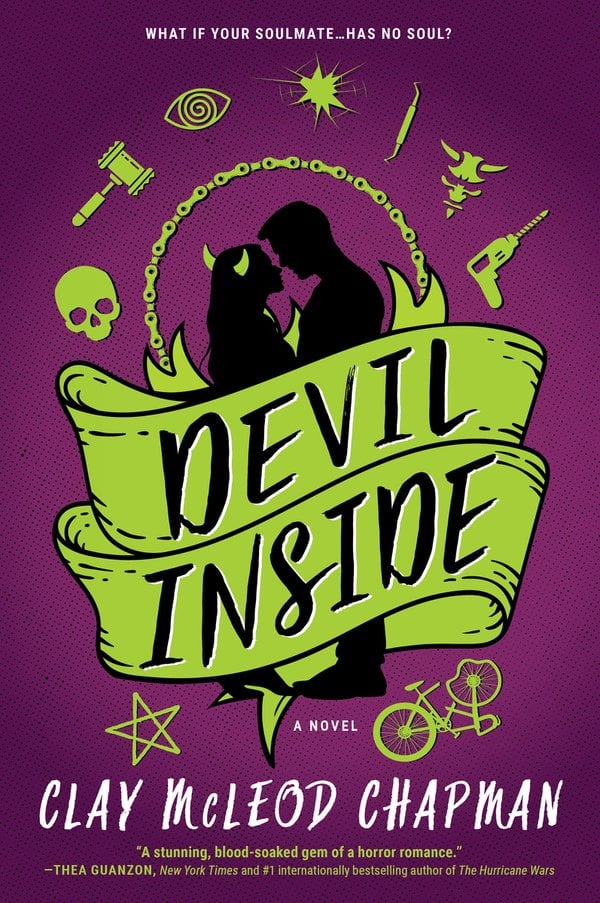
As I’ve gotten closer to the release of my upcoming horror-romance novel Devil Inside, which is all about a man with no soul falling in love with a demon looking for a vessel to possess, I have encountered several readers who say one of the following:
Horror readers: Oh—I don’t read romance.
Or:
Romance readers: Oh—I don’t read horror.
Same for reader reviews, now that they are beginning to trickle in on Goodreads and StoryGraph. It’s a familiar refrain: Normally, I don’t read romance…
Or:
Horror isn’t usually my thing…
These two genres aren’t as clashing as one might think. Horror and romance have always gone hand-in-hand. More so now than ever. Funny to think how both horror and romance are often maligned as lesser genres. We chalk them up to guilty pleasures…
Well, I am here to tell you: There is no shame in reading horror-romance! Be loud and proud of your Brynne Weaver! Your Sarah Gailey! Your Isabel Cañas!
First up, let’s talk about devotion: Romance readers show up. They buy books. Lots of books. $1.4 billion in annual revenue, I hear. That’s a lot of sprayed edges.
Horror readers, too. The genre is having its own publishing renaissance right about now, cited as one of the fastest growing genres, having doubled its growth over the last decade. Horror even took the Pulitzer!
In film, we often talk about how horror props up the rest of the industry with its low-budget features and stratospheric box office returns. Look to Backrooms, look to Obsession. And it’s not only financial optics; horror is also getting the begrudging respect of its peers. Look to Sinners and Weapons at the Oscars.
But most of all, just look to the fans.
Whether it’s at the cineplex or your local bookstore, we show up. There is a hunger for it, a downright desire for all-things horror and romance…so just imagine when these two blend together in a chocolate-peanut butter super-genre.
Horrormance.
Let’s talk about where these two genres intersect and what they offer readers….
*
Horror as Emotional Highlighter, Romance as Operatic Spotlight
At their very core, both horror and romance are operatic genres. In romance, the stakes always feel as if they are life-and-death, while in horror, most times, they quite literally are. Horror is an emotional highlighter. Characters are given permission to feel everything with all their heart: Fear, love, rage, anxiety. Our feelings are cranked up to eleven. There is no time to second-guess oneself when you need to survive.
Romance is the same. Horrormance allows readers to tap into those emotions writ large. Everything matters. Do or die. Blending these emotional elements not only elevates the stakes for our characters, but it permits readers to tap into those feelings as well. Matters of the heart matter more, whether that heart is pounding deep within your chest or bursting out from your ribcage.
When I dove into Devil Inside, I wanted to explore the messiness of love. The rawness of it all. I gave myself permission to write about Big Feelings, elevating every emotional beat of two individuals—one human, the other not—who lose themselves within one another, until they burst into flames.
That all-consuming quality of love whipped itself into such a fever pitch on the page, the very gestures themselves—romantic or horrific—became operatic in scale. It’s still a small story, at its heart, but the emotions swell to the scale of tragedy. What if you blended Romeo and Juliet with The Exorcist? I’ll show you…
*
The Mechanic of Denial and Drawing Out Suspense
Horror and comedy are often comped, drawing parallels between the set-ups and executions of a gag or kill, but I think there is a similar kinship between romance and horror as well, particularly when it comes to the build-up and drawing out of suspense.
The mechanics behind romance and horror share a similar interest in denying its readers release, sustaining a level of tension that keeps their audience on edge. If we consider the slow burn anticipation found within both genres, we see how they work:
In horror, we stretch the tension out for as long as humanly possible to create a sense of dread. Where’s the killer hiding? When’s the jump scare going to happen? The build-up of suspense is an anxiety-inducing tool, slowing things down in order for our audience’s imagination to fill in the silences, imbue every shadow with something monstrous. Something will eventually happen, whether it’s a cat springing out from behind the closet door or a slasher popping up to finally dispatch our victim… but when? How long do we have to stew in our own dread before our mounting dread is granted sweet release?
In romance, that suspense is there in a will-they-or-won’t-they manner. When are these two lovers going to get together? When will they see that they are meant to be together? The build-up here can truly reach agonizing lengths, where readers are desperate for the dam to break and our potential lovers finally consummate their love. How much fun it is for an author to sustain that level of anticipation, the bated breath between suitors, for immeasurable stretches, before finally letting our lovers loose. That first kiss can be a killer.
The eventual pay-off and release of tension gratifies the reader/viewer in different ways, but the build-up is key here. Authors withhold that release of tension for as long as humanly possible. The longer, the more gratifying the eventual release…or a happy ending.
Speaking of which….
*
Who Believes in Happy Endings These Days?
Something I’ve noticed lately is that readers have been coming to horror to find hope. Within the genre, audiences seem to need a means in which to process, perhaps even exorcise, their own anxieties about the modern world. Bleak books don’t seem to be as appealing to readers right now.
That’s not to say there can’t be a bleak streak within a story—it simply seems to mean readers are eager to find a spark, a glimmer of hope that compels them to turn the page, to persist, to survive. When the world itself is as bleak as it is, with the ennui of news and the malaise of social media overwhelming a lot of people, they are turning to horror as means of escape. Of survival. Of finding ways to fight back.
They need hope in their horror because the world itself isn’t offering it to them.
Funny how romance has its own promise of hope:
The HEA—aka, Happily Ever After.
For a romance to fulfill its genre-promise, it needs to give readers an HEA. That said, there are a multitude of happy endings to be found within both horror and romance. One protagonist’s HEA is possibly another’s death sentence. A Happily Ever After for me might be the demise of you, who knows? Nobody ever said everybody has to survive.
You just need to provide readers with a glimmer of hope of survival.
We’re living in times where we have to ask ourselves, what even is a happy ending? What is hope in times of intense struggle? Living to fight for another day? Finding love?
With Devil Inside, I found a certain joy in granting an HEA to our core couple, even at the expense of the rest of the world. Happiness in of itself becomes subjective, which brings us back to the horror. In the world within Devil Inside, when characters Jordan and Lilith achieve their own Happily Ever After… that’s when the real horror begins.
Horrormance is here to stay. It’s been here, living amongst us, shifting through the shadows of our shelves, embedded in our books whether we knew it or not. This subgenre is only going to grow, and spread, infecting the rest of your books before you know it.
Who knows? It just might soften the heart of the staunchest horror reader.
Or rip it right out.
***

Clay McLeod Chapman
Clay McLeod Chapman writes novels, comic books, and children's books, as well as for film and TV. He is the author of the horror novels The Remaking and Whisper Down the Lane. Visit him at claymcleodchapman.com. His latest novel, Ghost Eaters, is now available.