
Cliff Dorfman on Crime Families, Loyalty, and Rooting for the Bad Guys in Fiction
The author of Crime Family feels drawn to the family fidelity of fictive mobsters
I wrote a movie about two brothers who beat each other half to death inside a cage, and afterward people kept asking me the same, wrong question. They wanted to know who they were supposed to root for. Tommy or Brendan. The marine or the teacher. As if any story owes you a clean side. As if the whole reason you bought the ticket wasn’t that you were sitting in the dark wanting both men to win a fight only one of them walks away from.
That’s the engine. That’s the thing crime dynasties understand that the rest of our culture pretends not to. We love the family at the head of the table because the family is the oldest lie we tell and the only one we can’t live without. The Corleones, the Sopranos, the Lannisters, the Roys.
We don’t root for them because they’re good. We root for them because they’re loyal, and loyalty is the only virtue that survives contact with everything else we know is rotten. A character can launder money, break a kneecap, bury a cousin in the Staten Island Wetlands.
We forgive Joe Pesci’s portrayal of the ruthless Nicky Santoro in Casino because he makes it home every morning to cook breakfast for his son, no matter what atrocities he committed the night before. We forgive him because he showed up. Most of the people who were supposed to show up for us never did.
I know a little something about families who keep records. I was adopted through an agency in Manhattan that handed me to a couple and kept a secret it never told any of us. I was part of a study. There were others like me, separated on purpose, watched from a distance by men with clipboards and theories, our childhoods turned into data that sit locked away in the Yale University Library system, archived as MS 1585, until October 25th, 2065.
Nobody at that table was loyal to me. They were loyal to their experiment. So, I’ve spent my entire career writing about people who would burn the experiment to the ground for one person who actually belonged to them.
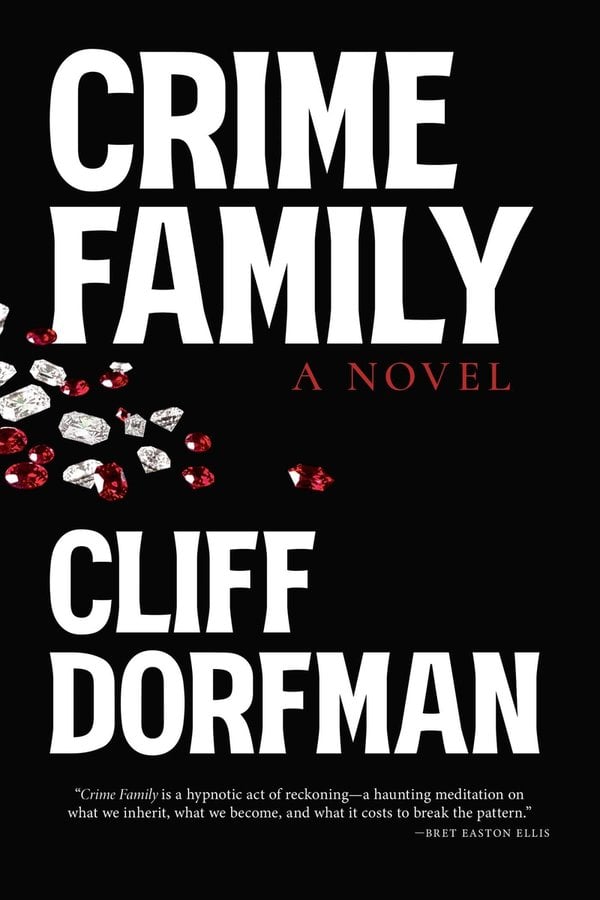
When I sat down to write my novel, Crime Family, I wasn’t writing about gangsters. I was writing about the thing every gangster story is secretly about, the unbearable gap between the family you were given and the family you’d choose to die for. Mob stories are a fantasy of belonging dressed up as a fantasy of power. The power is the costume. What we want is a seat at the table next to someone who would kill for us and mean it.
Morally complicated antiheroes are not a modern invention, and they are not a sign of our decline, despite what the scolds may say. They are the oldest characters in the book. It’s Achilles sulking in his tent while better men die because his feelings got hurt. It’s David sending a loyal soldier to the front line to die after sleeping with the man’s wife, and we still call him a king after God’s own heart.
The Bible is wall to wall with characters we are told to love and condemn in the same breath, and it never once flinches from the contradiction. It understood something we keep having to relearn. A character you can fully root for is a character you’ve stopped watching.
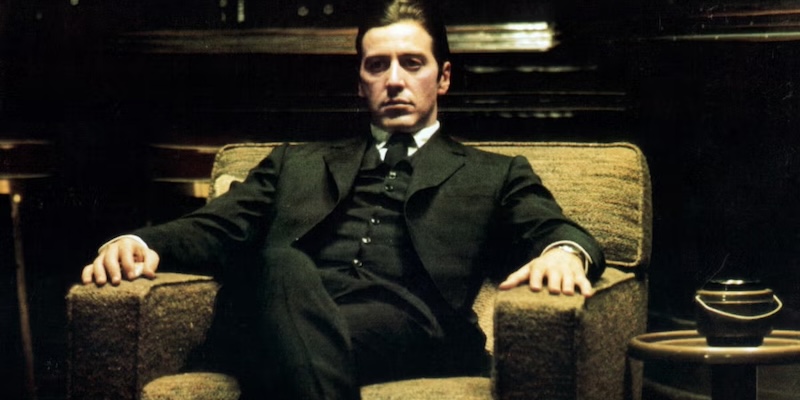
What makes us root for them isn’t the violence. Anyone can write violence. What makes us root for them is the cost. The antihero pays. Tony Soprano can’t sleep. Walter White loses the only thing he was pretending to do it for. Michael Corleone ends up alone in a chair in the cold, having won every battle yet lost the only thing wars are fought for. We root for these antiheroes the way we root for someone falling, hoping right up to the smack of the pavement that just this once gravity will make an exception. It never does. That’s the contract. The crime saga promises you antiheroes who will get everything they want and lose everything that mattered, and it keeps that promise every time.
There’s a darker reason as well, and the genre is honest enough to admit it when nothing else in our culture will. We root for the monster because we suspect we’d be one. Look what happened when someone killed John Wick’s puppy. Put an actual child in danger and watch how fast the PTA parent becomes something with teeth.
The crime story didn’t invent that creature. It simply refuses to look away from it. It tells you the truth polite society spends a fortune to avoid: the line between the monster at the head of the table and the monster in the federal indictment is mostly luck, mostly circumstance, mostly which family handed you which rules before you were old enough to refuse them.
I think that’s why we find it so hard to say goodnight to the bad guy. Every generation announces that the antihero is exhausted, that we want heroes again, that the culture has had enough moral murk. And every generation lines up for the next saga about a family that loves ferociously and lies constantly and would do anything, anything at all, for the people they choose to wrap their arms around and nothing for the people outside them.
Because that’s not a fantasy. That’s a description. That’s how most of us were actually raised, in families that drew a circle and called everything inside it sacred and everything outside it fair game.
The genius of the form is that it allows us all to sit around the table without paying the bill. We get the loyalty without the indictment, the belonging without the body count. Whether it’s three hundred pages or six seasons, we get to find out what it would feel like to come from a family that would burn the world down rather than lose us.
A lot of us only ever find that family in fiction. That’s not a small thing. That’s the whole reason crime families exist.
***

Cliff Dorfman
Cliff Dorfman is a screenwriter, novelist, and director whose work bridges the immediacy of cinema with the depth of literary fiction. He cowrote the acclaimed film Warrior (nominated for an Academy Award for Best Supporting Actor) and was a WGA Award–nominee for his work on HBO’s Entourage. Born and raised in New York but now residing in Los Angeles, Dorfman has spent his career moving between visual storytelling and the written word. Crime Family is his debut novel.