
Cutting the deadwood with Clive Cussler – my Dad
Dirk Cussler on the craft of writing adventure novels with a master of the form.
When the opportunity arose to co-write with Clive Cussler, I thought it would be a uniquely fun experience. After all, he was my father.
I knew Clive as a genial, good-natured man who loved a good laugh. He was the type of person who expected a lot from himself, but not from others. Growing up, I had ducked household chores as a kid, crashed the family car as a teen, and frittered away college tuition money on pizza and beer, all without incurring any lasting parental disdain. I expected our collaboration on adventure stories to be equally lighthearted and unruffled.
And so it was– until I submitted an early chapter in our first book together. I had written a scene in which our protagonist, Dirk Pitt, was beaten to a bloody pulp by a nefarious villain. I had crossed a line with Clive’s protagonist, and the curtain of joviality suddenly came crashing down. It was then and there that I realized the man who didn’t take life at all seriously was dead serious about his writing. Clive knew exactly how he wanted his adventure stories crafted, and he was uncompromising about their execution.
It took me back to when I was six years old, and my father began writing at night and on weekends in my childhood bedroom, which also served as the family den. He had stacks of paperback books on his desk by the likes of Hammond Innes, Donald Hamilton, and Alistair MacLean. Key passages and sections of dialogue were carefully underlined as he studied the contemporary masters of adventure writing like a Rhodes scholar.
Clive brought that same dedication to research into his own stories. He loved history, and early on began incorporating historical hooks as key elements in his books. But he never made these inclusions lightly; they were always thoroughly researched.
In the prologue to Treasure, a Roman legion is attacked by frontier barbarians in 391 A.D. The legionnaires are supported by an historically accurate contingent of Syrian archers and armed with laminated oval shields unique to that particular era of fading Roman dominance. His descriptions of the weaponry, military organization, and battle tactics demonstrated an impressive depth of study.
I was a young teen when Clive wrote his breakout bestseller, Raise the Titanic! He threw himself into researching the Titanic, borrowing every library book he could find on the ship. He joined the Titanic Historical Society to obtain its quarterly journals and enlisted me to stay up with him to watch the British production of A Night to Remember on late-night television. Such was his devotion to the topic that when he purchased and built a Revell plastic model of the ship, he manually extended the lengths of the funnels when he discovered they weren’t properly to scale. The joy he took in his research was reflected in his fictional raising of the grand ship and having it complete its maiden voyage to New York.
I share his passion for research, finding it one of the more rewarding aspects of writing. We often discussed the delicate balance involved in incorporating detailed research into a story. Knowledge of the fine details and nuances of a subject can add great flavor to a scene, but there’s also a risk of information overload. As writers, we become mini-experts on a topic and feel compelled to share our newfound knowledge. One common pitfall involves describing places we’ve visited. A writer on vacation in Dublin might later incorporate a night at a pub into a chapter scene. Eager to share the experience, she spends two pages describing the weathered wooden floor, the dusty bottles of whiskey lined above the bar, and the clover designs of the cardboard drink coasters on the tables. An atmospheric plunge suddenly turns into a boring travelogue.
Those of us who co-wrote with Clive were more than familiar with the crossed-out manuscript pages he would return to us when we got carried away with our own exuberant descriptions.
“Cut out the deadwood,” he would implore. “Make it fly.”
Clive always wanted to drive the narrative forward, but he wasn’t averse to expounding in detail at important points in the story. He might explain an ancient mystery in depth, such as the history of Troy and its related archaeological excavations in Trojan Odyssey. Or he might dive deep into describing an advanced technology incorporated into the story. These passages weren’t intended to demonstrate his knowledge, but to educate readers about elements that ultimately mattered to the plot.
Clive was a product of his time, and that also influenced his outlook on pacing and structure. Going to the movies was a ritual in his childhood, and he religiously attended matinees every Saturday afternoon. The main features were preceded by short movie serials, such as The Hurricane Express, which starred a young John Wayne. I know this because a local Denver television station aired the episodes in the 1970s, and my father watched them every week with a bowl of popcorn, as if he were eight years old again. Each episode was less than twenty minutes long, requiring a quick setup, an action sequence or two, and, of course, an ending cliffhanger. He wrote with that same sort of pacing and visual storytelling in mind. Clive especially relished ending a chapter with a cliffhanger, keeping readers eager to turn the page.
Ultimately, it was the swashbuckling sense of fun those films imparted that most influenced his approach to writing. He was more interested in entertaining readers than impressing them with his prose, and entertainment always took precedence. Clive wanted his stories to be gripping and fast-paced, of course, but the key ingredient may have been the very quality that defined his own character: a genuine sense of fun.
***
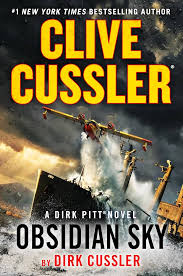

Dirk Cussler
Dirk Cussler is the author of Clive Cussler's The Devil's Sea, and coauthor with Clive Cussler of eight previous Dirk Pitt adventures: Black Wind, Treasure of Khan, Arctic Drift, Crescent Dawn, Poseidon's Arrow, Havana Storm, Odessa Sea, and Celtic Empire. He serves as president of NUMA, where he continues his father's legacy of searching for important historical shipwrecks. He lives in Connecticut.