Dan Warner on A.I., Life as Data, and Depicting Emerging Technologies in Fiction
The author of Wither ponders the "datafication" of the world as his twins sleep
My newborn twins are finally asleep. White noise chirring, dawn beginning to hum through the bedroom’s linen curtains, and I’m studying their identical bald heads—the twins are not identical, but their bald heads are—and wondering at the enormity of this moment, these two new beings in the world, wondering at the labyrinth of choices and luck that led me here, wondering who they will become and how they will handle the heartbreak and joy ahead of them.
And I’m wondering at what point I can feed these chunky little stochastic parrots to Claude to figure this all out so that I don’t have to wonder anymore about anything ever.
It’s a fixture of science fiction, Silicon Valley pipe dreams, corporate-executive wishful thinking: the oracle machine, a black box to which you submit questions and, through some unknowable process, perfect answers spit out. Mysteries solved, knowledge achieved, wonder and awe abolished.
This is the techno-solutionist belief that if we can see the world clearly—meaning digitally and statistically—we’ll control our destinies. All we have to do is liquify ourselves into data and pour the slurry down the gullet of the machines. No problem.
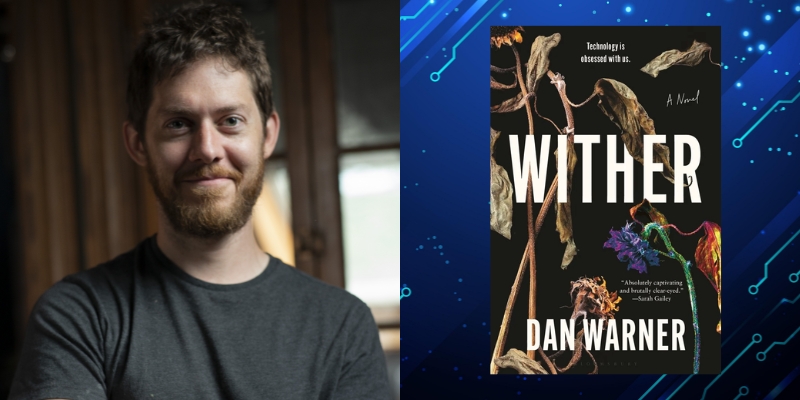
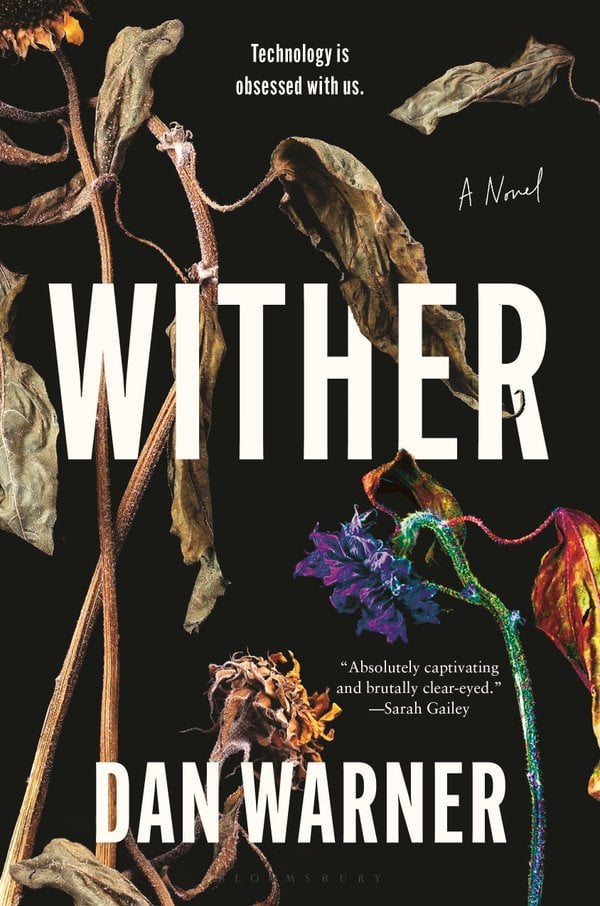
Datafication—in which we quantify every aspect of our lives to be analyzed, researched, fed to computers—has made the current A.I. era possible and is accelerating quickly. The trend, and the techno-optimist mindset behind it, partly inspired my debut sci-fi/horror novel, Wither, in which a marketing analyst falls in the thrall of a technology that harvests personal data with the promise of solving the world’s problems, until the technology develops a form of consciousness, and things go poorly.
I started writing this prior to A.I. seizing the zeitgeist, just a dark satire about tech hubris and our thirst for knowledge. I never hoped that it would be so relevant.
I wanted to write about datafication because, for one, I’m not cool. But also because I see the extremes of this mindset, in which everything is quantifiable, every aspect of a person categorizable, the world reducible to statistics, as both disenchanting and dangerous.
Taken to an extreme—and we very much see the tech industry taking it to an extreme—it devalues human beings, our experience, our existence. It’s an uber-rationalist and boring mindset that discards beauty, love, and mystery. There’s no room in the techno-solutionist framework for your soul.
So at the risk of sounding like a Hallmark card written disingenuously by Concerned-Face Sam Altman: You are more than your data.
Writing about the datafication of the consumer world is easy. Our phones gather location data, your smart toothbrush reports your hygiene habits to an app, your smart home device crouches in the shadows of the kitchen counter, beetle-eyed, eagerly listening for any mention of brands or familial strife or over-the-counter-product-treatable flatulence, largely with the goal—with the help of shadowy data brokers—of building a profile of you to more easily sell you stuff.
And it’s neither new nor surprising to see corporations dehumanizing their customers and seeking new ways to treat them like products or problems rather than people. What did surprise me, as I wrote deeper, was considering how much we have willingly given away, and how the datafication process has encouraged us to dehumanize ourselves.
We are breaking ourselves down through optimization, maxxing, counting steps and tracking heartrates and screentime and social-media reach, asking our phones to watch us sleep and then provide a numeric score as to how good we did. We’re handing over our tastes to algorithmic recommendation engines so that we can most efficiently consume the things we’ve been told to enjoy, even if we notice later on that we haven’t really enjoyed any of it, not in a while.
I’ve recently heard ads for A.I. companies describing how that sport you used to like watching can now be broken down into infinite datapoints, so you can focus on the math—the real substance of existence—instead of the game. Woo hoo.
I was at first reluctant to write a sort of rogue-A.I. villain, as it has been done many times by writers with a deeper understanding of creepy technology. But as I wrote, I landed on maybe the ultimate example of this disenchanting datafication mindset: the potential for A.I. consciousness. The thinking broadly goes that if everyone can be summed up through data, why couldn’t a machine develop a mind like ours?
Skipping over some of the laughable hubris involved—much of it involving how little we actually understand about consciousness, and the level of self-delusion it would take to claim to know how to reproduce it artificially—what interests me is that last part: a mind like ours.
Why would a mind built on silicon, with data as its lifeblood and lacking social evolution, produce a mind like ours? Would it be like the ultra-rational HAL 9000, psychopathic, but comprehensible? Or would it be more alien, its thinking and motivations so opaque and otherworldly to us that we can’t grasp them at all?
And wouldn’t it be fitting if the supposed pinnacle of our quest for knowledge and understanding produced a technology that we don’t understand?
Now that villain did interest me. I like writing about mysteries that I can’t understand.
My four-year-old son is now lounging in bed alongside the newborn twins, and as I wrote that first clause of this sentence, my two-year-old daughter (wait, how many kids does this guy have?) yelled at me from her bedroom and now is squirming beside me, and today is her first day of preschool and she has a black eye and is wearing an old t-shirt that hangs down to her ankles and reads on the front, “The Mets Are Pond Scum,” and as I’m being interrupted between every couple of words that I type, it occurs to me how clearly real life defies the limits imposed by datafication.
Even the most granular scaffold of statistical representation that you could build around this moment, with these beautiful, hilarious, fully human and complex kids beside me, would never capture it. I take comfort in that. And now I’ll set the laptop aside, shake myself from the digital world, and live in this one.
***

Dan Warner
Dan Warner is a writer and documentary filmmaker from St. Louis, Missouri, where he lives with his wife and kids in an old home under perpetual repair. He is the author of Wither.