

Dark Fairy Tales: Amin Ahmad On Nostalgia, Illusions, and the Comfort of Serial Killers
"[S]tories about serial killers seemed to occupy an archetypal niche in our imaginations and serve a cathartic function."
I must admit, serial killers scare me to death. I have friends who consume books and podcasts about these awful men (because they are mostly men), but not me. I barely made it all the way through ‘The Silence of the Lambs’. I watched two episodes of ‘Mindhunter’ and then stopped. Serial killers gave me nightmares.
So imagine my surprise when I found myself writing a new novel—and getting deep into their twisted psychology of serial killers.
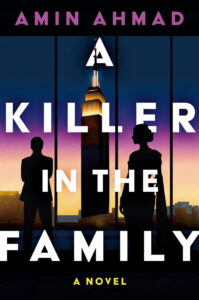
It all started when I began drafting a novel about an ultra-wealthy Indian American family in New York City. The patriarch, Abbas Khan, has clawed his way into a fortune in real estate, and built his company, Tiger Corp, from scratch. He’s an old-school tycoon, but he’s insecure: As a Muslim man, he craves acceptance from elite New York society—and to protect his reputation, he’s hiding a terrible secret.
But what exactly was he hiding? I needed to create a problem for Abbas, something that he covered up in the past, and that would come back to haunt him. At first, I thought about giving him a drug-addicted son, who acts out and kills someone, a murder that Abbas covers up. But that seemed cliched.
I sat at my desk, stuck, unsure what to write. I went for walks. I took showers. All to no avail.
When I am engaged in the first draft of a novel, I have to be careful about the media I consume—because whatever I am watching/reading/listening will inevitably leach into my writing. For me, a nascent novel is like an unformed child that has to be protected from the influence of the world. I was careful not to read other mysteries or thrillers or listen to true-crime podcasts, but I went on reading my beloved ‘New York Times’, along with my morning coffee.
As I skimmed news articles, I became dimly aware of a huge story brewing. A man known as the ‘Long Island Serial Killer’ (LISK) had been caught. He’d murdered a string of young women over a decade ago—mainly escorts—and buried their bodies along deserted Gilgo Beach. Because these women were sex workers, there was no concerted effort to solve the case; when this cold case was reopened in 2022, an inter-agency task force was formed and new forensic leads led to the killer being apprehended.
What caught my attention was the number of stories about LISK—there seemed to be an insatiable appetite for serial killers—and the tone of them. There was an odd note of nostalgia for serial killers. They seemed to occupy a place in American life before cellphone cameras, before surveillance technology and drones. It was hard to now be a serial killer, the news articles seemed to say, but back then, things were simpler. It was easier to murder people and get away with it. Why were readers nostalgic about these monsters?
Coincidentally, at the same time I was teaching an ‘Introduction to Fiction’ class, and we were discussing the appeal of fairytales. These stories had survived for hundreds of years—sometimes reaching back to medieval times—and still resonated in contemporary culture. We discussed how fairytales allowed children to safely explore their fears, and to recognize and circumvent evil. Perhaps, I thought, people were fascinated by serial killers because they were analogous to fairy tale characters: monsters who lived amongst us in the guise of normal people. Perhaps people enjoyed serial killer stories because they —the personification of evil—could be caught and brought to justice. Perhaps nostalgia for these older times was a relief from the world we now lived in, where danger was amorphous, where political instability, natural calamities, and terror threats felt ever-present and overwhelming.
Whatever the reason, stories about serial killers seemed to occupy an archetypal niche in our imaginations and serve a cathartic function. While a majority of serial killers had operated in California or the American West—seen as less populated, less dense, with weaker social ties—LISK was an engineer who lived in Long Island, right next to New York City, and drove into Manhattan every day.
So here was the backstory I was searching for. Abbas Khan, the real-estate tycoon in my novel was suppressing a secret from a decade ago: His family was linked to a serial killer who had operated over a decade ago. If this secret was revealed, it would destroy his reputation and the real-estate business he had so painstakingly created. From LISK I created JHK, the ‘Jackson Heights Killer’, who had operated in the immigrant neighborhood of Jackson Heights, and preyed on young Indian women. The police claimed they had caught him, but what if they’d apprehended a copycat killer, and the real one was to reappear?
This time, I had the stomach for research on serial killers. I dove deep into their motives, their need for control, their delusions and personas. And from this research, I created my own bogeyman, a phantom who could kill and then vanish for decades. Like a mythological creature, he haunted my imagination, and then began to haunt the pages of my book. And when a close friend sent me a news article about a human heart found in a salt pile, she included a note that said, “I think this is the work of a serial killer.” I took that detail and used it in my book. Right then, the Jackson Heights Killer came alive.
I wish I could say that all this exposure to serial killers has cured my fears, but exactly the opposite has happened. I know that I created JHK, but he has too much real DNA in him. The next time I’m visiting New York City, I will not go down any dark alleys.
***

Amin Ahmad
Amin Ahmad was raised in India and came to America at the age of 17. He worked as an architect for many years before turning to writing. He teaches creative writing at Duke University, and lives in Durham NC with his family and a very mischievous cat. Learn more at https://www.aminahmadbooks.com/