
Eli Raphael on Identity, Outsiders, and Creating Accountability in Thrillers
The author of Night Objects mulls the allure of assimilation and belonging
My freshman fall at Dartmouth, I spent many late nights on eBay. What I was looking for, specifically, was a Barbour jacket, the waxed canvas kind, olive green. It seemed like every girl on campus wore one. They were artifacts of belonging, as best I could decode it.
I was on workstudy, so I placed low bids and stayed up to watch the auctions close. When the jacket arrived, I wore it knowing it was used, aware at every moment of the gap between the costume and the person inside it. By winter term, I’d noticed another new thing I didn’t have: a BlackBerry. I bought one on eBay but it didn’t work. I hadn’t understood that you also needed to purchase a phone plan.
This is the perplexing honeycomb interior of assimilation: a series of costly, slightly delayed approximations, each one revealing a new iteration of what you still don’t know.
Sociologist and storyteller Sara Lawrence-Lightfoot, writing about exits and identity, observes that our lives are shaped not only by what we enter but by what we leave behind. That each departure from a role, a community, a version of ourselves, is also a kind of construction. We are always, simultaneously, leaving one self and assembling another.
What I came to understand at Dartmouth–then again when I moved to the rural Olympic Peninsula after graduation–is that some of those exits aren’t freely chosen. Some are extracted. The cost of entry into a new world is, almost always, an exit from a prior self–and the terms of that exit aren’t set by you, but by the group you’re trying to join.
In college, I felt this as a low-grade, constant disorientation. Many of my classmates had attended prep schools or public schools so generously funded they amounted to the same thing. They possessed fluencies I didn’t. Not facts; something more nebulous. A confidence in academic spaces nearly indistinguishable from intelligence. I sat in a freshman literature seminar and said nothing for weeks, not because there wasn’t anything happening in my brain but because I hadn’t yet understood that thinking wasn’t sufficient.
You also had to know how to take up space. Watching a classmate hold forth one afternoon, I had a disorienting realization: I wasn’t stupid. I just didn’t belong. The distinction felt important, but it was beside the point. Belonging requires a continuous performance of having always already belonged. You can’t arrive. You can only seem like you never left.
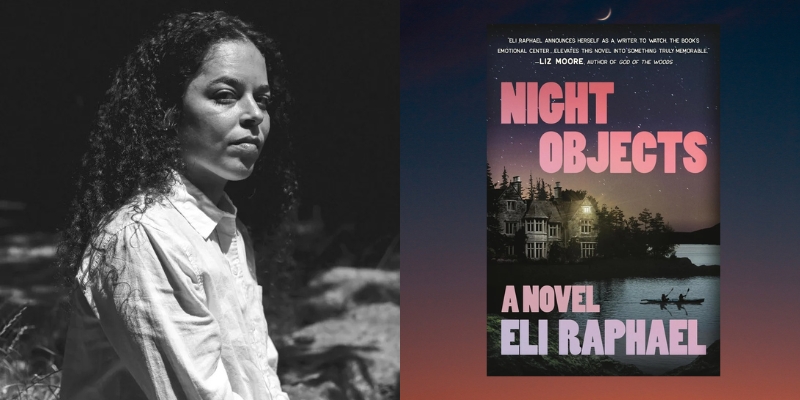
In Night Objects, Lenny Winter arrives at Blanchard—an elite, insular, monied world—carrying the wrong credentials. She’s biracial, Jewish, and poor in a place where wealth and lineage are a shared first language. What draws her into the orbit of the Pascalianum Club––Blanchard’s secret society––is the same thing that kept me up bidding on jackets I couldn’t afford: the belief that belonging equals safety.
Interestingly, the Pascalianum Club never explicitly asks anything of Lenny. Instead, she intuits what’s necessary and completes the erasure preemptively. This is what makes it so insidious, and so recognizable: the coercion is structural rather than stated. The group doesn’t demand that she embody a different character, or suggest she make her true self smaller. It simply creates conditions in which belonging via smallness is the only viable option.
But belonging only equals safety when the conditions of the group aren’t hostile to the most tender and ambiguous parts of your psyche. For Lenny—in all her uncertain, hungry, grieving, polysemantic modalities—Blanchard is not a safe harbor. It is a place that will use precisely those vulnerabilities as the price of admission.
After graduation, I moved to Port Angeles, a rural town on the Olympic Peninsula, nearly as far northwest as you can get on the continental United States. It was a different kind of outside. The fluencies I’d spent four years acquiring at Dartmouth were suddenly the wrong ones—knowing how to talk to a professor was worth nothing against knowing how to chop wood, which rain gear holds up best in sleety weather, why it’s gauche to hire someone to build a fence you could build yourself. A different self to exit and construct, and a precise map of the mechanics: belonging is not a destination. It’s a continuous negotiation, with terms you can’t fully read until you’ve already signed.
As Lenny’s involvement with the Pascalianum Club deepens, her identity becomes increasingly entangled with what the club wants from her. Her racial ambiguity, which has always made her feel like a third thing rather than either of the two things she might be classified as, becomes an increasing source of friction and power. Lenny discovers the dangerously seductive power of allowing yourself to be consumed. She mistakes visibility for safety, because she has conflated the two for so long that the distinction has become illegible.
Thriller is the genre that prices this exchange honestly. Secret societies, loyalty tests, morally gray machinations, in-groups that would rather destroy you than release you—these are formal structures for the oldest transaction: what will you give up to get inside the room? Literary fiction can explore this, but the thriller makes it architectural. The cost is always concrete. Someone always pays.
Literary fiction can explore this, but the thriller makes it structural. The cost can’t be atmospheric—it has to be paid on the page, in full. The reader demands their pound of flesh.
In this way, the thriller insists on accountability. It understands that power is fluid, moveable, changing hands and creating obligations. For a character like Lenny, who arrives at Blanchard with nothing the Pascalianum Club recognizes as valuable except her vulnerability, the thriller’s grammar is the only one precise enough to map what happens to her.
I carried the BlackBerry knowing that it didn’t work. I wore the jacket knowing it was used. What I didn’t understand then is that the self you abandon to get inside the room doesn’t dissolve. It waits. Sometimes what breaks you out of a place is the same thing that entrapped you—the part of yourself you tried hardest to hide, finally refusing to remain hidden.
That was true for me, and it’s true for Lenny. The exits she didn’t choose are coming. What will survive them is the only thing that was ever really hers.
***


Eli Raphael
Eli Raphael grew up in Miami, Florida, and now lives in rural Washington State. Night Objects is her first novel.