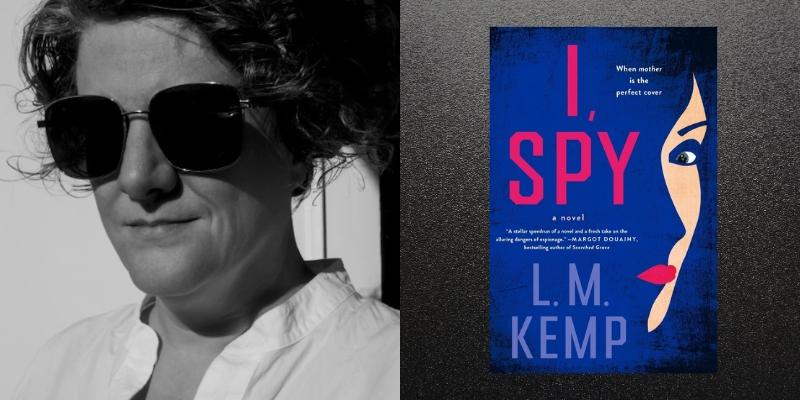
What Motherhood Taught L.M. Kemp About Espionage
The author of I, Spy shares how medical uncertainty shaped her new novel
Before I became a parent I would have made a terrible spy. I was fabulously indiscreet, with a well-documented contempt for authority. I still will not take orders. I have never been described as demure and I will take a punchline over privacy all day (sorry, Mom). I am also a terrible liar, I hate small talk, and about I’m about as stealthy as a turtle on the beach.
When my kid was born though, my skillset changed completely.
I wasn’t the first to discover this, and I know it won’t be news to most people, but holy macaroni, that first three months of parenthood is wild! It’s crazy even in the very best of circumstances, but ours were particularly rough.
Please let me preface this with a spoiler that my daughter is alive and thriving, but a week after she was born we were warned that there was something seriously wrong with her. And she might not survive infancy. I have no comparison for this kind of fear. I remember moving through the world after the meeting where they gave us a list of possible diagnoses, and feeling a fundamental shift, something akin to a reawakening, but bad.
For three months (and in a lesser way, for nearly two years), the three of us were a completely different group of people. The sense of injustice, the feeling of being outside reality. A simultaneous necessity and inability to be present during normal, day-to-day activities with people who did not, and could not, know the truth of what was happening. It all gave us a bizarre sense that nothing was real.
This shift in identity was compounded by the secrets we kept. Without a proper diagnosis we didn’t want to tell anyone, lest we jinx the outcome while the kid underwent about one billion tests. Our response to act normal was rooted in superstition, sure, but it was also extremely isolating. In retrospect it was not the best approach, but at the time it was all we could do. We only had each other inside the life we were living. Maybe that inspired the setting for I, Spy.
The fear for my daughter’s life came with a surprising side-effect; an utter fearlessness everywhere else. Honestly spiders could have run on my face and I would have been fine. I had several speaking assignments at the time and I found that I had absolutely zero nerves. Who cares if a crowd thinks I’m funny, my kid might be dying. I remember watching one of the Bourne movies and thinking, None of this is scary. He’s just running about. Try doing that with a stroller, Bourne, try Googling ‘syndromes’ for your baby, Bourne.
Maybe the seed idea of parental power and espionage, sprouted then.
Cut to the toddler years, she was past eighteen months when we got a resounding All Clear from the myriad doctors and test results. The kid was going to be okay. I stood in parks and stared into space and wondered if I’d ever be okay.
Once we had a new sense of normality, I wanted to use the experience in my work, to explore the fear inherent in parenting and the power it provides. I wanted to write down the incredible things my kid said, that made me marvel at her developing brain and language and I wanted to write about the shifting ways we both saw the world.
Espionage felt like a natural vehicle for this conversation, because I wanted to acknowledge the secret identities that we carry into parenthood. I wanted to write a mother who was stronger, smarter, braver and more powerful than I ever was, but more than that, I wanted to write a woman who would make mothers nod, and smile and feel seen.
As well as capturing that power, it was important to make sure that it wasn’t a ridiculous premise. Would you ever see children in the field? Would any active agent actually raise a family alongside a cover story? I wanted to write a book that wasn’t completely unrealistic. My homage to the power of mothers should be rooted in a real character, living in a scenario that could come to pass in real life.
During my research I had a long conversation with Rosanna Minchew, a mother with more than twenty years of experience in intelligence, security, and risk, including fifteen years at CIA in operational and leadership positions in Latin America, Europe, South Asia, Iraq and Washington D.C. I first met Rosanna when she gave a lecture called “A Life Overseas in Public Service: The Intelligence Officer’s Journey” through the Cold War Museum in Washington.
When I, Spy was in development I reached out to again, looking for accuracy and input for scenarios that my lead character, Kendal might conceivably give Joel, her asset in training. As part of this conversation I asked Rosanna if it was feasible that families would be placed on assignment.
“Oh yeah, for sure,” she answered without hesitation, “kids are a great cover. Kids parties are a really good way to get into homes and close to targets. You would never get sent to an active war zone with a family in tow, but other assignments, yes. For sure.”
Her kids were young when she was in active service, and they went to pre-school at the CIA HQ in Langley. She said they remembered that she always took weird routes to get there (she was running SDRs—surveillance detection routes).
Other avenues of my research talked about the characteristics that are essential in the field; strong instincts, adaptability, being likable and approachable and cool under pressure, being able to listen and pay attention to detail. Having an awareness of baseline normal and potential dangers and taking the initiative to respond appropriately. It’s not a stretch to say these are all qualities you also need at the playground.
When I started I, Spy, I knew how to write about the fear and joy of parenting. I already had all of that reference material. To take a parenting story into an espionage story I spent a year learning about the skills and traits necessary to be a good agent in the field. I hope in Kendal Carter I’ve created a character who resonates with women and the secret lives their kids will probably never know.
***

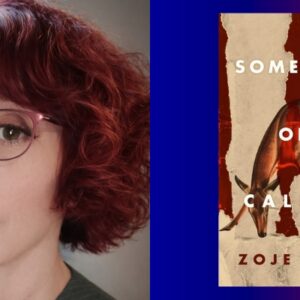
L.M. Kemp
L. M. Kemp lives and works in upstate London (Essex). She writes for a vast variety of creative, cultural, corporate and clandestine clients: most recently co-authoring personalized books for Wonderbly; reviewing pilot episodes, cheap perfumes and random Instagram accounts for Ralph Magazine; and editing lengthy and devastating reports for Greenpeace. For the last two years her work has been dominated by the research and development of I, Spy and a deep dive into the murky world of modern spycraft.