


Five Pointers for Writing a Genius (Even If You Aren’t One)
"[H]ow do I write a genius level character and, more specifically, a character who is much smarter than I am?"
As a fan of the mystery genre, I grew up reading about these intellectual titans. Sherlock Holmes and his quickfire deductions, Hercule Poirot’s touting of his little grey cells.
I adored reading about these genius detectives, but I never thought too much about the process of creating them.
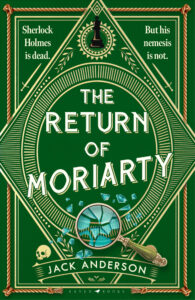
Yet, when I wrote my story, The Return of Moriarty, I finally had to contend with the strange question; how do I write a genius level character and, more specifically, a character who is much smarter than I am?
It seems almost paradoxical. If I can create characters who exceed my own intelligence, can I go to a party and act wittier than I am? It seems bizarre to tackle a character with faculties you don’t yourself possess and, after finishing the novel, I was surprised to find the same question being asked by aspiring writers across the community.
And yet, my journey to answer this question was fascinating, and the solutions I discovered so chock full of literary theatrics, that I thought it only right to put all my best answers in one place; a set of five tips and tricks for writing a genius, even if you aren’t one.
Tip One: Time Is On Your Side
Intelligence isn’t just about making good decisions; it’s about making good decisions at speed.
Therefore, one of the greatest tools in a mystery writer’s arsenal is the ability to play with time.
Have you put your hero in some impossible situation? Do they need to pull a solution from thin air while a countdown timer ticks into the single digits? A writer can put their pen down right there, make a cup of coffee, and spend hours, days, weeks thinking up the perfect course of action.
Then, when they sit down to write the scene, they can condense all that deliberation down, allowing their genius character to reach an impossible conclusion in a thirty second brainwave.
Tip Two: Your Detective’s Brain Is A Library
Another aspect of intelligence is the capacity to store sheer amounts of raw knowledge, and it’s a small but mighty part of a genius detective’s arsenal.
Whether it’s Sherlock’s comprehensive understanding of London or Poirot’s keen knowledge of toxicology. Details which you or I would need to look up, the genius detective can recall accurately and completely independently.
But, once again, the writer is in control, and it’s nothing that can’t be solved with some hard work and a bit of artistic flourish.
Because, of course, these Detectives do look things up, in a manner of speaking. These characters are the beneficiaries of countless hours of research by their writers; their encyclopaedic minds built on a foundation of library trips, google deep dives and expert consultations.
In the midst of a case, or combing a crime scene, our detectives will impress by having the information front of mind. But the truly impressive thing, is the work you’ve done to put it there.
Tip Three: The All-Seeing Eye
Intelligence is perception, the ability to take in more information from a scene than anyone else.
While it’s pleasant to think of oneself as observant, there is always the worrying counterpoint; that you failed to observe something, you’d never really know.
However, the genius detective doesn’t have to worry about that. Whatever you want them to learn from a scene, you can guarantee they’ll notice, and by extension, you can communicate huge ideas to them in the subtlest of signals.
A wistful glance, a misspoken word, a bead of sweat on the otherwise aloof suspect’s temple. The less there is to see, the smarter your detective will look for noticing it.
Tip Four: One Giant Leap For Detective Kind
Intelligence isn’t just about fitting the data together, it’s about making strong inferences when the data isn’t there.
Let’s be honest, human beings are imperfect creatures and most of the time, when we make 50/50 wagers, shots in the dark, and leaps of logic from incomplete data, there’s always a big chance we’ll fall on our face.
A dishonourable mention should also go to the infamous “hunch” which, speaking personally, have led me astray as much as they’ve served me well.
It’s the privilege of the genius detective that they enjoy a much higher hit rate.
It’s been lampooned for over a century now, that several Sherlockian deductions are, at best, educated guesses; deductions based on observations which, in truth, could have a dozen equally plausible explanations.
But, as the writer, and the person in control of the world itself, you can allow your detective to make plausible leaps through the investigation, always landing on their feet.
Even the aforementioned hunch, which is, in its simplest description, a called shot for the end of the story, feels impressive when it turns out correct. Who knows, perhaps in an uncertain world full of uncertain choices, it’s emboldening to see a hunch pay off.
Tip Five: Follow The Thread
One final aspect of intelligence for us to discuss, is the ability to tune out noise and focus on what’s truly important.
We’ve all seen it; the police milling about a crime scene, forensics analysing blood spatter, when the genius detective notices a wine cork on the floor and immediately imbues it with incredible significance.
“But why a wine cork?” they’ll say every so often, to their colleague’s chagrin, until the innocuous item eventually blows the case wide open.
As a writer, you know the thread of your story, the golden strand of relevant data that leads past all the dead ends and obfuscation.
You’ve made the story, and you’ve carved the secret path to its end. It’s the mark of a genius detective, that they know to follow it.
There are other tips and tricks for the writing of genius characters but, hopefully, these provide some food for thought as you lay out your story, or even if you want to read the mystery genre with a more critical eye.
In the end, the detectives you make will often be larger than life, and sometimes that means a level of intellect that no one can seriously live up to.
But that doesn’t mean you should be discouraged; with a bit of work, an understanding of the power writers hold over a story, and a good deal of artistic showmanship, it’s possible to create a Detective who makes the breakthrough in ways you, or your readers, never could.
Which, I hope you’ll realise is a little piece of genius in itself.
***

Jack Anderson
Jack Anderson is a UK-based writer of horror and mystery fiction. Jack got his start writing for the internet, penning the viral serial "Has Anyone Heard of the Left/Right Game?", which he wrote in a caffeine-fueled haze. It has since been adapted into a hit QCode podcast starring Tessa Thompson in the leading role of Alice. His debut thriller, The Grief Doctor, was published by Raven Books in June 2024. He is currently working on his new Moriarty Mystery series, with the first novel, The Return of Moriarty, scheduled to be published in Autumn 2025. Jack is also developing a number of original television and film ideas across the horror genre. Jack lives with his wife in Sheffield. Lifelong fans of games and puzzles, together they’re burning through every escape room in the North of England.