For Crime Writers, the Most Important Question Is 'What If?'
Jon Lindstrom talks with some of today's top authors about where they find inspiration.
I think it’s fair to say that most authors begin their first draft after asking themselves, What if? Those two words can be innocuous, even benign. But a few years ago I was at the LA Times Festival of Books and heard the great James Ellroy emphatically state that anything we write is autobiographical. Crime writers, by design, lean hard into the horrible things people can do. So, if Mr. Ellroy is correct, then just how much of the origin of our ideas, the What ifs that precede the creation of our stories, are rooted in our own experiences? And more specifically, the fears embedded in them? What if my brakes had failed when that kid crossed the street in front of my car? What if I had accepted that teenaged dare to play Russian Roulette?
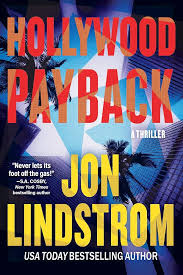
My books, HOLLYWOOD HUSTLE and HOLLYWOOD PAYBACK (and even my short story, STALKER in the award-winning anthology HOLLYWOOD KILLS), were definitely inspired by dissecting my Showbiz life and career. What if I had become a big star before developing the skills to cope with fame? Even the moderate amount of notoriety I’ve enjoyed over the years hasn’t been without psychological challenges. Winston Greene’s journey in HOLLYWOOD HUSTLE surely grew from that. Or, What if I had succumbed to the emotional strains that pursuing an acting career presents? Jake Ferguson in HOLLYWOOD PAYBACK is drawn from the many young men and women I’ve known who buckled under the pressure, and the constant reminders that they would never measure up. I’ve since come to realize my relationship to What ifs began long before I decided to tackle novels.
My first screenplay sprang from an obvious What if. I was in Lake Tahoe with friends over New Year’s Eve, 1991 into ’92. I was then what we in The Biz euphemistically call “between jobs”, and was seriously considering giving up acting. Despite a fairly strong start, for all practical purposes my career had evaporated. I hadn’t had a gig in two years, had no hope of paying off my considerable credit card debt, nor any reserves to cover the next month’s rent which was technically due the next day. I was at a Blackjack table in Harrah’s Casino when I found myself on an improbable run of good luck. I tallied the numbers as the amount of debt that had been weighing me down like an anvil was chipped away with each winning hand. If memory serves, it took me less than an hour to win enough money to pay off those credit cards, and to cover January/February rent. When I reached what felt like deliverance, I walked away from the table, went straight to the cage cashier, and traded in my chips for good old fashioned paper money.
Not long after, I took a drive from LA to the fabled Salton Sea, a 343 square mile saline water body in the California desert that had reputedly been formed by accident. While cruising a stretch of highway (that had an uncanny similarity to the closing shot of “Paper Moon”) I had a vision. I don’t recall thinking of anything in particular, certainly not my time in Tahoe, when a story suddenly ran through my head like a film strip. It began at that Blackjack table and ended at the Salton Sea which, mysteriously, I hadn’t even laid eyes on yet. The impulse of the idea was crystal clear: What if I hadn’t left that Blackjack game? That became a screenplay that had the protagonist, intoxicated by the buzz of winning, staying too long and losing big, launching his journey through hardship, crime, and carnage. I began writing it shortly after that day-long road trip. The script, co-written with my friend actor Tom Schanley and my first to be produced, became a movie called “The Hard Easy”. It starred Henry Thomas, Vera Farmiga, Bruce Dern, Peter Weller, David Boreanaz and Gary Busey. Even with that stellar cast hardly anyone saw it, but the actors all told me the same thing: They related to the authenticity of the protagonist’s dilemma. Today, I believe that story was born of a lingering fear, a What if I had made the wrong choice at that casino?
Okay, that’s me, but what about other writers? Do the What ifs of their lives inform their stories? This from blockbuster author May Cobb (ALL THE LITTLE HOUSES, THE HUNTING WIVES):
“For me, my novels can be very much about exploring the juicy question of the What ifs. For my thriller, THE HOLLYWOOD ASSISTANT, for instance, it was inspired by my time working as a Hollywood assistant to a famous couple, and the novel definitely asks the question, ‘What if the couple I’d worked for turned out not to be the dreamy, wonderfully supportive duo (who are still dear friends of mine), but rather a more sinister pair with secrets and hidden agendas bubbling just under the surface? What if I had found out I was hired for a very different purpose than to just run errands, read scripts?’ I love writing as a way to go down that forbidden road less traveled.”
It goes without saying that’s a great premise for a story but, and I may be projecting, could it also reveal something about May? As someone navigating a world unlike the one in which she was raised (if you believe her online bio, and why wouldn’t we?), could the What if of her novel disclose a young woman’s fear of a glamorous, but unfamiliar, world that hides a dangerous reality? Maybe. Maybe not.
So, I asked multiple NY Times bestselling author Alex Finlay (PARENTS WEEKEND, EVERY LAST FEAR) his thoughts:
“Yeah, I’m into the What if game. My most recent novel, THE ANNIVERSARY, is about a serial killer who strikes on the same day every year, May 1st. The book follows my two protagonists who we meet on May 1, 1992 in eleventh grade study hall, and we get only a glimpse of their lives on May 1st of each year for ten years, as the hunt for the May Day Killer unfolds. I met my wife in 11th grade study hall and she’s always believed that if we had not met, or if I hadn’t moved to her town that year, we would have still found one another in the future. Though I rolled my eyes a little, it got me thinking about What if we had never met, and about fate, which is a theme of the novel. I wouldn’t have a single book without the What ifs.”
International bestselling author Sarah Pekkanen (THE WOMEN IN WHITE, HOUSE OF GLASS) had this to say:
“Ever since I was a kid, I’ve been held hostage to the What ifs that seemed infinitely more compelling than the mundane reality demanding my attention (typically multiplication tables or spelling bee words.) Once in elementary school, I walked home at lunch, certain the school day was over, because I’d been so thoroughly abducted by a daydream that the structure of the school day had dissolved. Heavily influenced by the Nancy Drew books I devoured, it seemed likely that adventures, crimes and capers were unfolding all around me, and I explored many of them in my mind. My own experiences gave me plenty of fodder: that guy walking out of the woods? He’d clearly just hidden a body. The silent, well-dressed father at a school event? Obviously a spy. The mother of one of my friends scolded me after I speculated aloud that my friend and I both probably had been adopted and our parents were lying to us about our births. But the scariest What if of my life comes from reality: What if… exhausted from caring for my kids, I’d decided to go to bed early on a long-ago winter night rather than sitting down at my computer and typing the first page of what would eventually become my debut novel?”
And Indie “existential pulp fiction” author Will Viharo (LOVE STORIES ARE TOO VIOLENT FOR ME, GRAFFITI IN THE RUBBER ROOM) took it a step further:
“All of my stories and books are directly influenced and inspired by my personal experiences in this world. There exist multiverses inside our own minds that provide endless alternatives to paths we’ve chosen—or that chose us—in our own lives, which we can voyeuristically and virtually explore with our characters taking all the hits, suffering all the consequences, and reaping all the rewards. For me, all Art is a creative response to not only the question What if? (which is also the name of a Marvel comic book and animated series), but also Why and it’s polar possibility, Why not? It was our own answers to these questions that got us where we are in this Life, combined with circumstances beyond our control—but our reactive decisions in the latter regard also largely determined our present condition. Fiction is a cathartic form of entertainment, wherein both author and reader can safely fantasize about the roads less traveled, either so we don’t have to take the risks ourselves, or because we blew the chance when we had the opportunity. Speaking for myself, when I look back, it’s not so much the actions I took that I regret, but the inactions that prevented me from expanding my horizons as a person. My series characters Vic Valentine and Chumpy Walnut are sent on these imaginative journeys down those different lanes leading to any destination I choose, because in their case, I have that power. In reality, we often don’t.”
What am I to make of these author’s statements? Their writing styles vary wildly, but I sense a commonality: Virtually every story derived from a What if has the potential to have taken a tragic real-world turn. Each of these writers has harnessed those What ifs and wrangled them into inventive, superbly crafted novels. Has any of them ever suffered a tragedy or loss not unlike the one Mr. Ellroy has famously written about?* For all I know they all have, but I’m not about to ask. If so, would they be still creating stories? Based on what they shared with me… Yes. Writing is a calling. “No one writes unless they really have to write, not really,” I remember a Scottish novelist, his name lost to time, saying during a BBC interview I saw long ago on cable. I write, therefore I am. Or, perhaps, I write because I can’t get these goddamned scary What ifs out of my head. Writing is our way of working through these experiences. And it’s lot cheaper than therapy.
I’ve come to the conclusion that the What ifs we authors put to good use in our work are not only our inspiration, but a signal. A subconscious signpost of a cautionary tale that could become a fearsome reality. Yeah, sure, maybe I just decided to quit while I was ahead but, aside from the occasional neighborhood penny-ante poker game, I haven’t gambled since that night in Tahoe.
If you haven’t already, please check out the excellent work by May, Alex, Sarah, and Will. See below for information on where to find their books.
*When James Ellroy was 10 years old his mother was murdered, an event he chronicled in MY DARK PLACES: AN L.A. CRIME MEMOIR. The killer has never been identified.

Jon LIndstrom
A 4-time Emmy(c) nominee, Jon Lindstrom can be found in studio movies, independent films and literally thousands of hours of TV, working with several A-list directors and alongside many of Hollywood's biggest names. An award-winning filmmaker, Jon's films have won multiple film festival accolades. His writing has twice won recognition at the Launchpad Prose Competition, and several top screenplay competitions. For several years he was the drummer for The High Lonesome, scoring two hits on the Billboard Hot 100. Jon divides his time between Los Angeles and New York City.