
H.Y. Hanna on Craving Slow, Atmospheric Suspense in the Era of Short Attention
The author of The Taverna at the Edge of Night pushes against our cult of speed
We live in an age that worships the cult of speed. Our attention span, we’ve been told, has shrunk to barely a minute; journalists are reduced to writing in skimmable subheadings—and any anecdote or article that dares to run longer than a soundbite is slapped with the impatient “TL;DR” label. Even our social lives have been repackaged into disposable fragments of online “media”: an endless scroll of pithy captions and throwaway emojis, to be consumed as fast as possible, regardless of whether we’ve made any real connection with the people sharing those messages.
Books, too, have not escaped this modern trend. Publishing experts now extol the virtues of keeping chapters short and sentences shorter. They prescribe lean, minimalist prose, never letting a paragraph of description slow the sprint to the next cliffhanger.
Of course, high-octane, plot-driven books are deservedly popular and do dominate the bestseller lists, but somehow, we seem to have reached the conclusion that just because velocity sells, mood must not. Atmosphere—that rich, immersive quality that lets you fully savor the experience of a story—is now seen as an indulgence; one that gets in the way of the only thing readers supposedly want: to know what happens next as fast as possible.
And nowhere is this more apparent than in the arena of thrillers and suspense. “Pace” is assumed to be the supreme measure of readability, and praise for top sellers is routinely couched in terms like “fast-paced,” “propulsive” and “page-turner.” It often feels like a book’s worth is measured only by the ability to say: “I got to The End in record time!”
But why does it have to be a choice? Why is it always assumed that if readers want one thing, they can’t possibly want the other?
Because “unputdownable” and “atmospheric” aren’t mutually exclusive. And “good pacing” does not actually mean “never let the reader linger.” In fact, the best suspense relies on atmosphere to function. The belief that “slowing down” to add extra detail about setting, culture, historical context, character, or mood would lose the readers’ interest…is inherently misunderstanding how tension works. True suspense relies on the reader being trapped in the moment with the character. And the way to do that is to make the reader feel that moment even more fully, even more immersively.
As Alfred Hitchcock famously pointed out: if a bomb simply explodes, the audience gets a few seconds of shock; but if you show the bomb beneath the table and then show characters sitting unawares, chatting and smiling, eating their food and enjoying the jukebox music… you’ll hold the audience taut for fifteen minutes. Tension can be achieved by giving more detail, not less, to create anticipation, dread and doubt—the true engines of suspense.
It may seem counter-intuitive but a single, well-crafted atmospheric detail can be just as gripping as—if not more than—a sequence of dutiful twists. And even more counter-intuitively, there are readers out there for whom the details are the whole point. Yes, there are vast swathes of suspense readers who prize the ability to linger in the story more than the ability to race through a skeleton plot.
These are the people who want to travel for the scenery and not just the destination. These are the readers who want to immerse themselves in the texture, wallow in the atmosphere, so that they can embrace the actual experience of being transported to another world—not just tick off the achievement of having got there.
I know because I am one of them. And because I have encountered many others like me in online groups and real-life settings, frustrated and fatigued from combing book listings for fiction that not only provides the thrills—but also provides the “deep reading” experience we crave.
Oh, don’t get me wrong: there’s nothing wrong with fast-paced books. Adrenaline is great, twists are great, and we enjoy them as much as the next reader. But we also want something more….
We want the creeping unease of Daphne du Maurier’s Rebecca, whose famous opening pages fill you with dread while describing nothing more sinister than a driveway…the sunlit menace of Patricia Highsmith’s The Talented Mr Ripley, whose golden Italian coast and languid afternoons make its casual murders all the more chilling…the claustrophobic slow-burn of Ruth Ware’s The Woman in Cabin 10…and the simmering tension of Lucy Foley’s The Guest List.
The readership for atmospheric suspense is large, loyal and—in the case of dead authors with no trendy social media!—keeping books alive for more than half a century, just to feed that immersive reading experience we cherish.
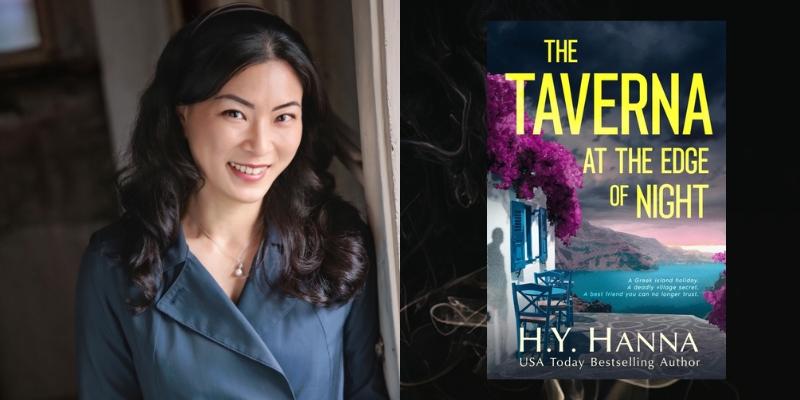
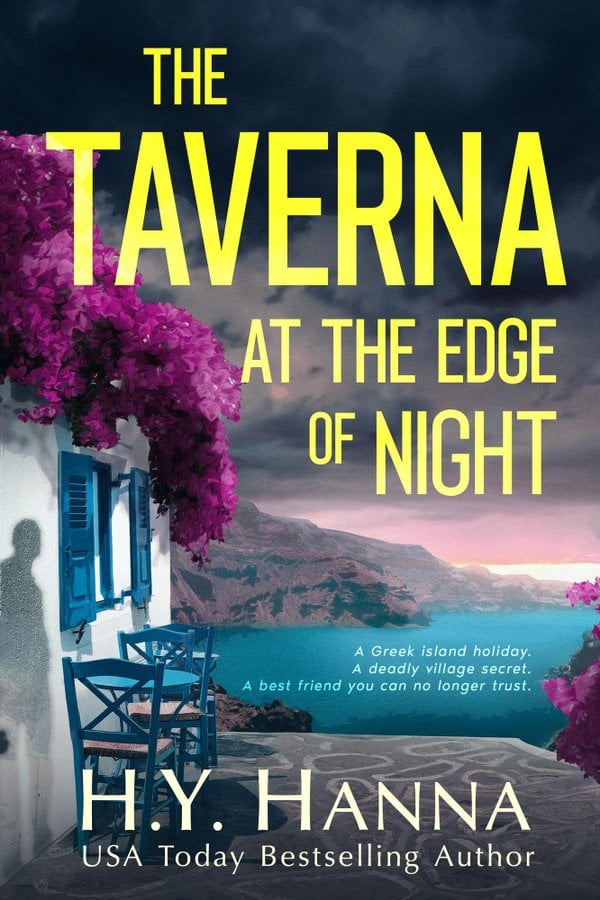
It is the same craving that inspired my own Greek island thriller, The Taverna at the Edge of Night—an escapist read filled with suspense, atmosphere and intrigue. Set in a remote fishing village on the south coast of Crete, the story follows my heroine as she travels to the island of Zeus’s birth for a dream vacation and a long-overdue reunion with her best friend.
But from the moment she arrives at the white-washed taverna overlooking the sea, something feels wrong. The locals won’t meet her eye. Her friend won’t answer questions. And on the cliffs by the village, a tourist recently fell to her death. Or was it murder?
Set against the dazzling blue waters and wild, rugged terrain of Crete, this is a slow-burn psychological thriller that immerses the reader in the ancient myths, timeless traditions, and warm hospitality of Mediterranean culture, all whilst drawing them ever deeper into a story of buried secrets, betrayal and danger.
In many ways, The Taverna at the Edge of Night is a homage to my favorite author, Mary Stewart, whose atmospheric suspense novels made a huge impression on me as a teenager. Since then, as both a reader and mystery and thriller author, I’ve always been drawn to stories with a strong sense of place and atmosphere, and landscapes that are both sinister and seductive. This is the lush, immersive experience I’m always seeking in novels I read and trying to create in the books I write.
(And for me, there is no greater compliment than a fan saying they regularly reread my books and have travelled on pilgrimages to my story settings, just because my writing evoked such a vivid sense of place and atmosphere!)
What is more, this appetite for atmosphere is no mere nostalgia for a bygone kind of book. You need only look at the runaway success of a series like The White Lotus—where, famously, “very little happens,” and yet audiences of millions stay glued to the screen, seduced by mood, place and the slow, delicious tightening of suspense.
In an age that worships speed, there remains a vast, hungry and curiously underserved readership longing to slow down and truly inhabit a story. The market might think that suspense readers only want propulsion…but what many readers really want is immersion.
***

H.Y. Hanna
USA Today bestselling author H.Y. Hanna writes atmospheric psychological thrillers set in beautiful—and often deadly—international locations, as well as light-hearted "cozy mysteries" blending humor, clever plots and quirky characters. With over thirty novels published and translated into several languages, her books and audiobooks have delighted readers around the world. After graduating from Oxford University, Hsin-Yi spent years trying to fit into a "real" job, before finally returning to her first love: writing. Throughout her life, she has called many places home—from Taiwan to London, Dubai to New Zealand—but she has now finally unpacked her bags for good in Perth, Western Australia, where she spends most days fighting with her cat Muesli for the use of her office chair.