The Saudi Woman Who's Reimagining Filmmaking – and the Murder Mystery
In short order, Haifaa Al Mansour has become one of Saudi Arabia's best known directors.
Haifa Al Mansour Interview
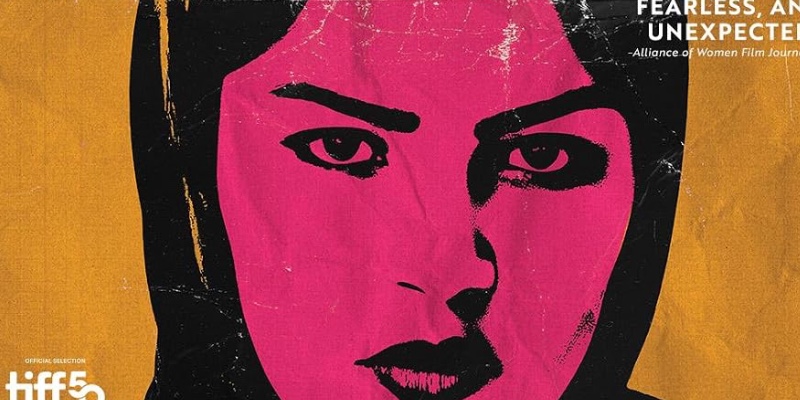
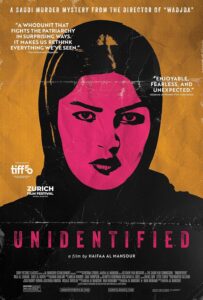
Haifaa Al Mansour is one of Saudi Arabia’s best-known filmmakers, and one of the country’s first women filmmakers. Her latest film, Unidentified (2025), tells the story of Nawal Al Saffan, a divorcee working a clerical job at a police department in Riyadh. When the body of a young woman is found abandoned in the desert and no one comes forward to claim it, Nawal makes it her mission to discover the young woman’s identity—over the objections of her superiors, and with pushback from those who might know who she was and who killed her. The film is a suspenseful, deliberately paced mystery with a kicker of a twist at the end, and it gives us a view into the shadowy world of women in a conservative, male-dominated culture.
Unidentified is Al Mansour’s third film shot in Saudi Arabia. The other two are Wadjda (2012) and The Perfect Candidate (2019).
I met Al Mansour at this year’s Tribeca Film Festival. She speaks quickly and energetically, always with a smile. During our conversation (which has been edited for clarity and length) we discussed what it’s like to make films in Saudi Arabia, the changes in Saudi society, and why it’s easier to get away with murdering a woman than a man.
Radha Vatsal: I read in an interview that you shot your first feature using walkie talkies from inside a van, because public interaction between unrelated men and women is prohibited in Saudi Arabia. Have things changed since then? And how did you shoot Unidentified?
Haifaa Al Mansour: Well, definitely, Saudi Arabia has changed so much since then. The country was segregated. So, as you said, men and women wouldn’t work together, especially in public, and every time when we were outside, they would have a van for me to direct. But during The Perfect Candidate and during Unidentified, the situation changed completely. I remember during The Perfect Candidate, we were shooting, and someone came, he was a bit conservative… and he kept interrupting our filming, so we called the police and the police came and checked our permits, and then when they found out our permits were valid, they booked him, and it was so empowering for me because I grew up in Saudi where everybody’s covered.
I was told as a kid, you can’t go into the street without being completely covered. Nobody hears your voice, nothing. And that has changed so much. And even with Unidentified, I was able to raise money completely for the film in Saudi Arabia. Before that, I had to do co-productions because we did not have public funds for films in Saudi. But now it’s changed so much and empowered me even as a producer, not only as a director.
This feeds into my next question, which was that I was surprised by the scenes in which the young women walk out to their cars without head coverings, and the scene in a club, where they’re smoking, and they’re not wearing head coverings, and there are also men there. And Nawal drives in the car with the colonel. Is all of this now allowed?
It is all allowed. It’s still a very conservative society. Before, we had the religious police, who determined the morals of society. Women can’t sit with men and all that. The religious police are gone. We don’t have them. So it is really up to the families, and some families are more traditional than others. Definitely, you need to be modest, but I was in the street with my hair visible and that was my personal choice and nobody had anything to say about it.
I’m assuming the relative freedom now offered to artists doesn’t spill over to freedom of the press, or is that changing as well?
Well, Saudi Arabia is a very conservative country still. And I am an artist who respects that. I learned a lot from a lot of great Iranian filmmakers. You can say a lot about your society without really rocking the boat. You say things within the culture, but you bring in a lot of important issues, and you bring in a lot of yourself, and I feel it is rewarding.
And even Majid, the police officer [in Unidentified] who’s kind and who’s supportive, and who sees Nawal as a colleague—that is an amazing thing for Middle Eastern men to see and hopefully learn, you know?
I was also struck by how, in many ways, the men in the film are less difficult with Nawal than the women she encounters. For instance, Mishal, the sign painter, who says, at first, I don’t talk to strange women, but then under pressure, he does. And also the colonel, who tells her to lay off the case, but then when she refuses, he doesn’t punish her, and he’s always very nice to her.
Yes, he’s supportive. And that line is my favorite. In Islam, we are not supposed to talk to women who are not from your family. And Nawal says, well you have to make an exception. I like that. For me it is exciting to see women who are strong and willing to punch back.
Your previous films set in Saudi Arabia have women at the center and are dramas, what made you decide to write and direct a murder mystery this time?
I wanted to tell a story that is entertaining, but still opens the culture and is authentic. During the pandemic, I watched Forensic Files. It is fascinating to watch all those crimes that happen in the middle of America, in Ohio or Oklahoma, and you can see what they eat, what they do. And that kind of opened the culture for me, and I wanted to do the same with my culture.
And I try to mix genres together. I do a lot of Italian neo-realism where you film in real places, and you use non-professional actors. But also, I brought a lot of Hitchcock, a little bit of film noir with the stairs, and they’re very different genres and I’m trying to meld them together in a way that is seamless. It’s almost like cooking.
Very often driving a car becomes a metaphor for taking charge, and I was struck by how often we see Nawal at the wheel, and being allowed to drive is also a relatively recent right for women in Saudi Arabia. The car also plays a very important narrative role in the film. So I was wondering whether you made a conscious decision to tie them together.
Of course, yes. It is a woman who is taking charge, and everybody is telling her not to take charge. She’s a divorcee in a society that puts a lot of emphasis on being the good wife, right? She couldn’t be a mom. She is not from an influential family, and she is not rich. She was told basically to disappear. But still, she refused. And I love to tell stories about women like that—who are not necessarily given things in life. They claim things and they claim what they think is theirs. And I don’t think we need to go to extremes like her. But in a way, it is important for women to see a woman like that.
We often see Nawal listening to a social media influencer who combines true-crime analysis with beauty tips. How did you come up with that idea?
Social media is everywhere, even in Saudi Arabia. Adwa Al Asiri, who played the TikToker, is a real influencer. And I loved her energy. I was watching her get-ready-with-me videos. She’s singing and doing all the dances and stuff. So I contacted her and said hey, do you want to be in the film? And she said, yes, and I sent her the script, and she films it like she films everything, and then she sent it back to me, and I corrected it. We weren’t together on the same set ever.
Violence against women is a central part of the story and also how women turn against each other to uphold social norms. Can you comment on that?
For me, it’s not women going against women, but it is getting away with murdering a woman… In Jordan, when a brother kills his sister because she was talking to a man, he could get only 3 months in prison. And he comes out like a hero and everybody celebrates him. That needs to be addressed. And the fact that it is easier to get away with murdering a woman than murdering a man is something that not only men are aware of, it’s also women.
What made you decide to take up filmmaking? If I understand correctly, there were no cinemas in Saudi Arabia from 1983 to 2018? When you were growing up, were you watching a lot of TV, what was your exposure to film and TV culture?
Yeah, of course, there were no movie theaters. So we rented a lot from Blockbuster. A lot of Bollywood films. And they weren’t even translated sometimes, and still we understood everything. We watched a lot of Chinese cinema. We watched a lot of Hollywood films. And maybe it was not art house and the most award-winning films. But it really made me understand the importance of entertaining.
I grew up in such a boring place, in a small town. And watching those movies was transformative for me. And that is why I want to tell a lot of important things about my culture, but also I don’t want to lose the fact that entertaining is a very important part of filmmaking as well.
Do you feel that right now, there are specific challenges that you face being a woman filmmaker in Saudi Arabia?
I’m a well-known filmmaker in Saudi Arabia, so it’s easier for me to make films there. It’s harder for women, ironically, in Hollywood. I know a lot of my friends, female filmmakers in America, they make a film and they wait 10 years to make another film. And very few women break into big blockbusters. It is harder for women to prove themselves in the studio system.
But it is still challenging for women everywhere, and especially now, cinema is becoming more profitable. In Saudi Arabia, we have a real box office. I’m afraid we might see women being marginalized because it’s becoming more commercial and all the men are coming back, like, let’s make films now. But I also think and everybody knows it’s important to tell stories from a female perspective. So there will be a lot of supporters and a lot of people who will promote women and help them to bring films, especially from the Middle-East.
Would you want to make a Saudi film in which gender doesn’t play a central role, which it seems to play in all your films, or do you feel like that’s not possible?
No, I would. I would tell any story that feels close to me, but I feel like I know the women’s world way more than men’s world. And honestly, I find it more interesting. I have a very intimate relationship with actresses, so I feel it is just more fun. But of course, if there is a story that is exciting, I would. But I still think women’s stories from the Middle East are way more complicated and there’s way more to tell.

Radha Vatsal
Radha Vatsal is the Film/TV Columnist for CrimeReads. She is the author of No. 10 Doyers Street and the Kitty Weeks mysteries, and her essays have appeared in the The New York Times, The Atlantic, the Los Angeles Review of Books, and elsewhere. She holds a Ph.D. in Film History from Duke University. You can find her on Instagram or email: rvatsal@lithub.com