
The Most Anticipated Mysteries, Thrillers, and Crime Novels of Summer 2026
70 new and upcoming titles to keep you reading all the way till cuffing season
It’s summer! Which means its time to read some books. Some mysteries, to be exact. And thrillers. So, so many mysteries and thrillers. Here are a whole bunch of books coming out this summer, to peruse at your leisure, because that’s what summer reading is for: leisure. The list below has a recommendation for every kind of taste, every subgenre of mystery, and every type of reader—if you don’t find what you’re looking for, then you can comment and I’ll get you a personalized rec 🙂 Thanks to my colleagues Dwyer Murphy and Olivia Rutigliano for pitching in with blurbs, and to the crime world for giving us all such deliciously compelling fiction to read.
Note: there are two true crime books included below. It’s not all fiction. So sue me.
___________________________________
JUNE
___________________________________
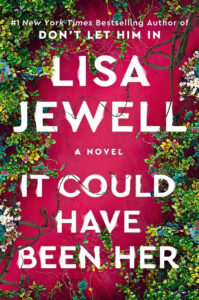
Lisa Jewell, It Could Have Been Her
(Atria)
Lisa Jewell’s books have become some of my go-to recommendations in recent years, with their suspenseful plotting, thoughtful characterizations, and deep respect for both the chaos and kindness of humanity. In Jewell’s newest, a woman finds a stray dog, and finds herself at the site of a traumatic incident from her youth when returning the lost animal. What happened at that house, all those years before? Why had the dog gone missing, and why was he found so far from home? And what secrets are the current residents hiding? While Jewell’s recent oeuvre is hardly light-hearted, It Could Have Been Her is the darkest in a while; the novel includes some truly toxic family dynamics, although I can promise that the dog turns out perfectly fine. Also, if you’re scared of clowns, this is not the book for you. –MO
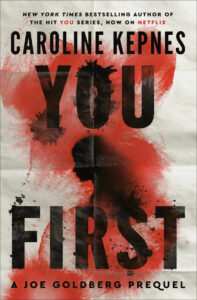
Caroline Kepnes, You First
(Random House)
We already know a fair amount about Joe Goldberg’s backstory, but Caroline Kepnes’ latest, a prequel, should fill in the blanks when it comes to his earliest romances; how they began, how they influenced (and were influenced by) his growing delusions, and most especially, how they ended. An excellent addition to an already-legendary series, this one is sure to please long-time readers and those looking for an easy entry point to the character’s exploits. –MO
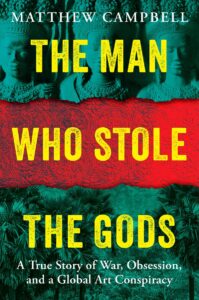
Matthew Campbell, The Man Who Stole the Gods: A True Story of War, Obsession, and a Global Art Conspiracy
(Portfolio)
In this wildly compelling new nonfiction book, Campbell chronicles the exploits of one Douglas Latchford, who took advantage of the brutal circumstances around the Cambodian genocide to undertake one of the art world’s biggest looting and smuggling operations. His techniques were destructive and callous, and his place within the broader art world was unique. Campbell uses the story of these crimes, investigated with great skill and depth, to expose a host of cultural institutions complicit in the brutal trade in relics and artifacts. –DM
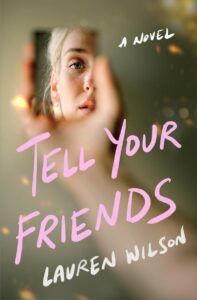
Lauren Wilson, Tell Your Friends
(Flatiron: Pine and Cedar)
Lauren Wilson’s latest is a perfectly plotted cat-and-mouse thriller set against a backdrop of growing concern over child influencers and exploitative parents, a context well-represented in the psychological thriller realm. Tell Your Friends showcases two vastly different perspectives: Budding journalist Crystal, set on exposing her influencer parents’ darkest secrets, and parasocial superfan Alyssa, determined to protect her favorite online family’s wholesome reputation. –MO
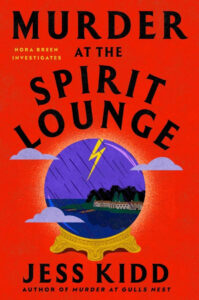
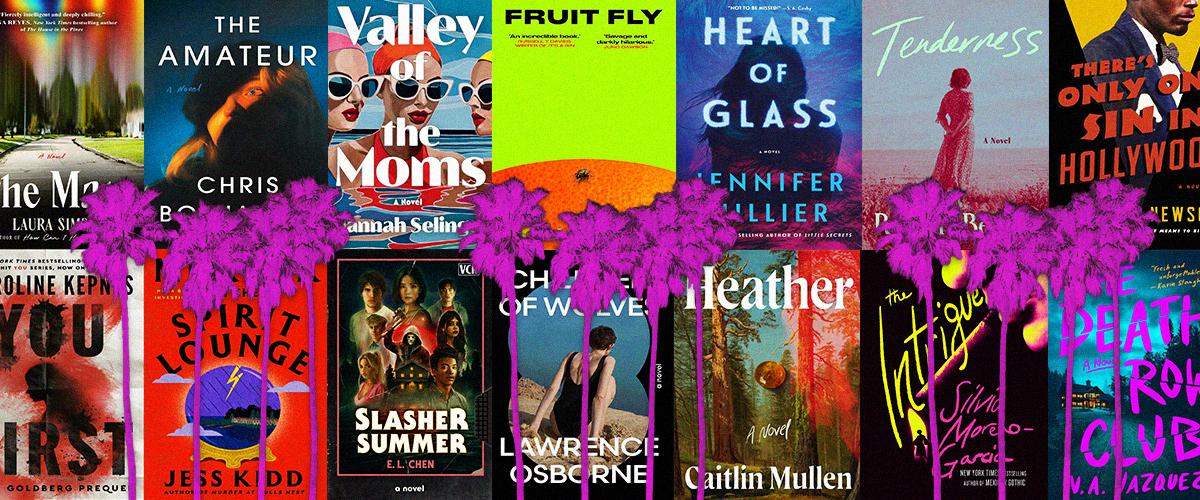
Jess Kidd, Murder at the Spirit Lounge
(Atria)
A medium, a series of supernatural deaths, a former nun investigating…Jess Kidd’s new novel, the second installment in the Nora Breen Investigates series, has it all, and Kidd brings it all together with an intricate, elegantly executed plot. –DM
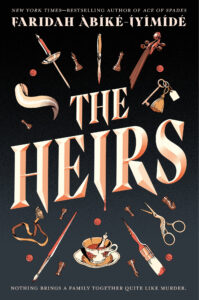
Faridah Àbíké-Íyímídé, The Heirs
(Feiwel and Friends)
The Heirs is pure delight in the package of a mystery novel. In this YA locked-room mystery perfect for fans of Umbrella Academy, the six adopted children of an eccentric billionaire reunite at their father’s palatial abode for annual party celebrating his widely-publicized talent for raising prodigies. Too bad he hasn’t succeeded: his kids are burnouts, his parenting is a joke, and by the end of the celebration, his life will be over. A perfect locked-room mystery that should please adults and teens alike! –MO
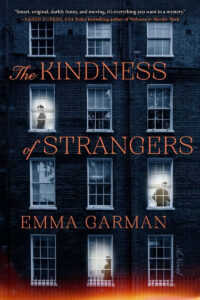
Emma Garman, The Kindness of Strangers
(Summit Books)
The longtime residents of a London boarding house come together to protect their own when a stranger moves in and destabilizes their delicate balance of live-and-let-live. Garman skillfully crafts complex and intersecting character arcs with fully realized backstories, for a richly detailed portrait of post-war England and a sensitive take on the long shadows of historical trauma. –MO
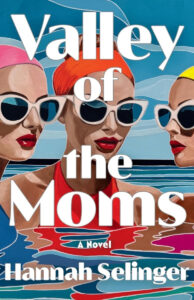
Hannah Selinger, Valley of the Moms
(Mulholland)
Hannah Selinger, known for her food writing, sets her sights on a world even more vicious, competitive, and high-stakes: suburban motherhood. In Valley of the Moms, a parent is incensed to learn that her daughter’s public school does not provide equal access to all events, but instead has a paid tier system that privileges wealthier attendees. One year later, that parent is dead, her partner faces accusations of murder, and the school’s PTA seems more in charge than ever. How did Selinger’s fiercely protective heroine end up dead over an issue both widely publicized and unbearably mundane? That’s for me to know and you to find out (by reading the book). Read it! It’s great! –MO
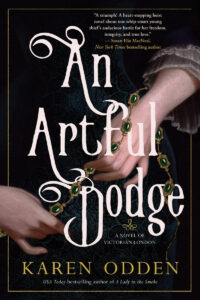
Karen Odden, An Artful Dodge
(Soho Crime)
Odden’s latest is an enthralling tale of an all-women thieving ring in Victorian London. We’re following Kit Jimeson, the most talented in the ring, who dreams of getting out of the life but has to bring her considerable talents to bear on at least the proverbial ‘one last job’ if she’s going to get herself and her sister into new lives. An Artful Dodge is lush with detail and populated by characters you won’t soon forget. –DM
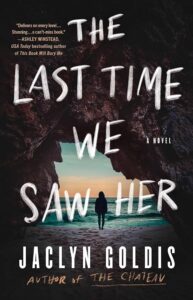
Jaclyn Goldis, The Last Time We Saw Her
(Atria/Emily Bestler)
In Goldis’ latest globetrotting thriller, a group of former campers reunite on the Azores a decade after one of them went missing, ready to participate in a documentary about what really happened ten years before. Goldis manages the revelations with an expert touch and keeps readers guessing at every turn. –DM
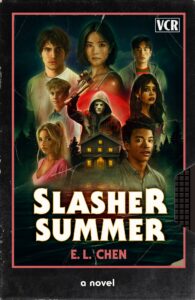
E.L. Chen, Slasher Summer
(Crown)
It’s a great year for snappy, fast-paced stories featuring multiple POVs, and this locked-room ode to slasher cinema is one of the standouts. In Chen’s horror thriller, seven former classmates reunite for one last blowout at their old cabin haunt, a famed film location turned infamous party spot. With old dramas resurfacing, and old rivalries resuming, the party’s off to a miserable start—a slasher imitating their favorite film is just the icing on a very bad cake. At least the screaming is less awkward than the silence! –MO
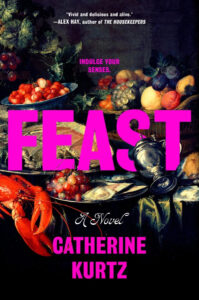
Catherine Kurtz, Feast
(Berkley)
In this deeply researched historical thriller, a poison taster believes she’s found the perfect position—until her new employers show her otherwise, despite their extreme reliance on her talents. Betrayal, vengeance, and a long-awaited reckoning ensue. –MO
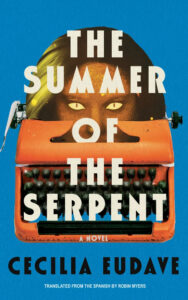
Cecilia Eudave, The Summer of the Serpent
Translated by Robin Myers
(Soho Crime)
Lives and visions collide in one long hot summer in Guadalajara, Mexico, in the late 1970s, in Eudave’s new fever dream of a novel. The Summer of the Serpent makes for a hypnotic and transporting read and a powerful, impressionistic portrait of a place and time. –DM

Naomi Kritzer, Obstetrix
(Tordotcom)
Obstetrix is one of several upcoming thrillers to examine compulsory reproduction in the post-Roe era. In Obstetrix, the last ob-gyn to perform an abortion in South Dakota is kidnapped after her acquittal and forced to play midwife to a cult. If you like this book, check out Carrying, by Samantha Josephs, in which a trans woman so stealth her family doesn’t even know finds herself impossibly pregnant, and Fallow, by Sarah Anderson, in which a company hires an in-house surrogate to eliminate a need for executive maternity leave. –MO
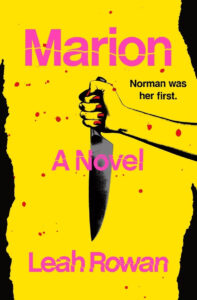
Leah Rowan, Marion
(St. Martin’s Press)
What if Marion had fought off Norman Bates when he attacked her in that shower, then started her own rampage? That’s the premise of Rowan’s furious rewrite of Hitchcock’s Psycho, and I cannot wait to see how it all plays out. –MO
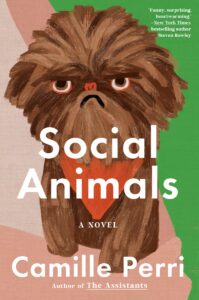
Camille Perri, Social Animals
(G.P. Putnam’s Sons)
Three lives intersect at the local dog park, in this exceedingly charming mystery featuring a private eye, new friendships, and lives coming into quiet collision in the most unexpected ways. Perri consistently delivers some of those most heartfelt and satisfying mysteries of any writer today. –DM
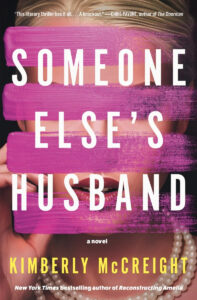
Kimberly McCreight, Someone Else’s Husband
(Knopf)
Kimberly McCreight has quickly become a favorite, with her twisty plots, wry sense of humor, and fully realized characterizations, and her new novel is simply a joy to read. McCreight is an avid mountain-climber, and takes readers to the top of Kilimanjaro in her latest, featuring a newly divorced adventurer surrounded by, you guessed it, other people’s husbands. Not all of whom will make it down the mountain alive. –MO
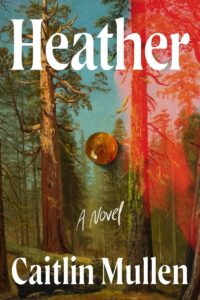
Caitlin Mullen, Heather
(Celadon)
Mullen’s new novel has tension and atmosphere to burn, unfolding a dark family mystery against the utter eeriness of New Jersey’s Pine Barrens region.–DM
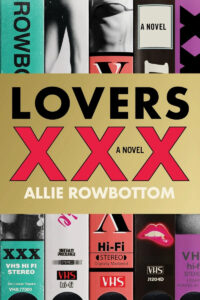
Allie Rowbottom, Lovers XXX
(Soho)
If you loved Boogie Nights, but wish it had way less Marky Mark and way more sapphic romance, then this is the book for you! Allie Rowbottom’s saga of the halcyon days of VHS pornography is both a love letter to sexual expression and a cautionary tale of capitalist exploitation, with gorgeously crafted set pieces and an efforvescent energy. In Lovers XXX, a reform school graduate heads to LA to search for her best friend; after a detour with a heroin-addicted biker boy, she finds her bestie dancing in a strip club, and the two embark on a wildly successful career in videotaped pornos. Can they carve out a space for independence, doing what they love? Or will the mounting consequences and societal pressures turn their chosen career into an inescapable nightmare? –MO
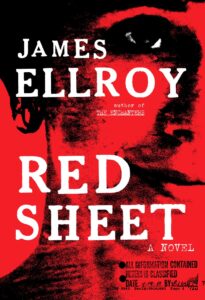
James Ellroy, Red Sheet
(Knopf)
Ellroy takes us on a wild ride through a funhouse mirror view of the early 1960s, as a dope-fiend criminal who also happens to be the LAPD’s most effective fixer stumbles upon a shocking communist conspiracy with Nixon at its center. Could Tricky Dick have been a Soviet spy? Was there a secret breeding program to create the perfect party assassin? Could a cop who does that many drugs even hold a conversation, much less lead a covert investigation? These are the kind of questions that pop up throughout Ellroy’s latest, not one of them a question that anyone has bothered to ask before (except the drug one) and yet the novel’s bizarre collection of hallucinatory ramblings and deep state conspiracies is also the best thing Ellroy has written since LA Confidential, and quite probably one of the best books of the year. As long as no one thinks it’s based on actual history. –MO
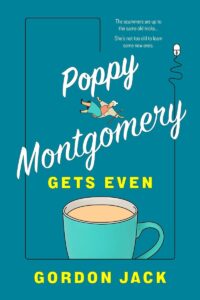
Gordon Jack, Poppy Montgomery Gets Even
(Mysterious Press)
A senior sleuth with a few bones to pick with life, and everyone in it, features in this charming new caper, pitting eighty-year-old Poppy Montgomery in a battle against a team of scammers. –DM
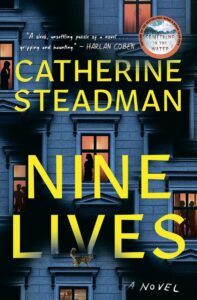
Catherine Steadman, Nine Lives
(Bantam)
Steadman’s latest has a fabulous conceit: imagine Rear Window, but with a cat camera! When Steadman’s heroine first arrives to her newly purchased abode in a tony London neighborhood, she expects quiet, safety, and most of all, no surprises. But when her cat returns from a nighttime expedition with a plea for help scratched into her collar, she digs out her old cat camera and discovers a horrifying secret, just down the street, one which only she seems prepared to address. –MO
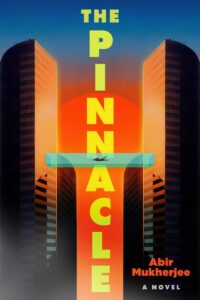
Abir Mukherjee, The Pinnacle
(Little Brown)
Mukherjee has been rising in the ranks of international thrillers in recent years, and The Pinnacle will surely win him droves of new readers, as he spins out a propulsive mystery around a vanished Bollywood darling, her washed up American actor husband, and the many lives that intersect with theirs in the underbelly of the Indian film industry. Mukherjee is a top-notch thriller talent. –DM
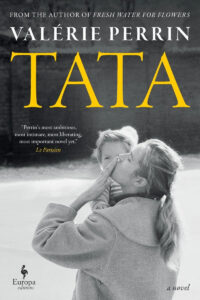
Valérie Perrin, Tata
Translated by Hildegarde Serle
(Europa)
As Tata begins, the narrator receives a call notifying her of her aunt’s death. The only problem? Her aunt supposedly passed away years before. So whose body is buried in her aunt’s grave, and why would she have faked her death in the first place? Through investigating her beloved relative’s disappearance, Perrin’s protagonist unearths a life full of secret loves and hidden happiness, for a fascinating character study that doubles as an elegant mystery. –MO
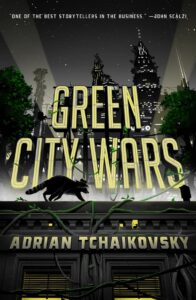
Adrian Tchaikovsky, Green City Wars
(Tor)
Animals solving mysteries? You might be forgiven for considering that image cute, given the new film featuring Hugh Jackman and a bunch of sheep, but the animals in Green City Wars live Hobbesian lives: nasty, brutish, and short. They’ve been bioengineered as “little helpers” to keep the future’s green cities functioning properly and looking pristine, an easy enough set of tasks to accomplish with the brain juice boosters that activate their genetically modified intelligence.
There’s a whole lot of animals competing for very few resources, including tightly controlled access to the medicine that keeps them (for lack of a better word) human, and every interstitial space in the city is alive with conflict between the gangs of armed critters ready to kill for resources, pride, and politics. The parrots are, of course, anarchists. And there’s a mouse on the loose with some very dangerous chemical equations that could blow the whole shebang to smithereens…And one tough little PI raccoon ready to do whatever it takes to stop him. This book is so adorable. And so murderous. Just like nature. –MO
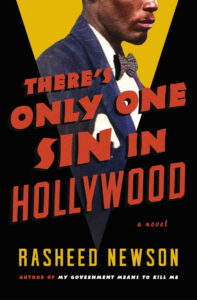
Rasheed Newson, There’s Only One Sin in Hollywood
(Flatiron)
Newson’s latest is a triumph of historical storytelling, featuring layered narratives that reveal the novel’s overarching themes through parallel trajectories, and use the dissonance of contrast to create a sense of unease, a mythos of unreliability. But to step back: here’s what the novel is actually about! Newson tells the story from the perspective of a fixer for Black and queer Hollywood, an efficient and amoral character who’s often torn between his own needs and those of the studios and their stars; he’s also a closeted gay man assigned to be a handler for an reckless queer actor, the star of a new film based on a WWII flying ace who happened to be the fixer’s first great love. What ensues is a tortuous journey of community defiance, self-erasure, and the sacrifices we make for love or money. If you read one historical novel this year, read this one. –MO
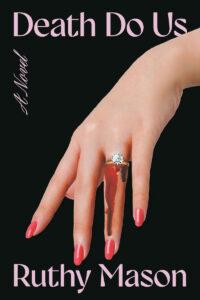
Ruthy Mason, Death Do Us
(Union Square)
Mason’s debut takes on the wedding industry in this gothic thriller. In Death Do Us, a newly engaged woman begins to physically deteriorate, and the cause may be an heirloom from her fiance’s wealthy clan. Will she make it to the wedding? Or will the cursed thing growing inside her fully take possession of its earthly host? Only time (and a few more pages) will tell. –MO

Daniel Kraus, The Sixth Nik
(Saga)
Hot off the heels of his well-received Angel Down, and with several film adaptations under his belt or in the works, Daniel Kraus is having a moment, with two novels publishing this year: the self-explanatory film criticism book Partially Devoured: How Night of the Living Dead Saved My Life and Changed the World, and the space horror novel The Sixth Nik, which completely and utterly destroyed me. In The Sixth Nik, a young girl is tasked with an epic quest to a dark truth, for a work reminiscent of Ender’s Game and Dan Simmons’ Hyperion, neither of which had been read by Kraus before writing this novel (as the publisher’s introductory note has assured me). A ridiculously awesome book, with a shattering finale. –MO
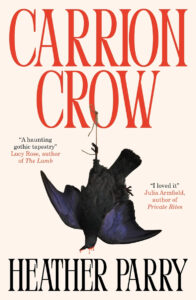
Heather Parry, Carrion Crow
(Pushkin Press)
What a truly disturbing tale! Heather Parry’s Carrion Crow is based on an infamous French case that you’ll recognize instantly if you, like me, are on Wikipedia late at night looking through the most messed-up crimes in history. At the start of the novel, Parry’s locked-in-the-attic heroine remains cheerful, despite her circumstances—she’s only up there to get a little paler, to lose a little weight, to make sure her morganatic marriage to a struggling solicitor has the highest chance possible of success. As she stays in the attic longer and longer, getting weaker and weaker, she begins to think her mother has lured her up the rickety stairs for a more nefarious purpose—one involving not rest and preparation, but captivity and abandonment. Check out Parry’s previous novel, Orpheus Builds a Girl, for more feminist body horror with a historical twist! –MO
___________________________________
JULY
___________________________________
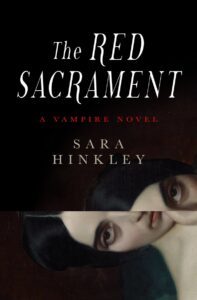
Sara Hinkley, The Red Sacrament
(Titan Books)
A historical horror of epic proportions! In Hinkley’s self-assured debut. a theatre troop composed entirely of vampires finds their survival imperiled when an indecorous set of siblings infiltrate their company, imperiling their hosts’ safety with a growing pile of rather publically slaughtered victims. Add to that a witch with a dangerous agenda, and place them all in the leadup to the Franco-Prussian War, and disaster is almost certainly garanteed. Like most vampire novels, this book is really about capitalism. And queer people. And art. And theatre management (I suppose that last one isn’t so much a vampire trope, but it is a fascinating part of the book). As most books featuring immortality have posited lately: living forever, it’s not so great. –MO
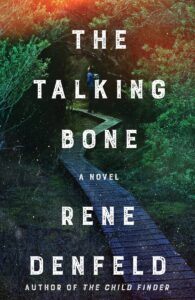
Rene Denfield, The Talking Bone
(Harper)
Rene Denfield is a death row innocence advocate in real life, and her experience and empathy shows throughout her latest novel. The Talking Bone follows a private investigator as she methodically searches for evidence that could exonerate an innocent man, two weeks from execution and desperate for help. As Denfield’s heroine uncovers more and more proof that her client has been framed, she begins to unravel the mysteries in her own personal history. A gut-punch of a novel with as much beauty as it has pain, The Talking Bone showcases an author at the top of her game. –MO
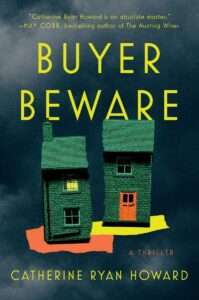
Catherine Ryan Howard, Buyer Beware
(Simon & Schuster)
Catherine Ryan Howard will always be in my thriller hall of fame for writing a pandemic novel that was actually good (the use of lockdown to create suspense in 56 Days is unmatchable), and I can’t wait to dive into her latest. In Buyer Beware, a new homeowner discovers a sinister history behind the tony remodel, a history her neighbors would do anything to keep buried, while additional narrators fill in all the nasty gaps in the building’s dark past. Given Howard’s mastery of claustrophobic settings and the trappings of domesticity, this one is sure to keep the pages turning. –MO
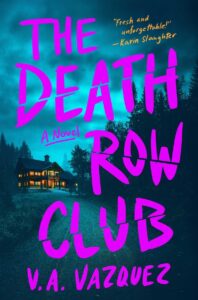
V. A. Vazquez, The Death Row Club
(Gallery)
The set-up for this one is irresistible: murder at a weekend getaway for the children of serial killers. That’s all the information I need to know how thoroughly I’ll enjoy it! –MO
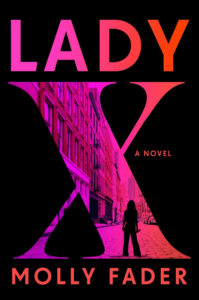
Molly Fader, Lady X
(Ballantine)
Lady X is split between the present day, where Fader’s heroine is grappling with the discovery of her Hollywood heart-throb husband’s bad behavior, and New York City in the 1970s, where the mysterious Lady X begins a series of escalating attacks against creeps, rapists, and other misogynist offenders. So good! And, depending on my future career as a graffiti-spraying vigilante painting dicks on a wall in the name of feminist justice, so inspirational… –MO
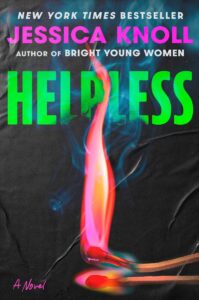
Jessica Knoll, Helpless
(Scribner)
A Jessica Knoll novel is always cause for celebration, and this, her fourth, preserves her reputation for intense characterizations and emotional depth, while also a rollicking good crime story. When Knoll’s heroine goes to bury her old mentor, she runs into an ex-boyfriend who made her feel things she’s never found since, and never knew how to ask for. Her ex, too, has some unresolved issues with their breakup—enough to drug, kidnap, and take her to a remote cabin, where he plans to talk things through with her once and for all. Nothing in this twisted tale is what I expected, and with a novel from Knoll, I’d expect nothing less. –MO
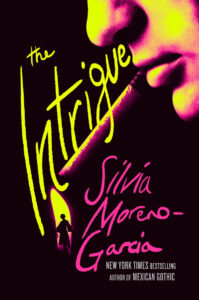
Silvia Moreno-Garcia, The Intrigue
(Del Rey)
A con artist who preys on wealthy older women in 1940s Mexico teams up with a disenfranchised bastard to bilk her aunt of all they can, and just maybe, find happiness with each other. The Intrigue looks to be Silvia Moreno-Garcia in peak form, for another entry in a storied career. –MO
Charles Salzberg, The Beginning of Everything
(Regalo Press)
A man grapples with his secret psychic abilities and takes on a missing person investigation in this compelling new mystery from longtime journalist, Salzberg. –DM
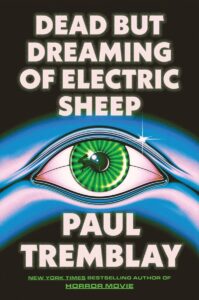
Paul Tremblay, Dead but Dreaming of Electric Sheep
(William Morrow)
A semi-professional Twitch streamer is hired to pilot a mostly-dead corpse from coast to coast in a grotesque display of proprietary technology—a plot reminiscent of nothing so much as Weekend at Bernie’s, oft-mentioned by the novel’s knowing protagonist, and a signature example of Paul Tremblay’s wacky influences and deadly serious applications. –MO
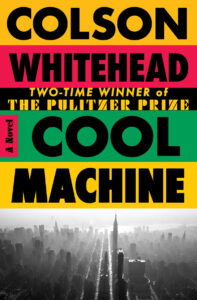
Colson Whitehead, Cool Machine
(Doubleday)
Whitehead’s Harlem Trilogy has easily been one of the high water marks for contemporary crime fiction, and the series comes to a fitting conclusion this year with Cool Machine, a wild march into 1980s New York, as Ray Carney dives into the proverbial ‘one last job’, Pepper takes an odyssey through the downtown club scene, and a sliver of redemption is sought through family ties. Whitehead is one of the most talented novelists of the era, and we’re lucky he’s taken on such a deeply felt, wildly entertaining project. –DM
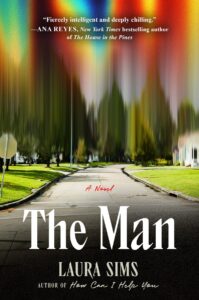
Laura Sims, The Man
(Putnam)
This book is one of the few stories I’ve ever read that successfully pulled off the mid-novel twist. I can’t tell you much more without spoiling it, but to briefly summarize: The Man follows a housewife with a rare talent in photography as she is pushed towards publicizing her brilliance, with deadly results. Sims’ latest profoundly captures the essence of Cicero’s favored saying: cui bono? Who benefits, indeed. –MO
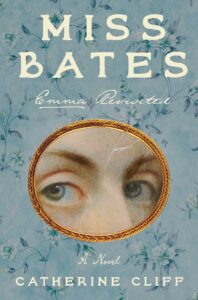
Catherine Cliff, Miss Bates: Emma Revisted
(Pegasus)
This book is for all those who have grown tired of the Jane Austen marriage market and would prefer to consider the spinster. I’m a sucker for a good backstory for a boring character, and Cliff’s new novel does for the pathetic Miss Bates what Laurie R. King did for Mrs. Hudson, Holmes’ landlady, in The Murder of Mary Russell: restores a little agency to the side-lined helpers and gives them a bit more control over their own narrative, as they puts one over all those snobby central characters and their endless assumptions. Good on you, Catherine Cliff! Now let’s see someone rescue Mrs. Havisham from that awful wedding cake. –MO

Isabella Valeri, The Prodigal Daughter
(Atria/Emily Bestler Books)
I loved Valeri’s debut, Letters from the Dead, a perfectly gothic potboiler which first introduced her flame-haired Machiavellian heiress and the nasty relations trying to keep her from either inheritance or escape. The Prodigal Daughter picks up just where the previous volume left off, as Valeri’s heroine has been spirited away from her lover and her brief chance at freedom, forced back to the family estate to be married off to whichever suitor best furthers both their financial imperatives and aristocratic bloodlines. The put-upon scion intends to be much more than a brood mare for the dwindling upper classes, if only she can get her hands on enough secrets to win her independence. I finished this one far too quickly, and now I must wait two years for the next installment…Sigh. –MO
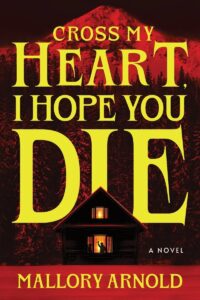
Mallory Arnold, Cross My Heart I Hope You Die
(Poisoned Pen Press)
I loved this clever revenge story, pitched as John Tucker Must Die meets Cabin in the Woods, in which three women who’ve all been dating the same man (and loaning him money) devise a fiendish plan to scare him into admitting his guilt. One of the spurned lovers has just inherited a remote cabin, one that seems tailor-made to scare a weeny into saying he’s a scrub: the walls are covered in grotesque graffiti, the attic is full of buckets of blood, and the surrounding forest holds the warped remnants of an apocalyptic cult. What could go wrong? –MO
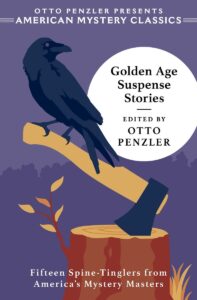
Otto Penzler (ed), Golden Age of Suspense Stories
(American Mystery Classics)
Detective fiction usually gets the top billing for its golden age, but classic suspense stories are getting their time in the limelight now, too, with this collection featuring fifteen tales from the likes of James M. Cain and Ellery Queen. –DM
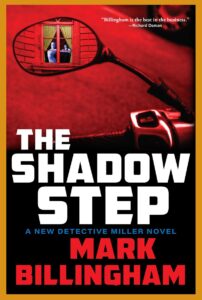
Mark Billingham, The Shadow Step
(Atlantic Crime)
I’m very much looking forward to Mark Billingham’s The Shadow Step, the second to feature the kindly yet foreboding Detective Miller, this time investigating a bizarre crime that’s resulted in an innocent man’s determined confession. –MO
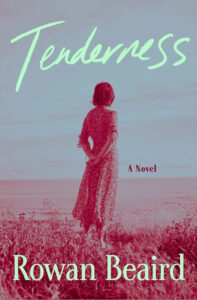
Rowan Beaird, Tenderness
(Flatiron)
Rowan Beaird’s latest, a slow-burn mystery set in the 1970s, takes place on a remote island that will soon host a wedding celebration between an old-money groom and his penniless aristocrat of a fiancee. The bride is recently escaped from a cult and enigmatic in her commitment to her intended; she yearns for escape, for freedom, and for a real chance at love, and feels stifled by the trappings of wealth and convention. The rarified guests have gathered in expectation of scandal, gossip, and perhaps a visit from the cult’s remaining members, while the mysterious bride stays a force of gravity at the center of the celebration, a mirror for all her friends and family and their many insecurities, even as they refuse to acknowledge her own rich interior life or the unvarnished truths behind her supposedly shocking actions. Tenderness is an astute study of human behavior, and a complex portrait of a resonant era. –MO
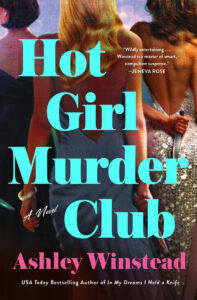
Ashley Winstead, Hot Girl Murder Club
(Minotaur)
I believe the title says it all. But if you need any additional encouragement to dive in, then know that Ashley Winstead is a skilled practitioner of the thriller arts, excelling in the suspense world for her captivating plots, intriguing characterization, and off-the-wall twists. If Winstead writes it, then I’m reading it. –MO
___________________________________
AUGUST
___________________________________
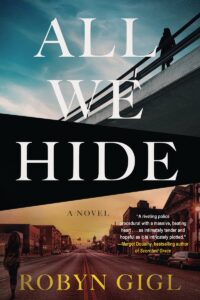
Robyn Gigl, All We Hide
(Soho Crime)
I’m psyched for Robyn Gigl’s All We Hide, the first in a new series featuring trans detective Lauren Kelly, as she fights rampant departmental discrimination and tries to solve the decades-old murder of a former high school classmate. Sherry Darling was the first out trans girl Kelly ever met, and a beacon of hope to her closeted classmate; she was also the victim of a brutal killing, blamed on her since-exonerated boyfriend—and the closer that Kelly gets to finding the real killer, the more determined the town elders are to stop her. –MO
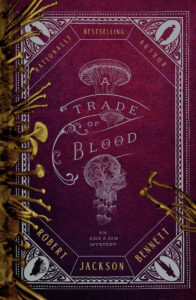
Robert Jackson Bennett, A Trade of Blood
(Del Rey)
Robert Jackson Bennett’s extremely entertaining Ana and Din series returns for a third installment, and it might be the best one yet. A Trade of Blood takes place in an agriculture region where the local aristocrats have been dropping like flies. Ana and Din have been sent to clear up the suspicious deaths and restore order to an essential region; instead, the two investigators uncover a shocking conspiracy with terrifying implications for the past, present, and future of their beloved Empire. So good!!!–MO
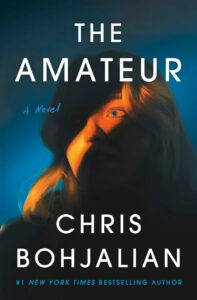
Chris Bohjalian, The Amateur
(Doubleday)
Chris Bohjalian’s latest is, quite simply, a masterpiece. I cannot praise this novel enough. It’s delicate, haunting, complex, and startling; a wide-ranging condemnation of polite society disguised as a character study and comedy of manners. And in addition to all The Amateur‘s literary feats, the novel also happens to make golf seem…kinda interesting? Which is obviously the novel’s most difficult achievement. In case you want to know what the book’s actually about: The Amateur begins with a shocking death, as a budding golf pro hits a ball through a hole in a net and hits a caddy in the head, instantly killing him. What follows is an odyssey of self-recrimination and terrible truths, a prescient reminder that those who feel most inclined towards guilt are often the least deserving of blame. The Amateur is a standout stunner of a story, and the perfect gateway into Bohjalian’s substantial literary oeuvre. –MO
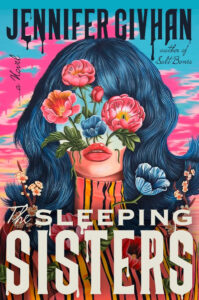
Jennifer Givhan, The Sleeping Sisters
(Little Brown)
The New Mexico desert plays host to a series of killings linked to a dark family legacy in Givhan’s latest chilling horror novel. The Sleeping Sisters mines the region’s history and mythology, but at the center of it all is the powerful story of a mother’s search. –DM
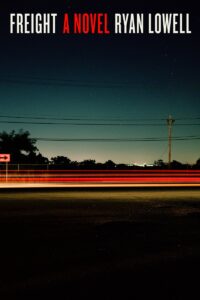
Ryan Lowell, Freight
(Little Brown)
This exceptional debut is the perfect balance of voice and propulsion: a barreling forward, momentum-driven plot that never scrimps on finding the pieces of humanity that make up its sprawling cast. in Freight, a semi-truck is headed toward the US-Canadian border, and as it moves, we meet the many, many people who seem to be involved in a plot to capture it. Freight has all the markers of classic noir along with a very contemporary sensibility about American crime. –DM
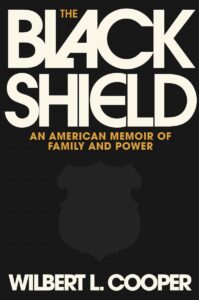
Wilbert L. Cooper, The Black Shield: An American Memoir of Family and Power
(FSG)
This book is essential reading for anyone trying to understand the corrupting nature of racist institutions, and how people trying to help their communities through reforming existing power structures instead find themselves weaponized against their own kin. Wilbert L. Cooper grew up in Cleveland, the child of two cops from policing families, both members of the Black Shield, an organization dedicated to fighting for Black officers’ rights and the center of those officers’ social lives. In a sweeping, elegiac examination of the many people who tried to institute reforms and instead came up against an impossible system, Cooper tracks the limits of reform-based movements to improve the lives of either Black communities or even Black police officers. He also places the history of policing in its full context, from its racist origins, through myriad attempts at reform, down to the present-day backlash against Black Lives Matter. Throughout the book, Cooper also grounds his study in personal remembrances and revealing interviews, for a lyrical work of intensely researched nonfiction as shattering as it is empathetic. –MO
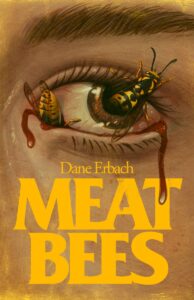
Dane Erbach, Meat Bees
(Clash Books)
In this gleeful ode to monster schlock, set against our modern backdrop of environmental destruction, flesh-eating wasps descend upon a small town in the Smoky Mountains. A grumpy teenager in town for the summer may be the community’s last defense against a nightmarish threat, if she can get over rolling her eyes long enough to notice all the mysterious disappearances. Also, there is a really cool “forest coaster” which sounds insanely dangerous and which I must ride immediately. –MO
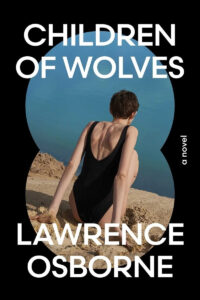
Lawrence Osborne, Children of Wolves
(S&S/Summit)
With any new Osborne novel, the thing I’m interested to learn first is the setting. I don’t really want to know much more than that, since it goes without saying that I’m going to enjoy the book, that expats will be involved, that something seemingly glamorous will prove to have an unspeakable underbelly. Osborne is, for me, the most atmospheric of working suspense writers. I just want to know where he’s going to be bringing all that talent to bear —this time around, it’s a seaside hotel in Turkey, with the action moving to Istanbul, as well. I won’t tell you more than that, except to say that Osborne doesn’t disappoint—this is an absolutely sensational novel. –DM
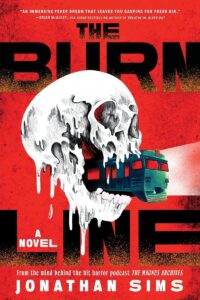
Jonathan Sims, The Burn Line
(Poisoned Pen Press)
The Burn Line is a terrifying, strangely heart-warming take on the vampire novel, wherein solidarity trumps individualism when it comes to fighting the undead (and, of course, negotiating union contracts). In Sims’ latest, a group of strangers discovers a horrifying conspiracy by London’s ultra-rich, who have been steadily feeding off the subway-riding proletariat in order to infinitely prolong their own monstrous existence. Do not let the heavy-handed metaphor dissuade you: Sims executes his plot with ease, finesse, and plenty of character development; the real star of the show is, of course, the London Underground. Enjoy the show! And of course, mind the gap. –MO
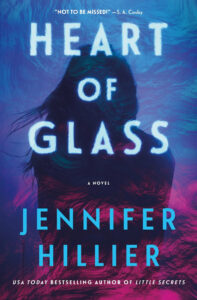
Jennifer Hillier, Heart of Glass
(Minotaur)
Heart of Glass looks to be classic Jennifer Hillier, featuring an old crime, a new murder, and a whole lot of secrets. In Hillier’s latest, two women revisit the greatest trauma of their youth—the disappearance of a friend from a notorious amusement park, now set to reopen—when new evidence challenges old assumptions, and new bodies start washing ashore. –MO
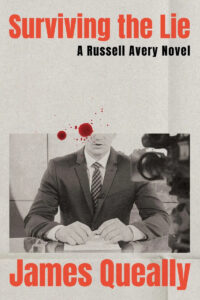
James Queally, Surviving the Lie
(Counterpoint)
Queally’s new Russell Avery novel is the most timely yet: a powerful story about disappearing journalists, conspiracy theorists, ex-cops, and the struggle to control truth in modern America. Queally is writing with a special fire these days, and his work is a must read for crime fans. –DM
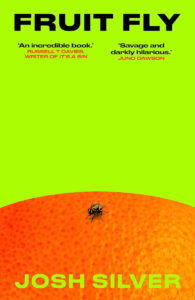
Josh Silver, Fruit Fly
(Crooked Lane)
A savage takedown of literary pretension and the quest for authenticity, Fruit Fly is quite possibly the meanest—and most accurate—take on publishing that I’ve read in some time. In this satirical psychological thriller, an author with a nasty case of writer’s block decides to steal the life story of a drug-addled sex worker for her new novel. Her chosen subject is no fool, sensing a place to stay and sober up if he plays this right, and their cat-and-mouse game of manipulation, exaggeration, and exploitation rapidly escalates to the point of mutually assured destruction. This book will leave you shaking your head at the state of the publishing industry, and wondering who owns your story, and more importantly, who dictates your truth. –MO
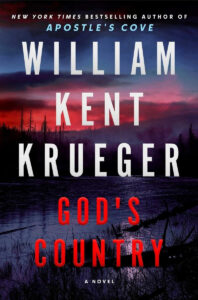
William Kent Krueger, God’s Country
(Atria)
We’re in somewhat of a series renaissance, and at least some of that must be due to the staying power of series like Krueger’s Cork O’Connor novels, which have kept up the same level of quality for over 20 installments. In the latest to feature the nature-loving detective, Cork uncovers a terrible conspiracy surrounding Minnesota’s Boundary Waters (one which resonates with real-life efforts to protect this environmentally sensitive zone from rapacious energy developers). –MO
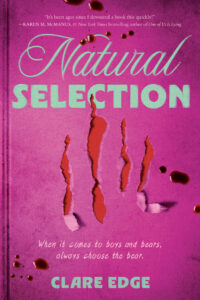
Clare Edge, Natural Selection
(Delacorte)
Remember when the internet was deciding if it was better to come across a bear or a man when walking as a woman in the forest? Well, what if the woman….was the bear? And what if she was going around killing off nasty misogynists in the town next door? –MO
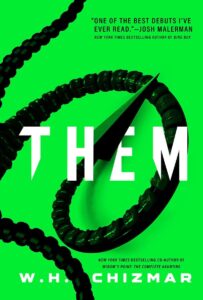
W.H. Chizmar, Them
(Gallery)
This survival horror is epic, violent, and not for the faint hearted. Chizmar’s debut consists of dual narratives, one leading up to an alien apocalypse, and the other set ten years after the fall of civilization as we know it. In the first, a government bureaucrat in charge of a top-secret research institute discovers the hubris of playing god, while in the latter, a lone survivor searches for signs of life amidst the devastation, while evading the scorpion-like monsters who now rule the landscape. A classic drama of pride before the fall, but with giant space bugs. Who have huge stingers, three jaws, and biometallic scales that are impervious to bullet fire. Yeah, they’d win. –MO
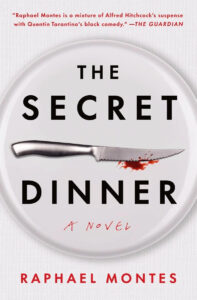
Raphael Montes, The Secret Dinner
(Celadon)
Raphael Montes has been a favorite of mine ever since I read his darkly comedic kidnapping story, Perfect Days (the psychopathic narrator not only abducts a woman but also…forcibly edits her novel, which is just the worst thing you can ever do to a writer). I’ve been waiting to read more from Montes ever since, and The Secret Dinner, his first US publication in over a decade, seems well worth the wait. In The Secret Dinner, a group of broke roommates finds a novel way to make rent: hosting private dinners for the ultrawealthy, where they serve one special ingredient, not available anywhere else—human flesh. A satirical (and literal) evisceration of foodie culture and wealthy excess, The Secret Dinner should be read in public, while eating a very bloody piece of meat, and snickering softly. If everyone around is not freaked out by the time you finish your meal then you are DOING IT WRONG. –MO
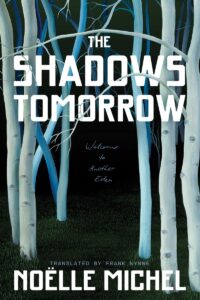
Noëlle Michel, The Shadows Tomorrow
Translated by Frank Wynne
(Simon & Schuster)
In Noëlle Michel’s newly translated parable of society and spectacle, Neanderthals have been brought back to life—and made the subject of an enormously popular reality show from within their nature reserve. Could the world’s ongoing obsession with the minutiae of their lives be covering more sinister purposes for their renewed existence? What part do humans play in the unfolding drama, as perpetrators, collaborators, bystanders, or allies? A passionate and altogether fascinating entry into the world of speculative thrillers, The Shadows Tomorrow is a must-read. –MO
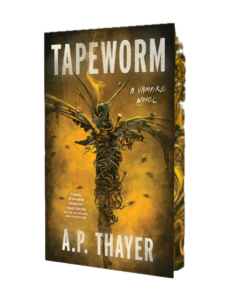
A.P. Thayer, Tapeworm
(Evil Twin)
An ancient evil dwells below the dried up lake that once filled Southern California, unable to escape its subterranean prison—that is, until climate change opens a way to the surface, and fractious vacationers soon become the perfect hosts to, well, a lot of worms. So many worms. And they are quite reasonable worms, with fairly achievable goals. This book is the first release from Zando’s new Evil Twin horror imprint, adding to the pantheon of new spinoffs celebrating the horror renaissance. –MO
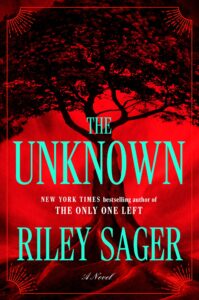
Riley Sager, The Unknown
(Dutton)
Riley Sager’s at it again, combining horror and mystery in a delightfully creepy, pastiche-savvy standalone. In The Unknown, a struggling actress lands a role in a new movie about five women (all mediums) who mysteriously disappeared in 1926—but when she spends a week on the island with the cast and crew, she begins to realize that what might have happened back then might be happening again now. I’m already shivering!–OR
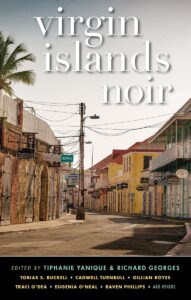
Virgin Islands Noir, edited by Tiphanie Yanique and Richard Georges
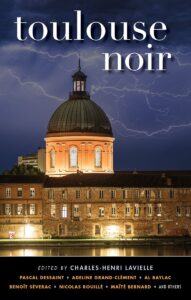
Toulouse Noir, Edited by Charles-Henri Lavielle
(Akashic)
Akashic brings two new anthologies, Virgin Islands Noir and Toulouse Noir, both of which look to be stunning additions to the best (and longest-running) series in publishing. –MO
___________________________________
SEPTEMBER AND BEYOND
___________________________________
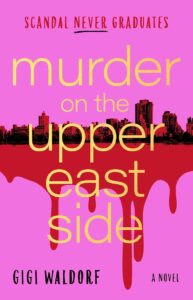
Gigi Waldorf, Murder on the Upper East Side
(Atria/Emily Bestler)
Gigi Waldorf’s new novel is pitched as Gossip Girl meets Only Murders in the Building, which is all I need to want to read this immediately. One reviewer of an advance copy warned that the book never stops noting the impact of class and wealth on characters’ behavior, but in my humble opinion, that’s not a good reason to stay away—that’s an endorsement. Waldorf is the pen for Kit Frick, by the way, so if you like this one, definitely check out the rest of her work.–MO
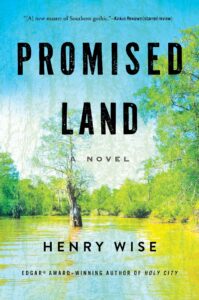
Henry Wise, Promised Land
(Atlantic Crime)
In this sequel to the breakout debut, Holy City, a new investigation takes deputy sheriff Will Seems deep into the swampland of southeast Virginia and into the hidden history of the community surrounding it. Wise brings gothic notes to the classic detective plot, creating an atmosphere all his own. –DM
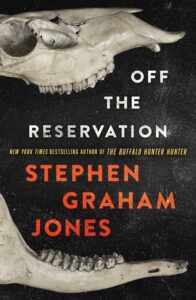
Stephen Graham Jones, Off the Reservation
(Saga)
Stephen Graham Jones returns to the world of The Only Good Indians, as the surviving characters accept a mission to rebury a native child who died at a notorious residential school; unfortunately there’s a dark spiritual presence that’s traveling with the soon-to-be-repatriated bones, and ready to wreak havoc along the journey. –MO
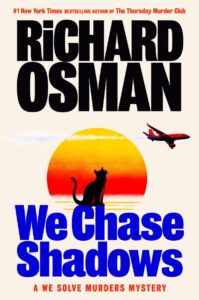
Richard Osman, We Chase Shadows
(Pamela Dorman)
Richard Osman’s second phenomenal crime series (I’m talking about the one he began with We Solve Murders two years ago) continues apace with this second installment, in which our heroes Amy, Rosie, and Steve take on their first proper case: one involving a mysterious killer who has committed a murder in the Italian hills, and an even more mysterious client who wants the killer found out, but not at the hands of any authority. STRAP IN, FRIENDS!–OR
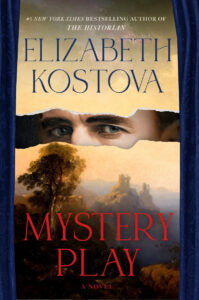
Elizabeth Kostova, Mystery Play
(Ballantine)
Another great vampire novel, in a year that’s positively full of them! Elizabeth Kostova’s upcoming take on Dracula draws inspiration from both 19th-century theater and the historical horrors of Vlad the Impaler, for an elegant tribute to an iconic story. Mystery Play feels a bit like the Booth family wandered into The Secret History and started eating everyone (and that’s a compliment). Fans of Kostova, historical fiction, and supernatural thrillers should all find much to enjoy—this is one of those books that makes it very difficult to set a demarcation point between mystery and horror. –MO

Molly Odintz
Molly Odintz is the managing editor for CrimeReads and the editor of Austin Noir, now available from Akashic Books. She grew up in Austin and worked as a bookseller before becoming a Very Professional Internet Person. She lives in central Texas with her cat, Fritz Lang.