26 New and Upcoming Historical Novels To Check Out in the Second Half of 2026
Papal intrigue, meddling spinsters, Hollywood hijinks, post-war shenanigans, and more
As the nation celebrates its 250th anniversary by forgetting its entire history, why not turn away from the parades and dive into a well-researched historical novel instead? Historical fiction is looking more and more to be one of the preserves of real history, as stories continue to remind us of what has occurred, while reafirming the basic humanity of those caught in the harsh currents of the past. These novels also, unfortunately, serve as mirrors to our own time, our own struggles, and bear witness to the ups-and-downs of history, in direct contrast to the pretend parabola of progress.
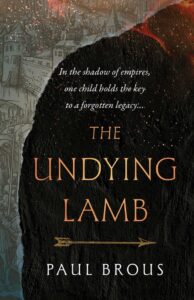
Paul Brous, The Undying Lamb
(Rising Action, October 6)
Setting: Italian states, 1230
When a book starts with a glossary featuring words from several now-dead languages, you just know that it’s going to be impeccably researched. In Paul Brous’ medieval-set thriller, an Albigensian assassin and an English knight must protect a child with an inconvenient lineage, as a vast array of forces attempt to eliminate their vulnerable charge. Perfect for those who enjoyed Conclave, but wish it had been set waaaay further back in history.
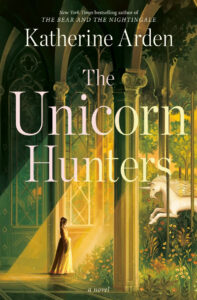
Katherine Arden, The Unicorn Hunter
(Del Rey, June 2)
Setting: Brittany, Late 15th Century
In 15th century Brittany, a noblewoman facing an unwanted union with a far-away lord puts in motion a clever plan to hold off the wedding: her husband-to-be must join her in a unicorn hunt in the dense, dark forest near to her castle. Soon, they find themselves transported into a magical realm beset by an ancient curse that only the lady and her wooing courtiers can break. The Unicorn Hunter takes its inspiration from the real Anne of Brittany, whose marriage to the King of France was just another method of preserving what little sovereignty her province could hold onto under the steady creep of French imperial influence, and who brought two beds to her wedding as a symbol of her independence. I think I would have quite liked Anne of Brittany—Katharine Arden certainly feels a sprightly kinship with the impish aristocrat.
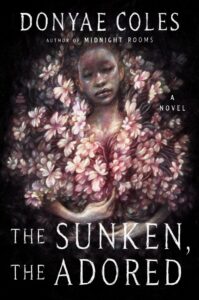
Donyae Coles, The Sunken, the Adored
(Amistad, August 25)
Setting: Venice, 1700
No one writes about hunger and want like Donyae Coles. I loved her terrifying take on the fairy underworld and their monstrous appetites, Midnight Rooms, and her latest continues her thematic exploration of desire and deprivation, this time in early 18th century Venice. In The Sunken, the Adored, a ship drifts into harbor with only one passenger left alive—and how she survived the voyage is even more nightmarish than any of the deaths surrounding.
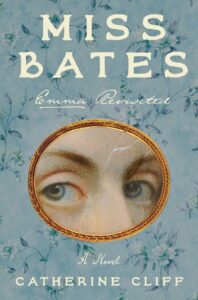
Catherine Cliff, Miss Bates: Emma Revisted
(Pegasus)
Setting: English Countryside, Early 19th Century
This book is for all those who have grown tired of the Jane Austen marriage market and would prefer to consider the spinster. I’m a sucker for a good backstory for a boring character, and Cliff’s new novel does for the pathetic Miss Bates what Laurie R. King did for Mrs. Hudson, Holmes’ landlady, in The Murder of Mary Russell: restores a little agency to the side-lined helpers and gives them a bit more control over their own narrative, as they puts one over all those snobby central characters and their endless assumptions. Good on you, Catherine Cliff! Now let’s see someone rescue Mrs. Havisham from that awful wedding cake.
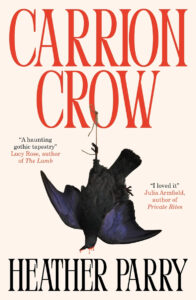
Heather Parry, Carrion Crow
(Pushkin Press)
Setting: France, Late 19th Century
What a truly disturbing tale! Heather Parry’s Carrion Crow is based on an infamous French case that you’ll recognize instantly if you, like me, are on Wikipedia late at night looking through the most messed-up crimes in history. At the start of the novel, Parry’s locked-in-the-attic heroine remains cheerful, despite her circumstances—she’s only up there to get a little paler, to lose a little weight, to make sure her morganatic marriage to a struggling solicitor has the highest chance possible of success. As she stays in the attic longer and longer, getting weaker and weaker, she begins to think her mother has lured her up the rickety stairs for a more nefarious purpose—one involving not rest and preparation, but captivity and abandonment. Check out Parry’s previous novel, Orpheus Builds a Girl, for more feminist body horror with a historical twist!
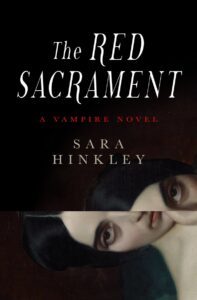
Sara Hinkley, The Red Sacrament
(Titan Books, July 7)
Setting: Paris, Mid-to-Late 19th Century
A historical horror of epic proportions! In Hinkley’s self-assured debut. a theatre troop composed entirely of vampires finds their survival imperiled when an indecorous set of siblings infiltrate their company, imperiling their hosts’ safety with a growing pile of rather publically slaughtered victims. Add to that a witch with a dangerous agenda, and place them all in the leadup to the Franco-Prussian War, and disaster is almost certainly garanteed. Like most vampire novels, this book is really about capitalism. And queer people. And art. And theatre management (I suppose that last one isn’t so much a vampire trope, but it is a fascinating part of the book). As most books featuring immortality have posited lately: living forever, it’s not so great.
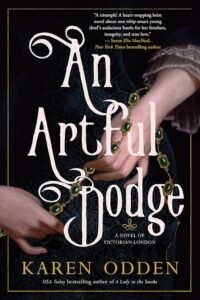
Karen Odden, An Artful Dodge
(Soho Crime, June 2)
Setting: Victorian London
Odden’s latest is an enthralling tale of an all-women thieving ring in Victorian London. We’re following Kit Jimeson, the most talented in the ring, who dreams of getting out of the life but has to bring her considerable talents to bear on at least the proverbial ‘one last job’ if she’s going to get herself and her sister into new lives. An Artful Dodge is lush with detail and populated by characters you won’t soon forget. –Dwyer Murphy
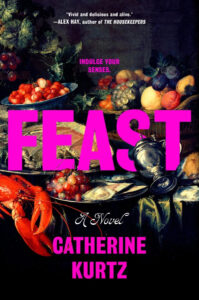
Catherine Kurtz, Feast
(Berkley, June 9)
Setting: Belle Epoque France
In this deeply researched historical thriller, a poison taster believes she’s found the perfect position—until her new employers show her otherwise, despite their extreme reliance on her talents. Betrayal, vengeance, and a long-awaited reckoning ensue.
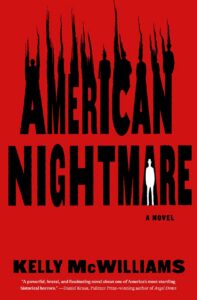
Kelly McWilliams, American Nightmare
(Crown, September 15)
Setting: New York and the hinterlands, 1920s
Walter White, former head of the NAACP and the driving force between many of the reforms in cultural depictions of African-Americans during WWII, is the hero of this historical horror novel, his light skin enabling him to go undercover for a Black newspaper and report on the massive spike of lynchings across the South in the 1920s. American Nightmare is well-crafted, richly detailed, and an excellent drama of investigative reportage, featuring vividly drawn characters and just a tinge of the supernatural. An excellent companion to Tananarive’s upcoming Mazywood, although Walter White’s brief cameo in that one is decidedly unheroic, alas.
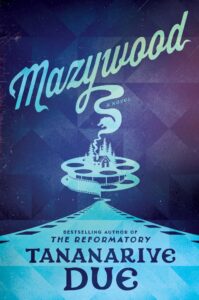
Tananarive Due, Mazywood
(Saga, September 22)
Setting: Hollywood, 1920s-40s
Tananarive Due has been steadily growing in reputation with each new work in her storied career, quietly amassing one of the greatest oeuvres in horror history; her last novel, The Reformatory, finally took Due from best-kept secret to household name, and her upcoming release delivers just as much heartbreak, horror, and history. Mazywood follows the long shadow of exploitation and trauma from the 1920s through to the present day: in Old Hollywood, the child of Black vaudevillians makes a fervent wish for a loyal helpmeet and a successful career, only to find herself facing rampant discrimination and impossible compromises; three generations later, her grandson takes his wife and children to his grandmother’s dilapidated resort, full of decayed glamour, dark secrets, a terrifying creature, and perhaps, just a kernel of hope. Mazywood may be 500 pages long, but I blazed through it in a single afternoon, and I have no doubt future readers will find it just as compelling. Man, this book was good…
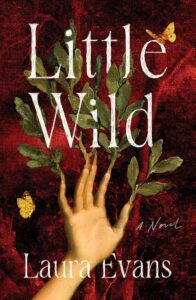
Laura Evans, Little Wild
(Henry Holt, June 23)
Setting: English Countryside, 1937
This one is pitched as “Atonement meets Weyward,” an entirely accurate description that I can confirm after having blazed through it. Little Wild begins on a sweltering September day in 1937, amidst preparations for a huge party celebrating beloved daughter Joanie, just returned from her travels to the continent. The family thinks Joanie is happily headed to Oxford in a week; only Margaret, her constant companion and the child of a rumored witch, knows Joanie’s real intentions. Throughout the long hot day, disasters major and minor plague the two girls’ reunion, and chaos and recriminations threaten their hastily made plans. Margaret won’t be swayed by any challenges to her desperately desired future with Joanie, and she’ll have to tap into all her departed mother’s witchy ways to get what she wants. Joanie’s voice hooked me from the first sentence, and Evans’ characters remain entirely believable, no matter how bonkers they behave. An incredible, self-assured debut that heralds a great future in the writing world.
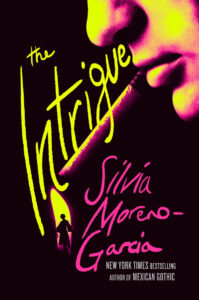
Silvia Moreno-Garcia, The Intrigue
(Del Rey, July 14)
Setting: Mexico, 1940s
A con artist who preys on wealthy older women in 1940s Mexico teams up with a disenfranchised bastard to bilk her aunt of all they can, and just maybe, find happiness with each other. The Intrigue looks to be Silvia Moreno-Garcia in peak form, for another entry in a storied career.

Ryan Burruss, American Crow
(Counterpoint, October 6)
Setting: Maryland, 1950s
American Crow is set in a hastily constructed suburb on the edge of DC, where evil lurks behind the veneer of normality, alcohol numbs the nightmares, violence rains down upon the weak and defenseless, and an epic showdown looms. Throw a mysterious, muscular stranger into this boiling cauldron of resentment and repression, add some romantic tension and dysfunctional family drama, throw in a little hinterland hijinks, and you’ve got a historical horror that packs an emotional wallop.
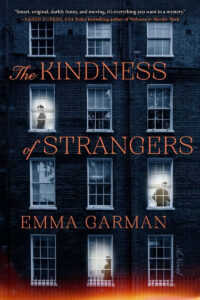
Emma Garman, The Kindness of Strangers
(Summit Books, May 12)
Setting: London, 1950s
The longtime residents of a London boarding house come together to protect their own when a stranger moves in and destabilizes their delicate balance of live-and-let-live. Garman skillfully crafts complex and intersecting character arcs with fully realized backstories, for a richly detailed portrait of post-war England and a sensitive take on the long shadows of historical trauma.
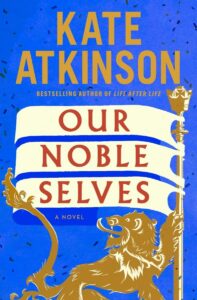
Kate Atkinson, Our Noble Selves
(Doubleday, September 15)
Setting: England, 1951
It may be humanly impossible to read this book without loving it. Our Noble Selves is certainly my new favorite, with its irresistible setting: A festival! Celebrating Britain! On the eve of empire’s decline! And in the midst of England’s growing irrelevancy! Into this maelstrom of amusement park planning and late empire soul-searching, Atkinson’s utterly charming characters are unceremoniously tossed, inexorably caught in the convoluted riptides of the mid-20th century, where dangerous undercurrents threaten to pull her hapless, tortured souls deep into the morass, before they even finish helping their government decide on which cake exactly represents the pinnacle of British (not suet, thank goodness, although the winner is just as hideous as any Etonian concoction). Oh, and there’s a murder. So that’s why it’s on this list.
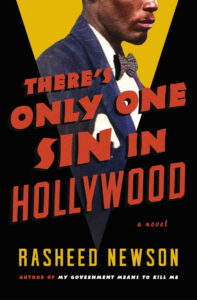
Rasheed Newson, There’s Only One Sin in Hollywood
(Flatiron, June 2)
Setting: South Pacific, 1940s and Hollywood, 1950s
Newson’s latest is a triumph of historical storytelling, featuring layered narratives that reveal the novel’s overarching themes through parallel trajectories, and use the dissonance of contrast to create a sense of unease, a mythos of unreliability. But to step back: here’s what the novel is actually about! Newson tells the story from the perspective of a fixer for Black and queer Hollywood, an efficient and amoral character who’s often torn between his own needs and those of the studios and their stars; he’s also a closeted gay man assigned to be a handler for an reckless queer actor, the star of a new film based on a WWII flying ace who happened to be the fixer’s first great love. What ensues is a tortuous journey of community defiance, self-erasure, and the sacrifices we make for love or money. If you read one historical novel this year, read this one.
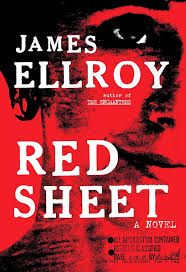
James Ellroy, Red Sheet
(Knopf, June 9)
Setting: Hollywood, 1950s
Ellroy takes us on a wild ride through a funhouse mirror view of the early 1960s, as a dope-fiend criminal who also happens to be the LAPD’s most effective fixer stumbles upon a shocking communist conspiracy with Nixon at its center. Could Tricky Dick have been a Soviet spy? Was there a secret breeding program to create the perfect party assassin? Could a cop who does that many drugs even hold a conversation, much less lead a covert investigation? These are the kind of questions that pop up throughout Ellroy’s latest, not one of them a question that anyone has bothered to ask before (except the drug one) and yet the novel’s bizarre collection of hallucinatory ramblings and deep state conspiracies is also the best thing Ellroy has written since LA Confidential, and quite probably one of the best books of the year. As long as no one thinks it’s based on actual history.
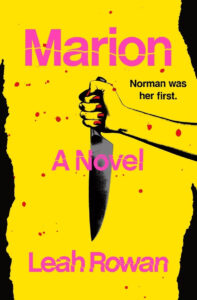
Leah Rowan, Marion
(St. Martin’s Press, June 2)
Setting: Upstate New York, 1960s
What if Marion had fought off Norman Bates when he attacked her in that shower, then started her own rampage? That’s the premise of Rowan’s furious rewrite of Hitchcock’s Psycho, and I cannot wait to see how it all plays out.
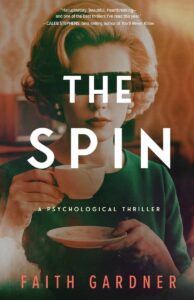
Faith Gardner, The Spin
(Mirror House Press, June 16)
Setting: Los Angeles, early 1960s
In this psychological thriller with teeth, an advertising executive finds his perfect suburban life falling apart as his wife’s mental health deteriorates after she participates in a seemingly innocuous sleep study at his workplace. When her violent suspicion of the study lands her in a padded cell with a lobotomy looming, her husband desperately searches for enough leverage against his employers and their mysterious benefactors to free his partner. This book is for the weird girls and all those who love them!
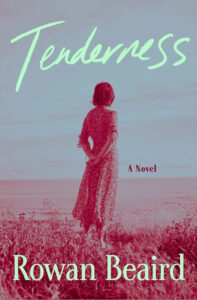
Rowan Beaird, Tenderness
(Flatiron, July 7)
Setting: New England, 1970s
Rowan Beaird’s latest, a slow-burn mystery set in the 1970s, takes place on a remote island that will soon host a wedding celebration between an old-money groom and his penniless aristocrat of a fiancee. The bride is recently escaped from a cult and enigmatic in her commitment to her intended; she yearns for escape, for freedom, and for a real chance at love, and feels stifled by the trappings of wealth and convention. The rarified guests have gathered in expectation of scandal, gossip, and perhaps a visit from the cult’s remaining members, while the mysterious bride stays a force of gravity at the center of the celebration, a mirror for all her friends and family and their many insecurities, even as they refuse to acknowledge her own rich interior life or the unvarnished truths behind her supposedly shocking actions. Tenderness is an astute study of human behavior, and a complex portrait of a resonant era.
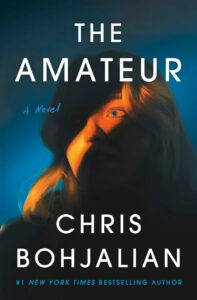
Chris Bohjalian, The Amateur
(Doubleday, August 4)
Setting: New England, 1970s
Chris Bohjalian’s latest is, quite simply, a masterpiece. I cannot praise this novel enough. It’s delicate, haunting, complex, and startling; a wide-ranging condemnation of polite society disguised as a character study and comedy of manners. And in addition to all The Amateur‘s literary feats, the novel also happens to make golf seem…kinda interesting? Which is obviously the novel’s most difficult achievement. In case you want to know what the book’s actually about: The Amateur begins with a shocking death, as a budding golf pro hits a ball through a hole in a net and hits a caddy in the head, instantly killing him. What follows is an odyssey of self-recrimination and terrible truths, a prescient reminder that those who feel most inclined towards guilt are often the least deserving of blame. The Amateur is a standout stunner of a story, and the perfect gateway into Bohjalian’s substantial literary oeuvre.
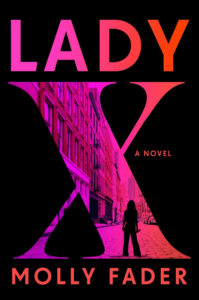
Molly Fader, Lady X
(Ballantine, July 14)
Setting: New York City, 1970s
Lady X is split between the present day, where Fader’s heroine is grappling with the discovery of her Hollywood heart-throb husband’s bad behavior, and New York City in the 1970s, where the mysterious Lady X begins a series of escalating attacks against creeps, rapists, and other misogynist offenders. So good! And, depending on my future career as a graffiti-spraying vigilante painting dicks on a wall in the name of feminist justice, so inspirational…
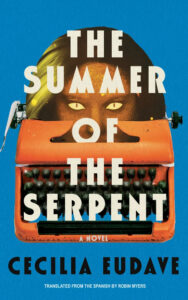
Cecilia Eudave, The Summer of the Serpent
Translated by Robin Myers
(Soho Crime, June 30)
Setting: Guadalajara, 1970s
Lives and visions collide in one long hot summer in Guadalajara, Mexico, in the late 1970s, in Eudave’s new fever dream of a novel. The Summer of the Serpent makes for a hypnotic and transporting read and a powerful, impressionistic portrait of a place and time.
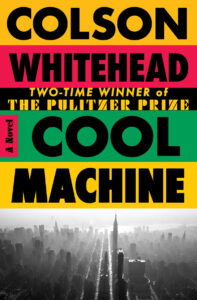
Colson Whitehead, Cool Machine
(Doubleday, July 21)
Setting: New York City, 1980s
Whitehead’s Harlem Trilogy has easily been one of the high water marks for contemporary crime fiction, and the series comes to a fitting conclusion this year with Cool Machine, a wild march into 1980s New York, as Ray Carney dives into the proverbial ‘one last job’, Pepper takes an odyssey through the downtown club scene, and a sliver of redemption is sought through family ties. Whitehead is one of the most talented novelists of the era, and we’re lucky he’s taken on such a deeply felt, wildly entertaining project. –Dwyer Murphy
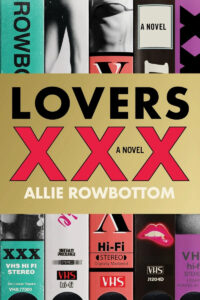
Allie Rowbottom, Lovers XXX
(Soho, June 2)
Setting: SoCal, 1980s
If you loved Boogie Nights, but wish it had way less Marky Mark and way more sapphic romance, then this is the book for you! Allie Rowbottom’s saga of the halcyon days of VHS pornography is both a love letter to sexual expression and a cautionary tale of capitalist exploitation, with gorgeously crafted set pieces and an efforvescent energy. In Lovers XXX, a reform school graduate heads to LA to search for her best friend; after a detour with a heroin-addicted biker boy, she finds her bestie dancing in a strip club, and the two embark on a wildly successful career in videotaped pornos. Can they carve out a space for independence, doing what they love? Or will the mounting consequences and societal pressures turn their chosen career into an inescapable nightmare?
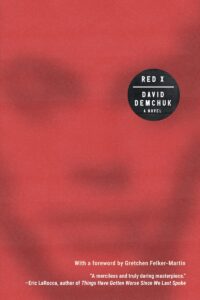
David Demchuk, Red X
(Hell’s Hundred, June 30)
Setting: Toronto, 1980s; England, 1790s
Red X isn’t just a horror novel—it’s a phenomenon. In Demchuk’s reissued cult classic, set in 1980s Toronto, queer men are dying in droves, succumbing to the neglect and violence of a homophobic society in the grip of an unprecedented epidemic, and falling prey to an ancient creature that lives deep below the city. The monster is lonely and prone to disappearing, just like the victims on whom it feeds, with their same desires, envies, needs, and dreams; the entropy of despair and the weight of history, more than any monster, are responsible for shuffling these young men to their devourer’s maw. And oh, that ending…I still have chills.

Molly Odintz
Molly Odintz is the managing editor for CrimeReads and the editor of Austin Noir, now available from Akashic Books. She grew up in Austin and worked as a bookseller before becoming a Very Professional Internet Person. She lives in central Texas with her cat, Fritz Lang.