

Hilary Davidson on Learning to Love Unreliable Narrators
The author of Every Lie I Told explores trauma, creative storytelling, and the pixelation of memory
You never forget your first betrayal.
Mine came at twelve, after borrowing The Murder of Roger Ackroyd from the local public library. I was already a dedicated Agatha Christie fan, having torn through some of her most famous works at a feverish pace. I’d been dazzled by Murder on the Orient Express, And Then There Were None, and The Mysterious Affair at Styles. One of my proudest moments was figuring out Death on the Nile before the ending. Yes, I was the kind of kid who kept score of how many clues I caught before Hercule Poirot did. Maybe that’s why the betrayal hit so hard.
When I got to the end of Roger Ackroyd I remember feeling like the whole room had tilted, like I was sitting in a funhouse. The narrator—my reliable companion throughout the entire story—had lied to me. Not just to the other characters, not even primarily to Poirot, but to me, the reader. His confidential tone and detailed account had built up my trust, a pact I hadn’t known I’d made until blew up.
I remember rereading the final pages, the words blurring together while my mind tried to reassemble the story in light of what I now knew. It felt less like a “whodunit” and more like a “how could you?”
The worst part was that I couldn’t claim I was scammed. If you’ve read Dame Agatha, you know she doesn’t cheat. There were clues, but I’d failed to pick up on them. Eventually, my irritation gave way to admiration. When I reread Roger Ackroyd later that year, I saw the brilliance in its sleight of hand. The story I thought I’d read and the one Christie had written were not the same—and in that murky gap between them dwelled a host of possibilities.
Ironically, Christie ignited my interest in unreliable narrators. I read Lolita in high school with a horrified admiration, watching the self-pitying Humbert Humbert transform his crimes with poetic language. I read Rebecca, and realized a deceptive narrator can also be quite innocent; sometimes they simply don’t know the truth and make what appear to be reasonable jumps in logic. Later, I discovered We Have Always Lived in the Castle, in which I realized that a narrator can honestly tell you what they believe and yet be quite mad.
In retrospect, I was developing a personal catalogue of untrustworthiness. There were the deluded narrators, lost in their own illusions; the self-interested ones, determined to preserve dignity or evade blame; the emotional censors, omitting the unbearable; and the performative storytellers, aware that they’re being watched and tailoring the truth to maintain control. Some lied to survive, while others lied because the truth would ruin their story—or themselves.
The more I read, the more the technique began to feel less like deception and more like revelation of a different sort. An unreliable narrator doesn’t simply distort reality—they expose how unstable reality always is, especially when filtered through any consciousness, mine included. What looked at twelve like betrayal came to feel like an invitation to question the voice, to read between the lines, to resist the comforting lull of authority on the page.
It took me years to realize that part of why I loved these narrators was that I saw a reflection of my own voice inside them. Writing always begins with a kind of self-deception: the belief that one can translate memory into language without distortion. But anyone who’s ever tried to write about their past knows how quickly truth slips through the cracks of intention. I would start an essay, convinced I was being honest, and find that I’d polished moments, softened edges, rephrased pain into something more manageable.
In my early twenties, a man came to my office one day and tried to kill everyone there. Later, when I tried to write about it, I found my brain eliding over the violence itself. I remembered the before with crystal clarity, and the aftermath with a bone-chilling intensity. But the worst of it? My brain still blanks it out.
In one essay, I admitted my memory of the event itself is pixelated. When I reach for it, there are snapshot-like glimpses and nothing more. I know it’s a self-protective mechanism, yet there’s always something surreal about knowing my own brain is determined to shelter me from trauma by hiding it. In a very real way, I can’t trust myself.
That understanding was something I carried with me into the writing from the point of view of Jackie Swift, the main character of Every Lie I Told. She works in public relations for a shady company with even shadier clients, and Jackie lies for a living. She’s not embarrassed by that fact, and nor is she ashamed about lying to the people in her life to avoid conflict.
But there’s a long list of things Jackie lies to herself about, and they influence her behavior in ways she’d never admit; sometimes, it’s not actually the reader she’s lying to. Jackie’s narration of the book became a negotiation between what actually happened and what she could bear to admit had happened.
As I wrote the novel, I worried that it was manipulative to hide information from the reader. After all, I’d once felt betrayed myself.
But I began to see that my main character’s lies are different from the ones that I spin as an author. If I’m holding up my end of the bargain, I might deceive you, but in such a way that it will ultimately highlight the ways people deceive themselves.
Jackie doesn’t directly lie to the reader, but she’s lied to every character in the book—even the people she loves best—and sorting out what’s real from the web she’s spinning is no mean trick. After all, she knows her sister killed a man and she’s trying to save her from a murder rap. The stakes are sky-high. But her trauma runs even deeper, and Jackie isn’t in control of that narrative. It slithers around her, and she can’t look at it.
One of the things I’ve come to appreciate about unreliable narrators is that they allow us to acknowledge how unreliable we are ourselves. I’m not even talking about the deliberate liars amongst us; I’m often surprised by what an unreliable instrument memory itself actually is. Studies show that court witnesses misremember key details, people can have false memories implanted, and repeating a story to yourself can make you believe it’s truth. By placing unreliability at the center of fiction, writers expose how fragile our systems of belief really are.
I bought my own copy of The Murder of Roger Ackroyd a few years back. Sometimes I flip through it, struck by how modest Christie’s deception seems now. Yet it holds the blueprint for everything I love about first-person narration: the tension between inside and outside, voice and action, self-image and truth.
The irony is that the author didn’t betray me. If anything, that deceptive narrator helped prepare me for every voice that would later seduce, mislead, or misdirect. Ultimately, it taught me to listen more closely. Because that’s what the unreliable narrator offers: a lesson in skepticism, one that extends far beyond literature. To trust completely—any story, any perspective—is to miss half the plot.
Still, I remain a willing accomplice. I open a novel and surrender to a voice that might be telling me only fragments of the truth. Each time, I do so knowingly, willingly, eager for the jolt that comes when the ground shifts. In that moment of discovery, when I realize the story was never what I thought, I feel again like I’m back in that tilted room. It’s not anger, but awe.
Because the ultimate trick of the unreliable narrator isn’t the lie—it’s the reminder that storytelling, like memory, is always a creative act. Once you accept that, the betrayal no longer wounds. It liberates. Because, deep down, we are all unreliable narrators.
***
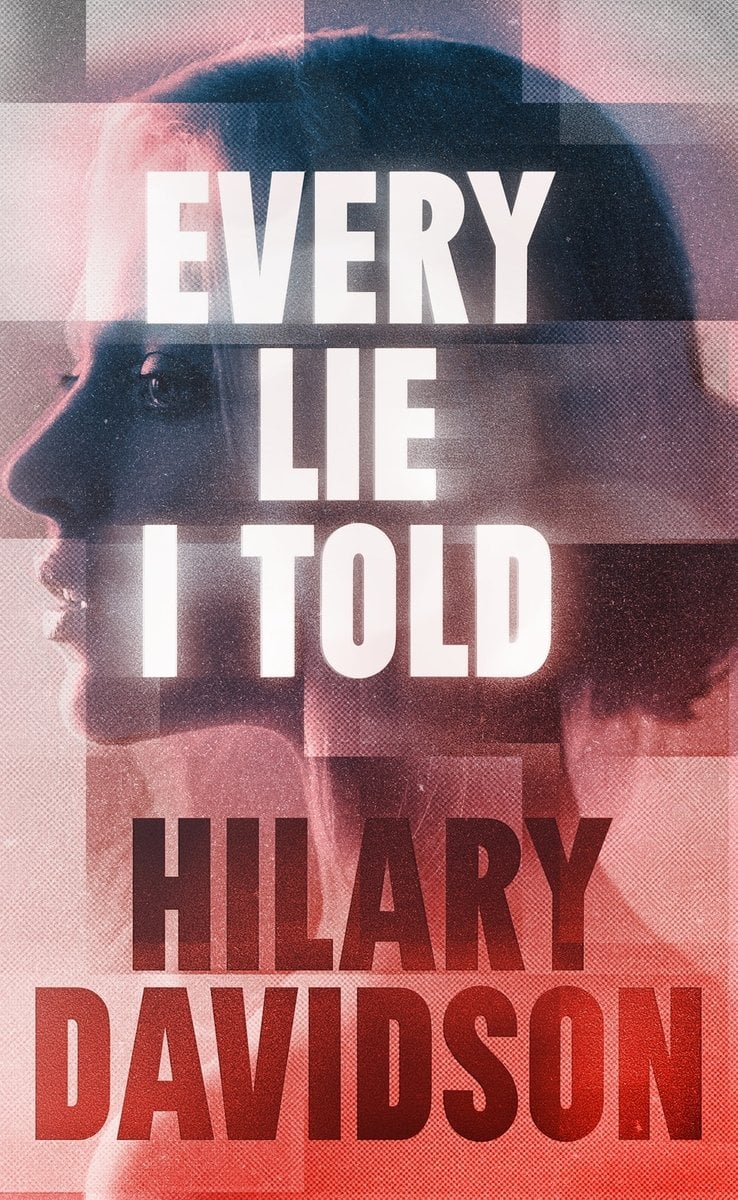

Hilary Davidson
About the author: Hilary Davidson was a journalist before she turned to the dark side and started writing crime fiction. Hernovels include the award-winning Lily Moore series—The Damage Done, The Next One to Fall, and Evil in All Its Disguises—the bestselling Shadows of New York series—One Small Sacrifice and Don’t Look Down—and the standalone novels Blood Always Tells and Her Last Breath. She is also the author of some fifty short stories. Her fiction has won two Anthony Awards, a Derringer Award, and a host of other accolades. Her novels have been translated into French, German, Hungarian, Polish, Romanian, and Russian. Toronto born and raised, she moved to New York City in October 2001. She is also the author of eighteen nonfiction books.