


How Pinellas County, Florida Shaped the Strange Life of Conman Paul Skalnik
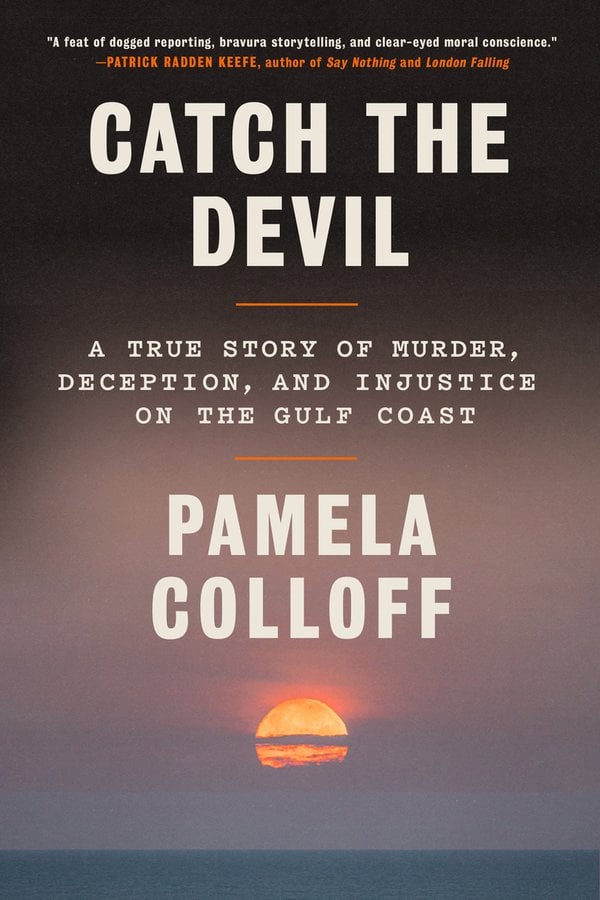
An excerpt from Catch the Devil: A True Story of Murder, Deception, and Injustice on the Gulf Coast by Pamela Colloff
The early Spanish explorers who made their way to the western coast of Florida, to what is now Pinellas County, came searching for treasure. But they found only primeval forest, which stretched to the Gulf of Mexico, and a slender chain of barrier islands edged with aquamarine water and bone-white sand.
Fortune seekers continued to flock there for centuries afterward, lured by myths of a Shangri-La, but it wasn’t until 1887, when a railway line connected the peninsula to the mainland, that the area finally made good on its long-imagined riches. Tourism and citrus farming gave rise to two major cities, St. Petersburg and Clearwater, and by the middle of the twentieth century an influx of retirees and veterans of World War II fueled a population boom.
Subdivisions and strip malls swallowed up the ancient pine forests and orange groves, and Pinellas County became a showy, if despoiled, new world: a patchwork of swimming pools and retention ponds, manicured retirement communities and RV parks, sleek new condos and Easter-egg-hued motels. Rapid change was taking place all across Florida, where the postwar years brought more new residents, development, and commerce than the previous four centuries combined. The pull of the Sunshine State never let up, drawing successive generations of newcomers.
People came to Pinellas County because it promised to be better than whatever they left behind. They were northerners fleeing bleak winters and the higher cost of living; southerners who had run out of money, or ideas, or goodwill back home; retirees from the upper Midwest who yearned for an easier, more care-free way of life.
Scientologists were among the many people who made their way to Pinellas County, and in 1975 the Church of Scientology began buying up swaths of property in Clearwater. Its disciples would remake the city’s downtown into a mecca of their own. Turning a once-grand, run-down hotel into their opulent base of operations, they created a marble-and-gold-leaf fantasia that would have left Florida’s early European explorers speechless.
It was a wedding—Skalnik’s fourth—that brought him to Pinellas County in the spring of 1980. He had met his new wife, a faithful, clean-living young evangelical named Suzanne Bourdeau, while she was vacationing in Orlando, and they married in her Clearwater church on a cloudless April afternoon.
“The bridegroom,” read their wedding announcement, “served in the U.S. Marine Corps and is general manager of Pro Chem Inc.” In the accompanying photo, Skalnik stood beside his jubilant bride, gazing soberly at the camera. He wore a businessman’s suit and tie, his dark mustache barely obscuring a smile, apparently untroubled that he was still married to Penny.
Suzanne did not know that three Mrs. Paul Skalniks had preceded her. (Her husband’s first two unions, to a nurse in Austin and a young woman from a small town outside Waco, lasted eleven months and eighteen months, respectively.) Cheerful and unguarded, Suzanne was the sort of person who assumed the best of others, not out of ignorance, but from a generous spirit.
She felt lucky to have found a husband who not only doted on her but shared her strong faith. Skalnik, who claimed to be a new believer, accompanied her to worship services every Sunday, and her church community eagerly welcomed him into the fold.
They settled in St. Petersburg, in a duplex enclosed by a white picket fence. Half an hour’s drive away was Stetson University College of Law, which had, for generations, produced many of the area’s judges and prosecutors, and that spring Skalnik told Suzanne that the law school had accepted him into its incoming class.
Suzanne was thrilled that he was going to be an attorney, but being married to a law student, she soon learned, was lonely. Her husband was rarely around, and no sooner was he home than he was off again—telling her that he had to prep for moot court, or study into the early morning hours at the law library. His fierce work ethic only underscored, for her, the scope of his ambition, but she dreaded eating dinner alone, looking out from the dining room table at the law textbooks he left scattered around.
This was not how she had envisioned their first year of marriage. While she supported the two of them, doing back-office work for a local defense contractor, and kept busy volunteering at their church, she reminded herself that the sacrifice was temporary. Everything he was doing was to build them a better future.
On May 22, 1981, thirteen months and a day after their wedding, Suzanne received a phone call from the city jail in St. Peters-burg. Skalnik was on the other end of the line. He provided no details, saying only that he would explain everything later—but first she needed to bail him out. When she arrived at the bail-bond agency across the street from the jail, Suzanne was floored to learn that her husband had been charged with a felony: a single count of grand theft, for which he faced up to five years in prison.
The bail-bond woman who assisted her looked unfazed as Suzanne began to cry and offered her some unsolicited advice. “Just leave him there,” the woman said with a tired wave of her hand. “Walk away and don’t look back.”
This was not the first time someone had tried to warn Suzanne about her husband. A married couple who employed him for a short time in Orlando had hinted at bookkeeping inconsistencies, telling Suzanne that they had noticed “problems with the receipts” when he worked for them. Her own mother said that she felt there was something off about him.
But at the bond woman’s words, Suzanne offered a weak laugh, trying to brush off the advice as a joke. Suzanne was trusting, and her husband always had an answer for everything, even the most head-scratching behavior. After she secured his release, he assured her that the theft charge was a simple mistake. He promised he would get it all straightened out.
Skalnik’s arrest merited a short article in the back of the St. Petersburg Times, running under a small but catchy headline: “False Promise, Fake Diamond, Phony Practice—Real Trouble.” While Suzanne had been having solitary dinners at home, her husband had been having an affair with a local dietitian. After presenting the young woman with a fake diamond ring, he bilked her out of thousands of dollars under the premise that he was a successful out-of-town lawyer who needed investors for his new local practice.
He had also persuaded her to give him power of attorney, with which he had drawn additional money from her bank account. She had become suspicious when he kept disappearing on business trips and she was unable to reach him. “If he channeled his energies into something productive, it’s amazing what he could do,” a detective told the paper.
Suzanne did not subscribe to the newspaper, and Skalnik, hoping to buy himself some time, decided it would be best if they got out of town. He volunteered to drive her and some of her missionary friends, who needed to catch a flight to their next assignment in Haiti, to the airport in Miami, telling her that they would make a little getaway out of it.
But leaving Pinellas County was a violation of his bail agreement. Word of his unauthorized trip to South Florida quickly made its way to the bail-bond agency, and after a little more than a week of freedom he was taken back into custody. Suzanne was once again blindsided. Her husband was to remain in the Pinellas County Jail until his case went to trial in August.
That summer was unusually hot. The peninsula’s subtropical splendor was outmatched by the intensity of the sun, which burned too brightly, and by the oppressive, almost suffocating, humidity.
Within the stultifying confines of the jail, Skalnik was left to contemplate his uncertain future. He was now a repeat offender who, if convicted, would be looking at time in state prison. He faced five years behind bars, far longer than his jail stints in Houston and Orlando. June ground on, then July.
One day he walked over to the bank of pay phones inside the jail and placed a collect call to the state attorney’s office in Clearwater. He asked to speak with an investigator.
Ten days before his grand theft case went to trial that August, Skalnik was quietly escorted from the jail to the state attorney’s office. He had information, he said, about three different men who were awaiting trial. All of them were charged with murder. And all of them, he said, had made full or partial confessions to him. By his telling, one man had admitted to shooting his ex-wife’s lover. Another had acknowledged pulling the trigger on a friend. A third had described hiding his grandfather’s body.
There were easy ways for Skalnik to gather the information he needed. Three daily newspapers—the Clearwater Sun, the St. Petersburg Times, and The Tampa Tribune—circulated freely around the jail, providing basic details about arrests and charges.
More valuable was his position working in the jail’s law library, which allowed him to present himself as a helpful adviser to the lockup’s less savvy arrivals. Some of them kept their legal paper-work in their cells—arrest warrants, indictments, and investigative reports that laid out critical facts of the state’s case against them—which Skalnik, playing the role of legal strategist, could ask to see.
The cursory information he provided on the first two defendants closely mirrored facts that had already run in the Times; the third defendant, about whom Skalnik offered the most detail, had unwittingly handed over documents in his case and asked for Skalnik’s advice.
Prosecutors did not challenge the idea that Skalnik had obtained three confessions in three different murder cases in less than a summer: a more impressive track record than all but the most storied of homicide investigators. Instead, they offered him a deal. If he pleaded guilty to grand theft, rather than go to trial, they would recommend to the judge overseeing his case that he spend no more than three years in prison—two less than he was facing.
They also left open the possibility that he could secure a sweeter deal if he cooperated further. So significant was the reward they dangled before him that it merited an exclamation point when it was recorded in the state attorney’s files: “Probation was discussed!”
Skalnik took the plea, and his sentencing was postponed while he went back to work inside the jail as a snitch. Prosecutors would hold off on making a sentencing recommendation until they saw exactly how much he had to offer them.
***

Pamela Colloff
Pamela Colloff is a reporter at ProPublica and a staff writer at The New York Times Magazine. She was the recipient of a National Magazine Award for Reporting in 2020 and for Feature Writing in 2013. Her work has been anthologized in The Best American Magazine Writing, The Best American Crime Reporting, and Next Wave: America’s New Generation of Great Literary Journalists. Colloff holds a bachelor’s degree in English from Brown University. She lives in Austin, Texas, with her husband and their two children.