How the Cozy Genre Took Over the World
Randee Dawn on why cozies and cottagecore appeal in our nightmarish reality.
You arrive in a a quaint village. Or perhaps a country home. Possibly a luxury train—or yacht. Or something more commonplace–a bookstore, a crafting club. Wherever you are the air is fragrantly redolent of lavender, vanilla, fresh-baked pastries. The breeze is friendly, the locals call out welcome. Fresh-brewed tea is always on tap.
You can’t wait to explore this wonderful, comfortable place–it’s like getting a hug from a friend. It’s cozy!
You love it so much that when that hug comes with a knife in the back, or the air is toxic, or the tea is poisoned, you nestle in. That’s because you love what comes next: a local, likely wise and full of years, an expert in a niche subject and a sleuthing amateur, who starts to ask questions—and who ultimately restores order.
Jessica Fletcher! Precious Ramotswe! Miss Marple! Jim Qwilleran! They are the superheroes your cozy world needs.
As it relates to mysteries, the “cozy” subgenre is not new; the term has been around mystery circles since the 1960s. But in these more modern times, “cozy” now carries a much heavier load, trotted out to describe far more than a specific type of crime story. Today we have cozy fantasies, cozy catastrophe stories, hopepunk and even cozy horror.
And outside entertainment, fans are embracing “cottagecore” and the Scandinavian hygge as lifestyles. Cozy is everywhere, like a giant warm blanket embracing us all. It’s the trope that took over.
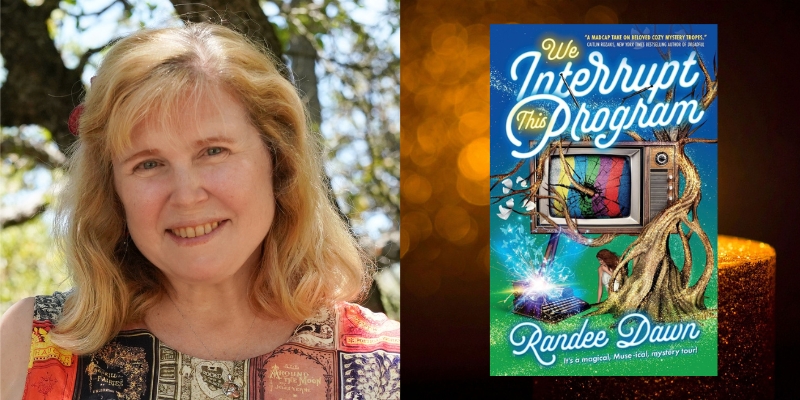
That’s one reason I used it in my new fantasy We Interrupt This Program. In Interrupt, we visit Seaview Haven—a town with all the hallmarks of a cozy mystery. But Seaview Haven knows it is a place where cozy mysteries are born and filmed, for the entertainment of magical creatures.
And it’s just one of dozens of magical Topographically Restricted Outer Perimeter Environment (aka TROPE) towns—just like the T-Towns invented for wholesome Hallmark-style rom-coms, or the one where everyone who angers the fae is sent to live out their punishment. In the TROPE town of Seaview Haven, our writer/amateur sleuth has terrible writer’s block—and the town is crumbling at the edges. It’s cozy, with a self-aware meta twist.
But why has “cozy” taken over so much of our entertainment offerings? For one thing, aside from the genre being addictive, challenging, and comforting at the same time—it’s quite simple: This is the escape audiences appear to need.
Right now, the world is nightmarish in ways we haven’t seen for generations: politics are deeply divisive, A.I. slop is eating the workforce (among other things), and the planet may be in a death spiral. The only event that united humanity (and then promptly divided it) in the past ten years was a plague known as COVID-19.
No wonder we want the salve of cozy. Cozy is tropey art hat follows the dictates of its audience, art that leans into the predictable, gentle, and manageable. Yet calling it a trope is not the same as saying it’s a cliché. These familiar shapes are just that, known and familiar, but clearly neither tired or overused.
Still, the virtual hug of a cozy story of any genre isn’t merely about expected plot milestones, or resolutions that neatly tie up loose ends. The cozy world is an aspirational one—where fearful situations, places, and people may reside, but not triumph. Humanity is the hero in a cozy story, because regular, ordinary humans triumph over underhanded villains every time. Sometimes, we even sympathize with those villains—such is the enveloping nature of cozy.
But most important is that cozy is – generally speaking—a world that leans into hope. In cozy stories, brains are more important than brawn. Smart, savvy, or curious folks solve puzzles rather than wield weapons. Solutions to impossible problems emerge from small details: the turn of a phrase, a loose button, an archaic piece of knowledge shared by someone who’s been overlooked the whole time. Cozy offers a firm hand on your elbow—not a punch in the face.
The cozy world also posits that everyone is worth something, given a chance. The dowdy archaeologist, the shy vicar, the blustering housewife, the gray-haired author of a certain age. Knowing your community and neighbors are strengths. The invisibility of being over fifty years old becomes an asset, as the criminals regularly underestimate anyone with an extra line on their face. Most of the crime-solvers are women, and that turns being being older and female into a strength, not a liability.
And in a world devoid of logic, in which humanity feels like it’s devolving rather than progressing—where physical ability and veniality are considered the only useful skills to have, the cozy trope says to fans: There is another way.
Naturally, “cozy” has been appropriated by the marketing class, which has muddied the waters. Calling something “cozy” is like calling a food “organic,” the meaning diluted almost to uselessness.
Still, even in its adulterated state, “cozy” does continue to have meaning for those seeking particular stories to wrap around themselves. The word tells audiences ahead of time that yes, we will be going through scary, mysterious, even fantastical things together—but you’ll still get to sleep at night.
The real trick now is for cozy fans to keep the genre fresh and aspirational—and not turn it into an ouroboros of nostalgia. As author/neuroscientist V.S. Ramachandran noted, “It’s human nature to want to be cozy, secure. But it’s a cul-de-sac.” The mystery of how to remain wrapped in the cozy blanket without being smothered by it—is one fans of the subgenre may need to take to heart.
But if cozy stories tell us anything, it’s that ordinary folks—with their special, unordinary, life-earned knowledge—can solve pretty much any puzzle they put their mind to.
***


Randee Dawn
Randee Dawn is the bestselling author of the "funny as hell" pop culture fantasy novel Tune in Tomorrow from 2022 and its Tune-iverse 2026 follow-up We Interrupt This Program. She's also the author of the dark Celtic musical fantasies The Only Song Worth Singing and Leave No Trace, both of which published in 2025. Her short fiction has appeared in numerous anthologies, including most recently Dark Spores: Stories We Tell After Midnight, Vol. 4. She is the co-author of The Law & Order: SVU Unofficial Companion, hosts a course called "How to Be Interviewed" through Creative Coaching Partners, and curates and hosts a monthly reading series in Brooklyn called Brooklyn Books & Booze. A veteran entertainment journalist for The LA Times, Variety, and Today.com, Randee lives in Brooklyn.