

How to Hide a Body and (Maybe) Get Away with Murder in Fiction
Jennifer Holdich shares the craft of setting up flawless corpse coverups
After decades of watching and reading thrillers, you would think that most people would be well versed in the ins and outs of getting away with murder. Yet, time and time again, we see an alibi carefully set up and a crime flawlessly committed, only to be followed by a complete breakdown when it comes to covering up that crime. The problems always start with what to do with the deceased.
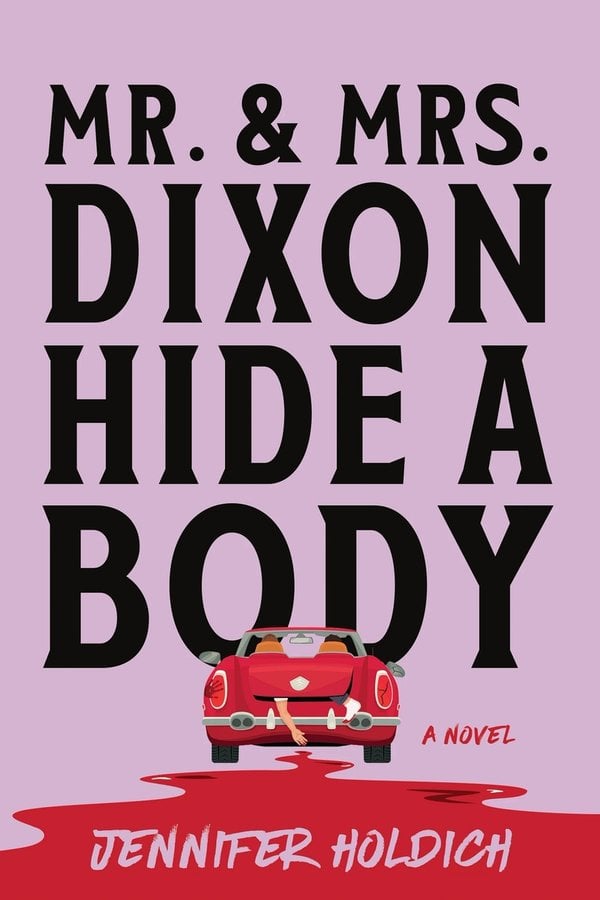
In my novel Mr and Mrs Dixon Hide a Body, the culprits were—seemingly—lucky in that they lived on a vast estate and had access to a mausoleum in which to deposit their corpse. But in case you don’t have access to extensive grounds and a family crypt, here are the pros and cons of hiding a cadaver in a more modest establishment.
First of all, the classic: if a person hasn’t been seen for a while, sooner or later someone will ask the question, “Have you buried them under your patio?” It’s a classic burial site.
But I’d advise against it. Firstly, it is a very labor-intensive way to go about it. Patio slabs are heavy and once they have been moved, you have to shift the soil beneath them to make way for the corpse; then you have to get rid of that soil.
This is what always seems to be overlooked: you can’t just put it back in, on top of the remains, not unless you want those slabs to be higher than the others by approximately the height of one corpse. It would sink down over time, but not before you get sick of answering the question, “What happened here? Not got a body under there?!”
Ho ho ho. Plus, you’d need to get the slabs you moved repointed. All in all, this idea is overrated.
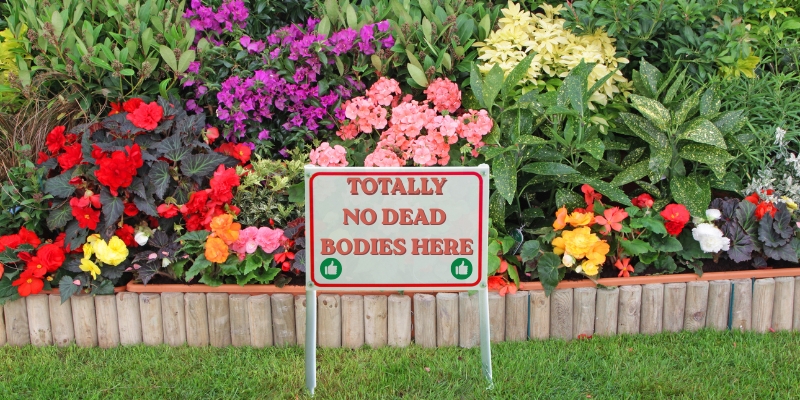
However, if you have a vegetable patch, or flower beds, you probably can’t do better than a traditional burial in the ground. It would be easier to spread the displaced earth, and it would do wonders for your leeks.
But a note of caution, especially if you’re going to bury a body in a flower bed: do some research on which flowers would grow best over it and think about the effect you want to create. For example, if you have several flower beds, do you really want one that is bursting with award-winning blooms, while the others are only up to their usual standards?
To lessen the effect, you could think about dismemberment first and planting one in each plot, to spread the growth evenly, but I’ll have to leave that with you; every individual will know what’s best for their own garden.
These possibilities of course are only open to you if you actually have an outside space. If you don’t, the options are more limited and you may need some DIY skills. You may also wish to search for an article about embalming before you start—in Mr & Mrs Dixon, Daisy used a schools’ teaching website to learn about Egyptian mummification, with arguable success.
I’m lucky in my house in that I have a walk-in cupboard off the kitchen. It was probably once a pantry or a larder, but is now just unused space, with potential for bricking up, as they did during the plague, without waiting for the victims to become corpses first. There is room for several bodies, so, as long as you don’t mind the labour involved, this would be the perfect spot.
But not everyone has a space like that, and of the alternatives, under the stairs is my favourite. This area is sometimes used as a cupboard, and sometimes as a work station, but so often you see it boarded up and wasted, when there is plenty of room there for a body. It worked for Daisy and it could work for you.
If you don’t have stairs, the space under a bath might be enough. You could try under a shower, but you’d probably find yourself needing a plumber sooner rather than later, and there would be some explaining to do.
A popular spot in film and TV is the chest freezer and the advantages are obvious: no embalming necessary, it will keep a corpse fresh indefinitely, and a freezer is such a normal thing to have, it wouldn’t attract any comment. But the disadvantages are also clear: if there was a power cut, you could be in trouble and if a visitor decided to help themselves to an ice pop, the secret would be out. On balance, if it looks easy there is probably a snag and this solution should only be considered as a temporary hiding place, until you are able to move it to a permanent location.
Which brings us to taking the deceased off the premises. This gets it well out of your sphere and can potentially cast the blame on all sorts of innocent bystanders. Perfect. But beware of science. As James and Daisy found, there is always something you don’t know that can lead back to you, and at least while the corpse is on your estate, you have some control.
Hiding a body is hard, but essential if you’re going to get away with murder. Many a convict has made the mistake of plotting the alibi and the deed, without properly working out what they will do in the aftermath.
So, think about where it is going to go, whether it’s a final resting place, or a stop-off, and give serious consideration to what could go wrong. And whatever you do, don’t do as my cat does and carry it triumphantly around with you, that can only lead to disaster.
***

Jennifer Holdich
Jennifer Holdich is originally from the East Midlands, and is now living in South Wales with a very spoilt cat called Fable. Over the years she has worked various jobs, while writing as much as she can. She obtained an MA in Scriptwriting in 2013, won the Cardiff Writers’ Circle Short Story competition in 2021 and has had multiple short stories and pieces of flash fiction published. She is the author of Mr. and Mrs. Dixon Hide a Body and Julie Tudor is Not a Psychopath.