

How To Stay Creative While Living In the Suburbs
Laura Sims on finding intensity in unexpected places
It was easy in Brooklyn. Step outside and see: a couple fighting in public, a trio of old men chatting on the stoop, and a woman walking quickly along, belting out whatever song was playing in her headphones—all inside the length of a block. It was there for the taking: the densely packed, captivating drama of life. A writer’s dream. My first novel, Looker, was built on the experience of simply…living in Brooklyn. We lived a few houses down from a celebrity whose casually elegant, exalted existence threw into question the meaning and worth of my own; this psychological friction sparked an intense narrative about a woman who becomes increasingly obsessed (and increasingly transgressive) with her famous neighbor. So: the city made me do it, and I wasn’t sure I could do it again without the generative if enervating pressures and proximities of the city when we moved to the New Jersey suburbs. But I did do it: I went on to write a second novel, and now I’m publishing my third novel, THE MAN, which was deeply inspired by my so-called “quiet” environs. About eighteen miles from the frenetic pulse of the world’s greatest city, I discovered new ways to sustain my creative fire.
It took time, though. I was both relieved and devastated to leave New York, like I imagine many people are. Relieved to be leaving behind all the schlepping and endless hustling the city required, but grieving for the one place on earth I’d ever fallen in love with as deeply as if it were a person. But I was excited for New Jersey, too (don’t laugh), and for a new kind of life—with a little house and a backyard and fields down the street where my son could play the sports we needed to exhaust him. But I worried that I’d never find inspiration in the deep green lawns and clean streets, or on the sidelines of peewee soccer games. I feared everything would be too easy, too easeful, in the suburbs—and this ease would leave me permanently creatively empty. The overwhelming forces of the city had acted on me as a necessary stimulant—and sometimes also as a necessary obstacle I wrote against, carving out space and quiet for the work of the mind. I wondered how my writing could possibly transmit something like the intensity of Looker when I was living in a larger, less quirky version of Stars Hollow (a la The Gilmore Girls).
I started to wonder if “peace and quiet” might be something of a boon. That I might even conjure intensity from my new town’s peaceful, quiet depths.
I found that intensity, eventually, in unexpected places—like the town’s public library, where I started to work part-time. I had a fresh MLS degree but still held the cliched notion of libraries as hushed and sedate, and imagined my librarian self as a smiling, bespectacled figure behind the desk who would dole out assistance and book suggestions in a breathy whisper. Ha. Even in a small-town library, as I came to learn, that image was a joke; in truth the public library is as full of compacted life (and noise), sometimes, as a Brooklyn city block, with a similarly diversified collection of happenings and inhabitants. The man trimming his toenails in a back corner, for instance. Or the woman freaking out because she wasn’t allowed to print 2,000 pages on a public computer. The pair of pimpled teens making out after school in the stacks. All of this woven into the more structured fabric of the library’s goings-on: baby storytimes, craft programs, book talks, makers’ fairs…a whole vibrant world in one building! I quickly learned that I could sit behind my desk (sometimes bespectacled, sometimes not), and watch it all unfold. Soak it up. (A writer’s dream!) I started taking notes, and before long, I had the idea for my second novel, How Can I Help You, which takes place, yep, in a small-town public library. And yes, the book, the story, its characters—all frighteningly intense.
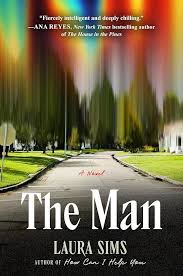
My next novel, The Man, came from something of a suburban awakening. Or reawakening. Since writing How Can I Help You meant that my new locale hadn’t smothered my creative impulse as I’d feared, I started to wonder if “peace and quiet” might be something of a boon. That I might even conjure intensity from my new town’s peaceful, quiet depths. From those clean streets and deep green lawns—and even the peewee soccer games. I’d done this during my childhood and adolescence, after all; in the placid half-nothingness of the Richmond, Virginia suburbs, I’d learned how absence and silence could make way for the reign of the imagination. I may have been at my most prolific in those pre-teen and teen years, writing poems, stories, half-novels, and essays galore in my (refurbished, not creepy) basement room.
After years of city living, I’d forgotten this time of creative abundance and the quiet that had fostered it; in recalling it, I started down the path that would lead me to writing The Man, a novel fueled and fed by the dark potential of the suburbs. It grew from the shadows between pools of light on late-night walks home, from the heavy, deserted stillness of late summer afternoons, and from my own desire to see, hear, and feel things that weren’t there. To make them visible, palpable. To populate the world of the mind—and then convey it to the page. As I leaned into the much-maligned landscape of suburban life, I found raw, unsettling, and yes, intense material there. I was learning, too, probably later than I should have, that the intensity I sought wasn’t external to me at all: it was in me. It came from my internal drive to write, yes, but also from the chemical reaction that occurred when I immersed myself in a new place—whatever that place might be. A packed city block or a small public library; a shadowy street with houses shuttered for the night or a street fair in sunny Brooklyn. It all fed my creativity, which meant that I could go on writing intensely from my little house with a backyard and fields down the street…or from anywhere: a writer’s dream.
***

Laura Sims
Laura Sims is the author of Looker, a novel; four books of poetry, most recently Staying Alive; and the editor of Fare Forward: Letters from David Markson. She lives outside of New York City with her family.