Isabella Valeri on Joseph Campbell, Gender, and Charting the Antiheroine's Journey
Exploring the archetypes and character arcs of dark exiled women in fiction
I have only ever written anti-heroines as main characters. Many years ago I remember reading several pieces interviewing Gillian Flynn in the wake of critiques of her third novel Gone Girl suggesting it was “misogynistic,” given the rather sinister aspect in which Flynn casts her main character Amy Dunne. Flynn’s responses resonated with me, and solidified my own view that female characters in many dramatic works are outright boring.
One tires of third act reveals that the mysterious talk, dark, and handsome stranger is actually a Count and only heir to a large European estate, and the book’s heroine is therefore destined to marry him and live happily ever after on the family’s French vineyard. There is something deeply unsatisfying about these sorts of dramatic resolutions in that they sap the agency from their female characters, (not to mention making it clear that the author has never lived on a vineyard and does not understand how much work is involved).
Naturally, there are a host of examples on the other extreme as well, and it is equally exasperating to discover mid-book that the female main character in a work is actually an expert markswoman, an accomplished Brazilian jiu-jitsu black belt, and has a natural immunity to cobra venom to boot. Surely, I have often thought, there must be some mean between the extremes of Cinderella and “Mary Sue?”
But my own biases in this regard predated the Flynn material. While the seeds that eventually germinated into Letters from the Dead, my debut novel, were already well-developed by the time I started reading Flynn, it was the long journey I made from “pantser” to “plotter” when writing my first novel that finally refined my own view of female main characters in dramatic writing.
In trying to explore the nuances of narrative theory I naturally gravitated to Joseph Campbell’s 1949 work The Hero with a Thousand Faces, and the concept of the “monomyth”, a template for the “Hero’s Journey” in dramatic writing, a critical structure that has been applied to works as varied as the Epic of Gilgamesh, potentially the oldest surviving written epic, to Charlotte Brontë’s Jane Eyre, to Star Wars.
As Campbell describes it: “A hero ventures forth from the world of common day into a region of supernatural wonder: fabulous forces are there encountered and a decisive victory is won: the hero comes back from this mysterious adventure with the power to bestow boons on his fellow man.”
Dedicated readers of fiction will recognize embedded in the concept a classic three act structure, the “inciting incident”, the appearance of a helpful mentor, and the metaphorical transformation of death and resurrection, followed by an equally metaphorical ascension.
Maureen Murdock, a Jungian psychotherapist, once Campbell’s student and author of the 1990 book “The Heroine’s Journey”, extended the construct to feminine development, highlighting her view that the female journey is far more about an internal struggle women undertake to find harmony between their innate femininity and masculine influences. But her book is intended as a therapeutic work with practical application, not a guide to narrative theory.
For his part, Campbell, acknowledged that his Hero’s Journey concept is a predominantly masculine one, and reportedly suggested that, as women were often the destination of the Hero’s Journey, they had no need to undertake the quest themselves.
Faced with such barriers what was an aspiring author to do? My quandary was complicated further by my early dissatisfaction with trite or overly potent female main characters in drama and thrillers.
Even some of those that did inspire me, for example, Lt. Ellen Louise Ripley from the Alien franchise, Lisbeth Salander, “Stieg” Larsson’s creation from a woman he actually knew for The Girl with the Dragon Tattoo, Beatrix “The Bride” Kiddo, from Kill Bill, Marie Clement from La Femme Nikita, and Lorraine Broughton from David Leitch’s Atomic Blonde, seem to test one’s ability to suspend disbelief as they punch, slice, kick, or flamethrow their way through, what seemed to me at least, intrinsically masculine challenges. At the same time, I realized that, while in essence action stars, those characters that inspired me were often antiheroines.
While my novels certainly have a strong literary fiction feel, quite early on it also seemed to me that any female main character I wanted to (or perhaps needed to) write was far better positioned to navigate herself through a thriller as opposed to other potential genres, and that such a treatment necessarily required viewing them through rather a darker lens. I also came to believe that female main characters that would be forced to navigate nontraditional challenges required of an author a great deal more care in crafting their origins.
*
The Road to Exile
I found myself contrasting my own ideas about the narrative arc of an antiheroine against Campbell’s structure. What resulted was my own invention: “The Antiheroine’s Journey.”
Whereas Campbell’s hero is presented with a “call to adventure” to a predominantly masculine quest (defeat the galactic empire, destroy the ring of power, find the Arc of the Covenant) which he first refuses, the budding antiheroine is not invited to undertake the sort of action-adventure quest that a hero would be, and lacks the agency to refuse such a call in any event. Instead, the antiheroine’s stasis is disrupted by her involuntary banishment to exile (literal or figurative), likely because she is underestimated by those around her, and to paternalistically (and condescendingly) protect her from the dangers of such an adventure.
Campbell’s Hero’s Journey places importance on the appearance of a mentor to guide the hero into accepting the call to adventure and through a road of challenges or trials that follows. But this tradition of fraternity in martial endeavours (“We few, we happy few, we band of brothers….”) always felt unduly masculine to me for a female main character, and I quickly abandoned it in favour of a literal betrayal; the mentor figure tricking the antiheroine into exile and thereby magnifying even further the figurative betrayal of underestimation, and completing the first act.
Following Murdock’s observation that the feminine journey is more internal and focused on harmonizing the masculine and feminine, the antiheroine’s exile is isolating and lonely, and she is embittered by her betrayal. As with Campbell’s “Road of Trails,” my concept of exile presents a series of challenges the antiheroine must traverse by looking inward to develop her uniquely feminine whiles.
In the process, she takes the lesson that she cannot progress while following the rules laid down for her, a metaphorical reference for the differing roles and expectations that society places on women and girls. Naturally, this also serves to provide the “alternative moral code” which the antiheroine will adopt at the expense of traditional morality (hence her status as an antiheroine rather than a heroine).
After first refusing to embrace this deviant moral structure, the final acceptance of such an alternative code necessarily includes embracing dark traits like deception, seduction, and tactics to leverage society’s underestimation of the antiheroine to her own advantage. This is the “Dark Epiphany”, the antiheroine’s recognition that she cannot compete “by the rules” and prevail, and it entails obvious parallels to the alternative expectations required of women in society.
*
Embracing a Dark Destiny
Breaking the rules has consequences, and a dramatic work would suffer indeed if its anti-hero or antiheroine did not pay a price for their transgressions. Though we root for him, we all recognize that Puzo’s Michael Corleone is in some sense doomed when he finally chooses to join the family business. Hilary Mantel’s Thomas Cromwell’s fate is sealed when he binds himself to Henry VIII and becomes the ruthless Lord Chancellor.
Though I believe antiheroines must take a different path to realize their destiny, the price they pay in the end is similar. They must sacrifice the benefits of traditional societal values (love, family, hearth, and home) in exchange for their alternative moral code. I wonder at times if these costs are dearer to women than to men, and in some sense that makes me root for antiheroines (including my own) that much harder.
***

Isabella Valeri
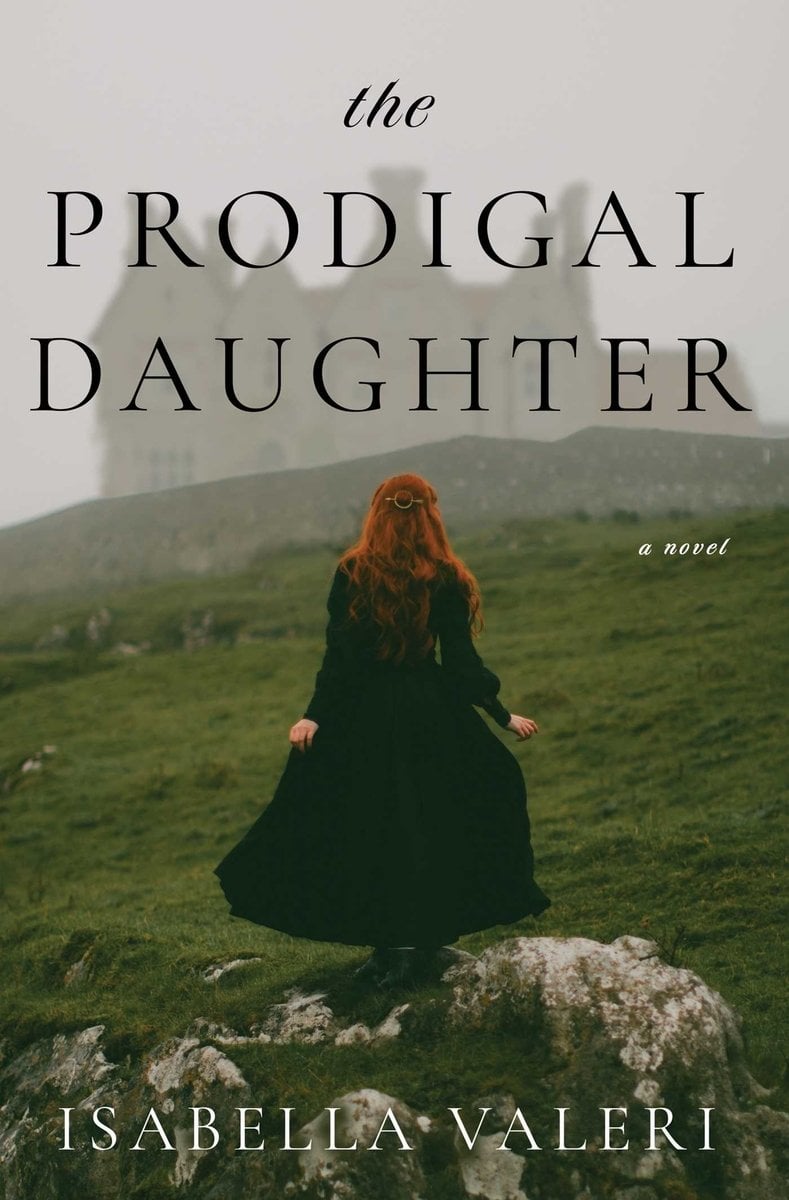
Isabella Valeri is the author of Letters from the Dead, her debut novel, and the forthcoming sequel The Prodigal Daughter, the second book in the Letters from the Dead series, both from Simon and Schuster imprint Emily Bestler Books/Atria. She is an avid markswoman, skier, equestrian, and pilot. She lives under an assumed name somewhere in the Alps. Visit Isabella Valeri’s website at Isabella-V.com, her Substack at @IsabellaValeri, or follow her on X @IsaGirl_V and Instagram @Isabella_Valeri_IG.