Isolation as an Antagonist
Why thriller readers love reading about characters who are trapped
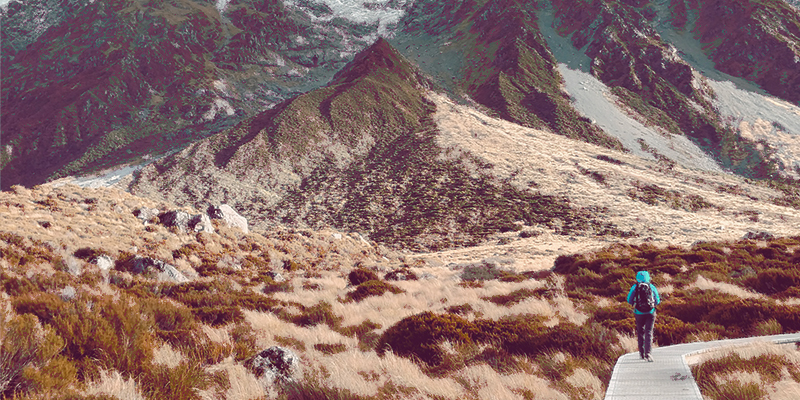
There is something undoubtedly addictive in reading about a courageous lone character facing overwhelming odds, while surviving in utter isolation. History and mythology are brimming with such examples, proving that isolation not only fascinates, but terrifies us. Especially in our technological dependent age. Imagine becoming lost in a sea of green up a misty mountain with no GPS, no signal, no means of contacting support. Imagine surviving a catastrophic event like a storm at sea, only to find yourself adrift, clinging to a piece of wreckage, with no sign of other survivors. Such was the fate of Odysseus, the very epitome of the lone character cut off from all aid in an isolated setting. In this case, the very elements were controlled by the gods; extreme weather events were justified as upset deities venting their displeasure at some act of disrespect. Now authors have replaced the gods, deciding what impediments and natural challenges are to be flung in the path of their unfortunate, helpless characters. All for the sake of reading pleasure, naturally. To wield such unstoppable power and to create endless possibilities in the name of creativity is what makes us human. There’s no limit to what villainous isolated settings an author can conjure for their characters (and readers). It’s not only addictive to write about characters struggling with and surviving against isolation, but also to read about it in the quiet, safe comfort of home, with our phones nearby.
Isolation as an antagonist ramps up the survival stakes for any protagonist until it becomes the ultimate contest of life and death. Suddenly, the ‘typical’ conflict you would expect in a thriller such as self vs man, self vs monster, self vs self, becomes intrinsically layered when we bring isolation into the mix. Self vs nature/isolation complicates the plot, affects the characters and raises the stakes in their relationships, bringing forth a much deeper level of tension the thriller reader may not otherwise encounter in a usual mundane domestic thriller setting. What could be more gripping for a reader than to wonder how on earth the character is going to escape from their seemingly impossible predicament, while also jumping through the hurdles a thriller brings? What wonderful twists await those seeking page-turning adventure, when we have isolation/nature plus murder and mayhem?
Readers live through their characters’ bloodcurdling exploits, vicariously experiencing every terrifying twist and turn, knowing they can dip in and out at will when things get too much, and take a breather. Because of this escape clause, readers enjoy the thrill ride that much more and are prepared to push their fear tolerance threshold for the sake of an adrenaline pumping climax with the tension ratcheted up to eleven.
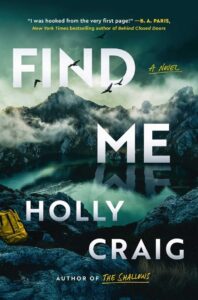
I’ve set the cast of my survival suspense, Find Me, in the isolated Tasmanian wilderness setting to reveal the true essence of my characters complex personalities, flawed behaviours, irrational fears, when all they have is each other to rely on. Isolation brings out the very best and worst in the sisters, Hallie and Gertie, who are searching for their missing brother, Pete. Even with the characters being as experienced as they are—Hallie is an award-winning Search and Rescue worker, and Pete is an avid and able mountain climber—the wild isolation taunts and teases the way any good antagonist should. Pete hiked up Mount Mercy three years ago to a secret, isolated commune that has been hidden beneath the pines for fifty years. However, he isn’t the only male to go missing up there. The town of Pine Peak believes Mount Mercy takes men. Despite the sisters uneasy relationships, whatever troubles they get themselves into will have to be solved on the fly by the seat of their pants. Their instincts are their only guide, their only help. Not knowing who to trust will only highlight their peril and magnify their vulnerability. And along with this, the fear of isolation: self vs nature, adds that much needed layer of conflict and tension to an already dramatic plot.
The mountain itself, along with the isolation surrounding it, presents an immediate antagonist to the reader, a real, living, breathing entity they can fear before the sisters even venture up its trails to the off-grid commune. Additionally, isolated communities come with the reputation of a closed society, shunning the world with their self-enforced isolation for whatever reasons. Such privacy predictably elicits suspicion and rumours that create the sense of ‘the other,’ an ‘us and them’ divide. They live by their own rules and dispense their own brand of justice, without technology, a tool humanity cannot live without. So, how would such a secretive group treat outsiders who stumble upon them? Would the members be welcoming, indifferent, or hostile? That is a theme I explore in Find Me, pitting an isolated community in an isolated wilderness against my protagonists. As if they haven’t enough to worry about.
Thriller readers love this scenario because the chances of experiencing being lost on an isolated, freezing mountain in real life, camping with a commune, having to cope without phones, social media, food and shelter is slim. Most of us prefer to avoid extremes and gravitate towards creature comforts and the safety of domestic routine. Impossible odds should ring the death knell for any character, but we all know that the author of any such scenario is merely throwing down the gauntlet, daring any reader to not toss the book aside, but to instead steel themselves for one hell of a thriller ride. This leads to the curious challenge of observing how these characters escape and survive with nothing but desperate invention for backup and a sturdy determination to triumph.
Isolated settings in thrillers really strip bare the options available for escape or survival. Readers puzzle over how the author’s ingenuity will resolve this predicament. Part of the enjoyment for readers is to guess how the escape from isolation will be made, and the further they miss their mark, the greater the enjoyment of being pleasantly surprised. Author originality counts highly, too. Those nineties films we all love and know, where the hero must scale the rocky ridge without falling, canoe down the deadly rapids without drowning, chip their way out of a glacier without freezing have somewhat spoilt the viewer. Cliché and predictability encourage the onset of boredom, leading to a fatal dose of lost interest in the thriller reader. To not see something coming is high praise indeed, and luckily isolated settings make for the perfect unexpected villain, ready to dish out twist upon twist. After all, this is entertainment, and no reader wants to be left disappointed.
Readers enjoy antagonist and protagonist pitting wits in a cat and mouse game designed not to end well for the victim unless for some miraculous intervention because it’s a contest. We are hard-wired to enjoy contests; think what went on in the Colosseum in the name of entertainment. Modern thriller writers are merely working on a variation of that theme; contriving situations designed to entertain their readership by tweaking the odds in a way that creates suspense and enjoyment all in one taut package. And if it ends well in a clever way, all the better for sales and a growing fan base.
But how realistic do fictitious isolated situations need to be? How much reality stretching can an author get away with before credibility comes into play? After all, readers aren’t fools; there’s a plausibility ceiling that, once reached, can shatter that suspension of disbelief mode we are normally willing to accept. There’s a fine line authors need to navigate, the so-called Goldilocks zone of believability where plausibility feels just right. But to stand out from the crowded shelves, authors need to constantly outdo each other to attract the ever fickle and discerning market, to push the boundaries of credibility just enough to keep it real. So, as the survival stakes increase for fictional characters, the gaol posts keep shifting, the twists need tweaking and natural environments where the wild is deadlier than the murderer, abductor, psychopathic killer have become a popular choice for the hungry thriller reader seeking more. Wild, isolated settings feel believable, even in a fictious situation.
How many thriller readers are inspired to recreate fictional survival stories just to see for themselves how they can stand up against that isolation antagonist? How many think they could survive such contrived adversity in real life? No doubt, that breed of thrill seeker does exist, seeing the natural world as nothing but a series of challenges. But for most readers, to imagine through the printed word is passport enough. After all, creature comforts are not to be dismissed lightly. And if one happens to incur a debilitating injury, through no fault of their own, in an isolated setting with no chance of assistance, what then? Hardly a happy ending for any reader, I would imagine. But there are those who will try.
We all love the idea of the underdog winning against all odds. We also love the idea that our characters do get located, do make it out alive, do go on to live happily ever after. In life, happy endings in crime are few and far between. In fiction, we get to witness justice, survival and heroism – a remote and slim peek into good vs evil. In real life, most people are never found, never done for the crime. Perhaps this is the very reason why thriller/crime readers want to race to the end, swing a leg over that ridge on the mountain, set their sights on civilisation after a gruelling mountain thriller, feel their feet hit the shores after being lost at sea with their beloved protagonist. When the character wins, so too does the thriller reader… while safely tucked inside their beds, surrounded by people, technology, communication and herbal tea, taking comfort in the warm knowledge that they never have to experience isolation for themselves… ever. And thank goodness for that.
***

Holly Craig
Holly Craig lives on the Western Australian coast. She spent her childhood on boats and on Rottnest Island, inspiring her second novel The Rip, and her debut #1 bestselling novel, The Shallows. She is also the author of the Audible Original Mayday. The beach and river were her playground and have shaped the settings in her stories. Holly is an English teacher and now teaches adults how to write their novels, preparing their manuscripts for publication through The Write Club. Her latest novel, Find Me, is now available.