

J.T. Ellison on Fear, Vulnerability, and the Deep Potential of Domestic Suspense
The author of 'You Know Why' explores the sexist dismissals and enduring allure of a crime subgenre
Did you know that domestic suspense is technically not a category of fiction? It’s a marketing term, which helps explain why it is one of the most popular genres out there.
The actual BISAC category is tucked away under the thriller nomenclature. Suspense is reserved for psychological stories; the domestic BISAC algorithmic tree is Fiction—> Mystery, Thriller, Suspense —> Thrillers —> Domestic. (BISAC stands for Book Industry Standards and Communications, in other words, the modern alternative to the Dewey Decimal system.)
For the longest time, this category was confused with romantic suspense, which is why there can be some of that annoying, looking down the nose derision of “Oh, it has domestic in the title, it’s just women’s fiction.” It’s actually almost the exact opposite.
Yes, these are often stories about women, but they are also about love, about relationships, about family, about power, about abuse—the very cores of our culture and society. These are stories about loneliness, being misunderstood, being led astray, being betrayed. How love can hurt us and break us. These are not universal female truths—they are universal, period.
The category known as romantic suspense might have a crime in the plot, but the story is about the main characters finding each other—and love—along the way, against the backdrop of criminality.
Domestic suspense, on the other hand, is about finding out that the person you love the most has betrayed you in the most terrible fashion.
Whether you call it domestic suspense or domestic thriller, which, technically, one can argue are two slightly different categories of story, (in the thriller, the reader knows more than the character; in suspense and mystery, the reader is catapulted along with the tale, which is why the form is predominantly written from the first person POV), it is a genre that will always have room for more stories.
Will we ever tire of exploring our own vulnerabilities? The fear that we might have chosen the wrong person to trust, to love, to spend our lives with? That our homes, the place where we are supposed to feel the safest, can be violated with such ease, from without or within?
No. Domestic suspense is the basic intellectual study of human nature. Thrillers are cultural commentary in many ways. They explore wars and political malfeasance and are populated with assassins and terrorists and heroes. Domestic suspense does just what it says—it takes this impactful cultural lens and puts it under the microscope. Domestic versus national or international. Macro versus micro.
Many years ago, when I wrote a book (Lie To Me) my publisher was calling “domestic noir” because the domestic suspense terminology wasn’t quite in place yet, they did research to see if there was still interest among the readers for these kinds of domestic stories. Gillian Flynn’s list-busting Gone Girl came out in October of 2014, and by 2016, publishers were wondering—nay, expecting—the trend to be over.
Genre popularity is cyclical (hence why vampires reappear every five years or so); domestic stories seemed to be on their way out, as well.
To their surprise, there was still interest in those kinds of stories. Vigorous interest. Here we are, a decade later, and the category is still going strong.
Because that’s where the heavy hitters write. Liane Moriarty. Lisa Jewell. Alice Feeney. Jennifer Hillier. Angie Kim. Kimberley McCreight. Jeneva Rose. Riley Sager. Alex Finlay. Sara Pekannan. Mary Kubica. Freida McFadden. Rachel Howzell Hall.
I could go on and on, because the list of talent writing in this genre is endless. Over the past decade, there has been an utter explosion of titles that examine our quietest, safest space—home.
Which translates quite simply to—fear. Domestic suspense is an examination of our deep-seated fears about someone we love betraying us by exploiting our vulnerabilities.
Variations on the theme abound, which is another reason these books will never get old. The quiet neighborhood is still a fan favorite, but these themes exist across multiple settings now: planes, hotels, mountains, island vacations. Anywhere that love exists between two people can be appropriated and perverted into a suspenseful tale.
The days of derision toward stories told by women, about women, are long gone. Domestic suspense regularly appears on the bestseller lists, best of lists, and sustains careers. Will it fade? Eventually, perhaps. But with new and diverse authors regularly entering the genre with their own lived experiences, it should exist for years to come.
Like the gothic, domestic suspense is an umbrella category with endless story possibilities. We will never tire of trying to understand what happens behind the neighbors’ closed door.
***

J. T. Ellison
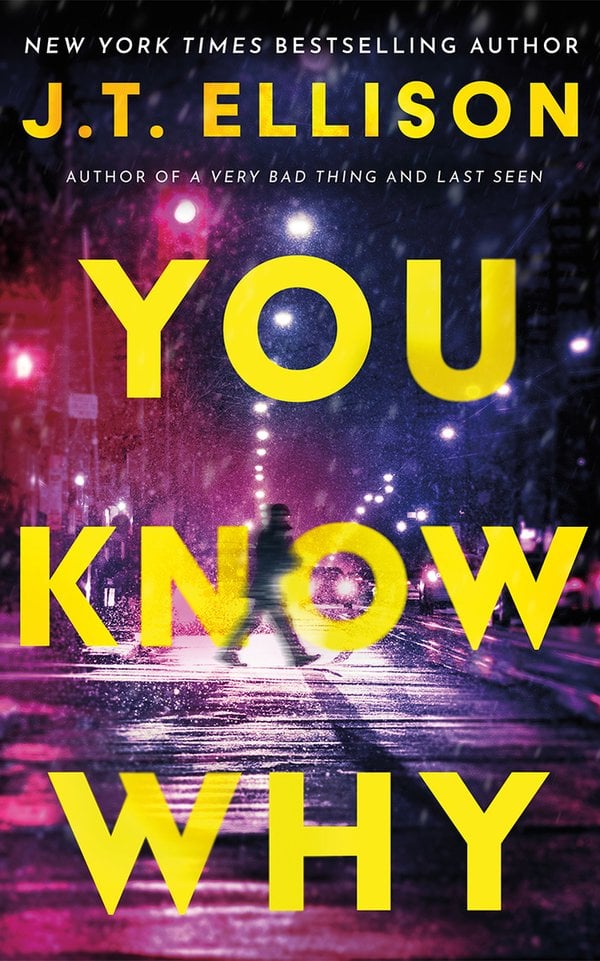
J.T. Ellison is the New York Times and USA Today bestselling author of more than thirty novels of psychological suspense, including the Lt. Taylor Jackson series, the Dr. Samantha Owens series, and numerous acclaimed standalones. She is the Emmy Award–winning cohost of A Word on Words, the literary television series on PBS. Over a twenty-year career, her work has earned widespread critical recognition, with titles optioned for television and published in thirty countries, and millions of copies in print worldwide. A dedicated voice in the writing community, she also publishes "The Creative Edge," a newsletter and blog for writers navigating the craft and business of fiction. She lives with her husband and twin kittens—one of whom is a ghost—in Nashville, Tennessee. You can subscribe to her monthly newsletter at www.jtellison.com/subscribe.