
Jennifer Givhan on Monstrous Mothers, Headless Women, and Writing Symbolic Horror
The author of The Sleeping Sisters analyzes the tale of the girl with the green ribbon
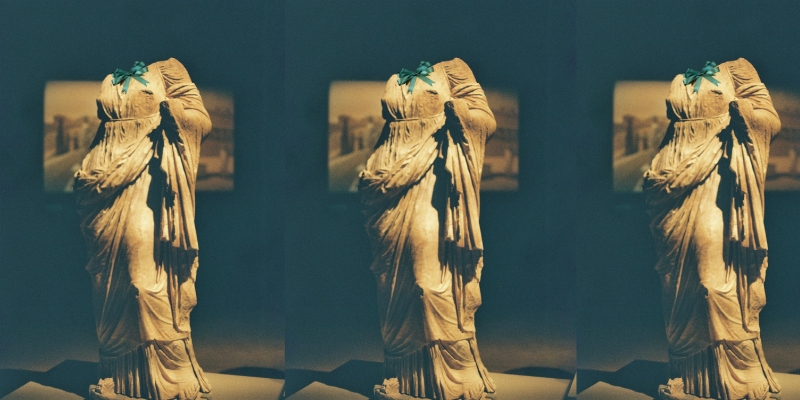
There’s something about the headless woman that intrigues and terrifies us. We see headlessness everywhere from the headless Venus de Milo to the highly sexualized women’s bodies on covers of magazines and books to advertisements on billboards. As a kid, I was intensely captivated by the headless woman who changes heads with her victims in the movie Return to Oz. That she could become any woman. That by removing a woman’s head, her identity becomes interchangeable—
I think this is a key attribute of our cultural fascination with the headless woman. She’s everywoman and no woman at once. She invokes terror, or she’s invisible.
When I was eight or nine at a sleepover at my friends’ house across the street, we read a book of scary stories that housed one tale that would stick with me and come to underscore a major facet of my writing life: “The Girl with the Green Ribbon.”
My mom had her thyroid removed when she was a girl, and back in the day they sliced her throat and sewed her back together. She has the scar, a thin, raised line where her head meets her neck. Motherhood was my lore. My mother, my world, larger than life. When I first read “The Girl with the Green Ribbon,” I pictured my own mom.
There was something about the idea of ownership and social expectations/mores exemplified in the children’s book by her husband wanting to rip that ribbon off Jenny’s neck, first when she was his girlfriend, and then when she was his wife. It’s a story that strikes a chord with how it subtly rebels; Jenny won’t let Alfred touch her ribbon until she declares it’s time, however much he wants to inhabit that part of her story or control that private aspect of her being.
Back then, I marveled at Jenny’s ability to put herself back together, to keep going despite her split. She had been violated, and in her survival, she had become, in some ways, monstrous—a scary story to tell in the dark.
She needed a ribbon tied around her neck to keep her head from falling to the floor with a plop. And yet, she is so resilient.
Whatever happened to her in girlhood hadn’t stopped her from living, nor from setting boundaries.
There’s such a lesson here for girls and women, especially like me, who’d already undergone trauma at a young age.
What happens after the horror story ends?
What does survival actually cost? Can we, headless women who have survived, ever thrive?
In my most unhinged novel yet, quite literally, The Sleeping Sisters, I ask: how does a traumatized woman mother whole, well-regulated children? As a mother myself, how not to helicopter or tiger mother them? How not to monstrous mother them?
How sometimes a mother’s hypervigilance can mask neglect or not addressing the necessary painful issues.
I’m drawn to messy, complex characters, especially women, who exist and fight the socially conscripted roles, who shirk expectations even as they rail against internalized duty or responsibility, inherited shame, or personal demons.
Growing up, I often saw this kind of complexity in the media and literature when it came to white women and girls, but it was rarer to see these messy, complicated stories portrayed by girls and women of color, especially when we’re Latina and Indigenous. These days, so many writers I admire are doing this work, from Silvia Moreno-Garcia to V. Castro, whose The Haunting of Alejandra is being adapted to screen.
What I specifically wanted to explore was the parentified or traumatized daughter grown into the messy mother who actively works not to traumatize her children, protecting them while giving them the space and autonomy to make their own mistakes they can learn from, but the boundaries not to fall off the edge of the world when they make those mistakes.
Trauma-informed, child-centered, loving and nurturing parenting in the Latine and Indigenous communities where too often the aftereffects of colonialization, taboo, and/or poverty have left their painful mark and allowed toxic cycles to perpetuate, sometimes under the guise of religion, tradition, or cultural jokes. For instance, hitting children turned into the comical beware la chancla or underage drinking condoned via fiesta culture. Or a woman silenced as a man is the head of the household in machismo or religious tradition.
Carmen Maria Machado retold “The Girl with the Green Ribbon” to gorgeous affect, addressing outdated social expectations of women to marry, bear children, and devote her life to her home and family—since the scary story itself presents both those stifling mores and the desire for choices outside those norms. Machado addresses how deep the misogyny goes in our society, with a woman still considered her husband’s property in too many ways, especially in the medical realm, where a man still must consent in writing to a woman getting her tubes tied, for instance, and, as in “The Husband Stitch,” can ask the doctor to mutilate a woman’s genitals during/after childbirth for the husband’s pleasure.
My ribbon takes on the intersection of gendered and racialized violence against Missing and Murdered Indigenous and Latina Women and Girls. For us, the ribbon is no longer only metaphor. The violence is historical, ongoing, and often invisible until someone names it.
The reasons we are at a higher risk of violence are myriad and complex. Poverty is still one major factor, as are cultural and religious expectations. Higher rates of alcoholism and drug abuse can also contribute.
Often in our Latine and Indigenous culture, we are akin to the OG childhood story with one crucial difference. The headless woman keeps herself together for her own sake, not merely the victim but the survivor, the final girl, the thriver—
And we also keep ourselves together for our families.
This is a crucial cornerstone that goes hand in hand with culture and wellbeing.
The Sleeping Sisters deepens and psychologically expands my debut poetry collection Landscape with Headless Mama, which explored mothering through mental illness and the legacy of growing up a parentified daughter to become a mother as survivor. I implemented trauma-informed parenting, healing the present to heal the past and the future and breaking toxic cycles.
In my novel, “The Green Ribbon” becomes a symbol that asserts survivorhood as a badge of courage, relentless tenacity not only to heal the self but to extend that heartwork to protect other marginalized people from experiencing the same violence.
It’s a recognition of the so-called monstrosity that society hurls at survivors of sexual violence. A kind of “good for her” reclamation of monstrosity as empowerment. The monstrous mother who would stop at nothing to protect her children. My novel picks up where the childhood tale and Machado’s interpretation leave off, after the ribbon falls away from Jenny’s neck and her head lops off, rolling onto the floor with a sickening squish.
I had to understand—what happens next? And so I wrote it. My own children are now sixteen and nineteen, well past the age my trauma began.
How does the last girl in a horror story pick up and start anew? And what if she’s a mother? How does she pick up the pieces of her broken tale, her children in tow along with her newfound “monstrosity,” having done whatever was needed to survive, squeezing at her neck, the thick ropey scar for her children and the rest of the world to see. To try and paw at. A shiny green ribbon to try pulling away from her….
She declares her own story, recognizing she is only a victim in someone else’s story. And in her own version, she’s a badass, capable of taking down the predators of this world.
***
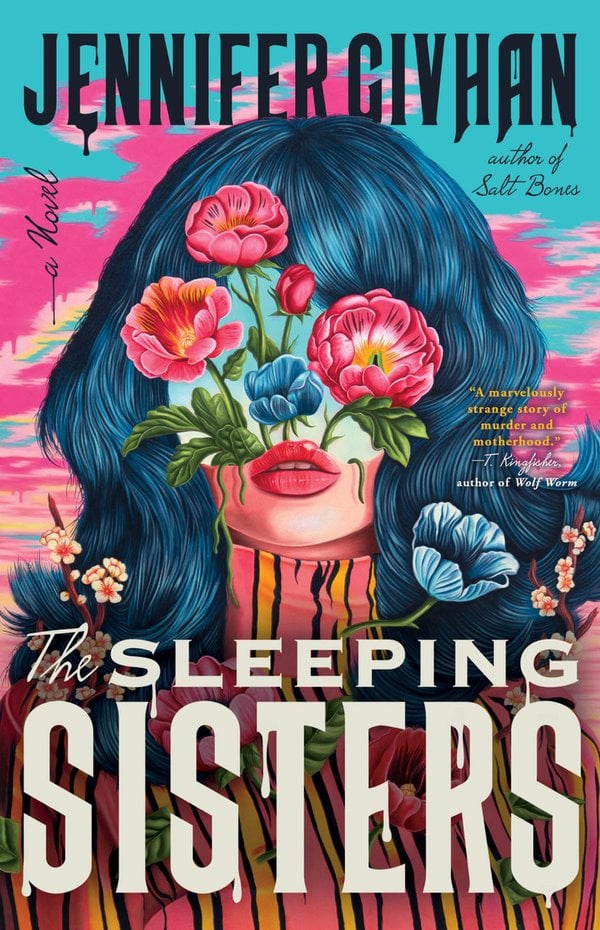

Jennifer Givhan
Jennifer Givhan, a National Endowment for the Arts and PEN/Rosenthal Emerging Voices fellow, is a Mexican American writer and activist from the Southwestern desert. She is the author of four full-length poetry collections: Landscape with Headless Mama (2015 Pleiades Editors' Prize), Protection Spell (2016 Miller Williams Poetry Prize Series edited by Billy Collins), Girl with Death Mask (2017 Blue Light Books Prize chosen by Ross Gay), and Rosa's Einstein (Camino Del Sol Poetry Series, 2019). Her honors include the Frost Place Latinx Scholarship, a National Latinx Writers' Conference Scholarship, the Lascaux Review Poetry Prize, Phoebe Journal's Greg Grummer Poetry Prize chosen by Monica Youn, the Pinch Poetry Prize chosen by Ada Limón, and ten Pushcart nominations. Her work has appeared in Best of the Net, Best New Poets, Poetry Daily, Verse Daily, Ploughshares, Poetry, TriQuarterly, Boston Review, AGNI, Crazyhorse, Witness, Southern Humanities Review, Missouri Review, and the Kenyon Review. Givhan holds a master's degree in English from California State University Fullerton and an MFA from Warren Wilson College, and she can be found discussing feminist motherhood at JenniferGivhan.com as well as on Facebook and Twitter @JennGivhan. Her new novel, River Woman, River Demon, is now available.