Jessica Brody on Going from Writing the Book on Plot to Plotting Out Murders
The author of 'How to Write a Murder' explores narrative structure, twists, and self-help
I should be able to see every plot twist coming. After all, I wrote the book on plot. Literally. I wrote a bestselling guide called Save the Cat! Writes a Novel that teaches writers how stories work. Therefore, I shouldn’t ever be fooled by a story. But I am. All the time. Especially mysteries.
But that’s exactly why I love them. The surprises. The clever reveals. The play-fair clues that were there the whole time and I read right past them. (Correction: I was carefully and quite purposefully misdirected to look the other way.)
Why do we love these moments so much? Because these are the moments we never get in magic shows. It’s the reveal of how the trick was done. The magician pulling back the curtain on the whole mechanism and we’re left slapping our foreheads going, “Duh! The trap door was right there the whole time! But I didn’t see it because I was busy looking elsewhere.”
So, naturally, when I set out to write my first murder mystery, I wanted to create those same moments of delight. I wanted to be the magician. To fool, to misdirect, to create those forehead-slapping epiphanies. But I also had a nagging question in the back of my mind:
Can I reveal the trick as I’m pulling it off and still pull it off?
Can a magician peel back the curtain to show you the trap door and still fool you?
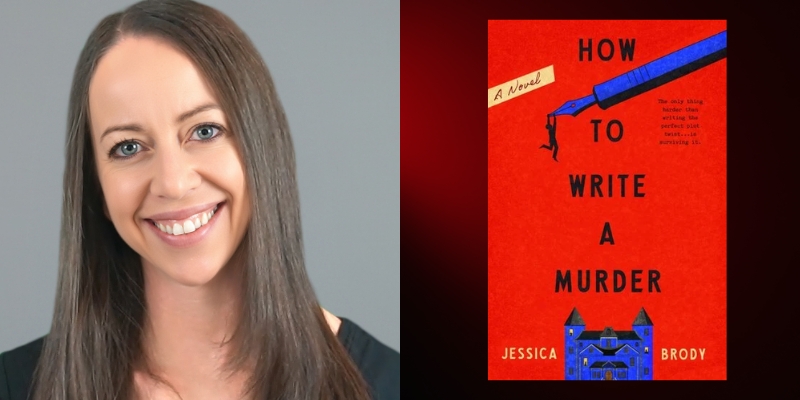
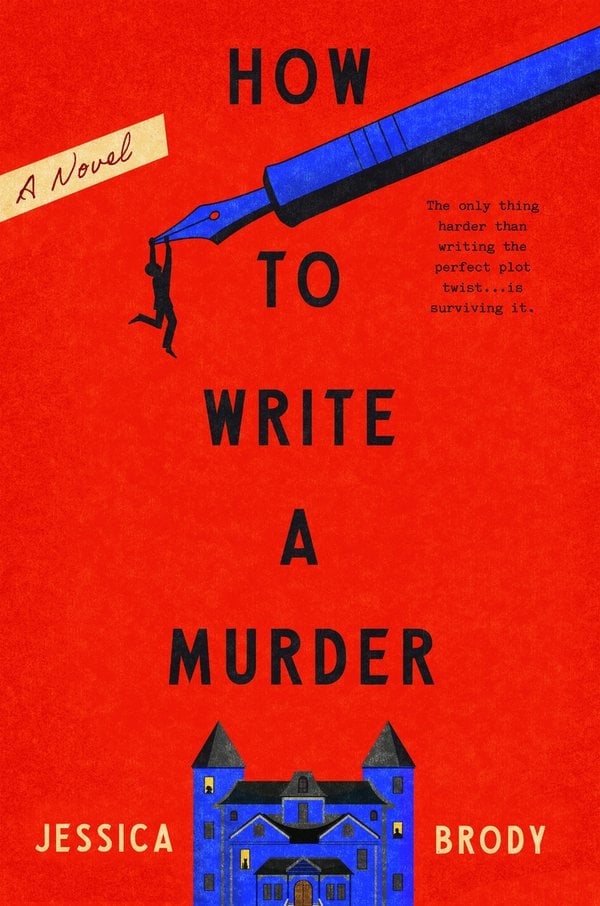
This became my grand experiment with How to Write a Murder (seven mystery writers, one dead body, and a narrator teaching you exactly how a murder is written, as one is being committed.)
On paper, my experiment should have failed. I shouldn’t be able to reveal the mechanics of the murder and still hide the solution from you. All murder mysteries are a game between writer and reader. Once I, the writer, pull back the curtain and show you how I’m writing it, the jig is up, right? The game is over.
Or is it?
For the same reason I, a plot teacher, should be able to see all the plot twists before they happen, you should be able to solve the murder the moment I tell you how the murder works.
Yet, I don’t see those plot twists coming. And I’d venture to say that you already know how a murder mystery works and you’re still surprised by many of the ones you read.
There’s a good reason for that. And I’m banking my mystery writing career on it.
If you’ve read as many mystery novels as I have—and I’m guessing you’ve read even more—surely you’ve caught the pattern. The blueprint, if you will. I know it’s there because it’s the same blueprint I teach writers. The same structure that’s used by millions of writers around the world. And it’s buried under not just romances, fantasies, epic quests, and space operas. It’s buried under mystery novels, too. And no, they’re not different blueprints. They’re eerily, uncannily exactly the same.
Every story ever told runs on the same handful of structural “beats.” For example: They all have to have a Catalyst (inciting incident). In a mystery novel it’s often the discovery of the body, while in a fantasy it might be the discovery of magical powers. Every novel has to have a decisive action beat (the Break into Act 2).In a mystery novel it’s often the detective taking the case, while in a space opera, it might be the rogue space pirate taking the bounty hunter job.
And every novel has to have a Midpoint twist. In mystery novels, it’s often the reveal of a shocking new clue, while in romance it’s often the reveal of a shocking new complication that drives the lovers apart.
I could sketch the skeleton of your favorite novel on a cocktail napkin and show you how the beats are all there. (It’s a nifty party trick that you would think would make me more popular at parties.) You might even say the beats are predictable. And yet, I imagine your favorite novel still surprised you.
There’s a great debate in the writing world: does a familiar plot structure kill the surprise? (In How to Write a Murder, it’s a debate my characters literally have over dinner.)
I argue that it doesn’t. Here’s what two decades of diagramming stories on cocktail napkins has taught me: structure isn’t the thing that spoils the surprise. It’s the thing that delivers it.
Or to be even more bold, it’s the vehicle that allows the surprise to exist in the first place. Because whether you realized it or not, you were expecting that dead body at the Catalyst. You were anticipating that shocking reveal at the Midpoint. It’s actually, subconsciously, what kept you turning pages to get there. But the nature of how it went down is the thing that delighted you.
The reason a great twist lands isn’t that the writer hid the clue in some unfamiliar story beat that no one’s ever done before. It’s that they placed it exactly where the structure said to, on the precise beat when your story-attuned subconscious brain knew to look for it. And they still misdirected you away from it. That’s the magic trick. And the Golden Age masters built entire careers on it.
But here’s the rub: in most novels, the structure is buried underneath the plot. You don’t see it (unless you’re a plotting teacher like me who can’t unsee it.) Sure your brain might get a spidey sense that a Midpoint twist is coming, but no one is popping out from behind the curtain to tell you to watch out for it.
So, I asked myself, what if someone did?
What if the trap door wasn’t hidden behind the trick? What if it was part of the trick? What if the structure that all great mysteries are built upon wasn’t hidden beneath the story, but became part of the mystery itself?
How to Write a Murder is my attempt to pull off just that. The story is broken into structural steps, printed right on the page—the Intriguing Opening, The Looming Threat, the Maze of Misdirection, all while a mysterious “Writer” narrator is telling you exactly how the murder is being built (as the bodies are dropping), teaching you how to write a murder (as you actively try to solve it.)
Delightful? I sure hope so. Successful? You tell me. Twisted? Maybe a little.
But we mystery fans are a little twisted. We know someone will die. We know the shocking reveal is coming. We know there’s a trap door we probably won’t spot. And yet we buy the ticket to the magic show anyway. Because deep down, we’d rather be amazed than right. We’d rather be fooled than see the wires. In the end, we don’t read this genre to win. We read it to lose.
And I’m sure hoping you do.
***

Jessica Brody
Jessica Brody is the author of the number-one-bestselling novel-writing guides Save the Cat! Writes a Novel and Page One to Done as well as more than twenty novels for teens, tweens, and adults including The Geography of Lost Things, The Chaos of Standing Still, Amelia Gray Is Almost Okay, A Week of Mondays, 52 Reasons to Hate My Father, the Unremembered trilogy, and the System Divine trilogy, which is a sci-fi reimagining of Victor Hugo’s Les Misérables, co-written with Joanne Rendell. Jessica’s books have been translated into and published in over twenty languages and several have been optioned for film and television. She’s the founder of the Writing Mastery Academy and lives with her husband and dogs near Portland, Oregon.