
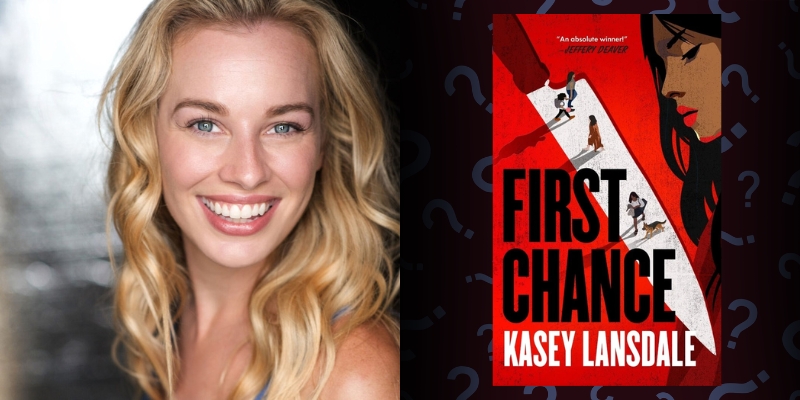
Kasey Lansdale on Writing an Inexperienced Small-Town PI Protagonist
The author of First Chance extolls the amateur sleuths who feel in over their heads
When I first thought about writing a PI novel, I read and heard lots of advice about how to make your character good at what they do. Fellow authors talked about the research they had done to learn different police procedures and protocols—a ride along during a high speed chase for one—as well as the exciting technology their big city PIs would have access to down the line.
My small-town PI felt bland in comparison.
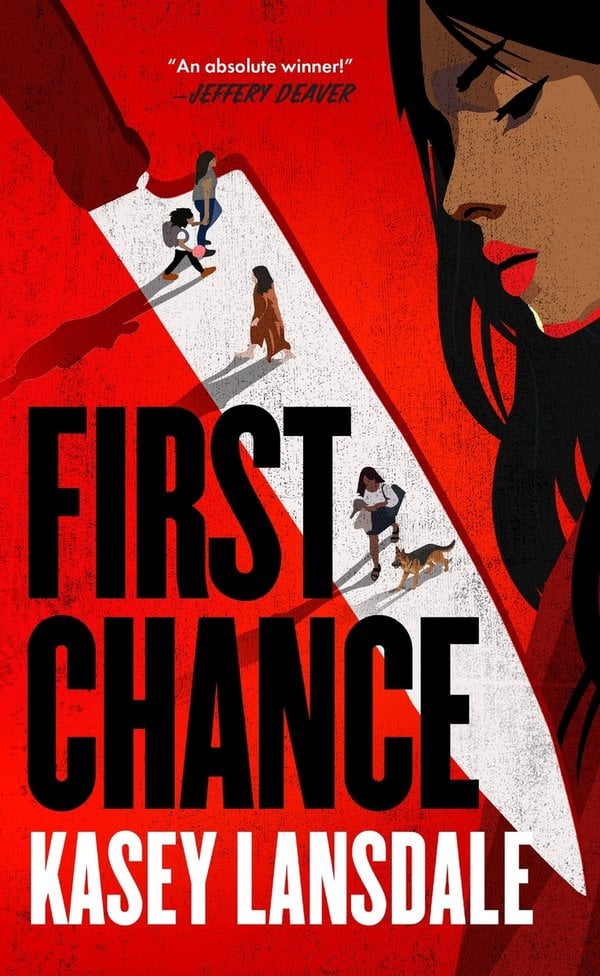
Chance Kirby, from my novel First Chance, is an average woman in her mid-twenties, starting out on her own for the first time in the back woods of East Texas with no real experience to speak of.
Throughout the book, she acts impulsively at times, which lands her in hot water, including locked in a jail cell at one point. Though Chance is far from helpless, she is in her own way naïve.
Unlike a Sherlock Holmes, one of the most beloved characters in fiction, Chance isn’t a genius, nor was she raised in a privileged upbringing or taught to hone her skills early. And while every story in the Holmes universe is loads of fun, there’s never a moment someone might think, oh no. Will he figure it out? Of course he will. He’s Sherlock Holmes.
I wanted to write about a character who would be considered an everyman/everywoman. The rule, rather than the exception. As a reader, I find the characters I return to again and again aren’t the ones who never make mistakes, they’re the ones who do, but still get the job done somehow. Michael Connelly’s Harry Bosch isn’t doing everything right all the time, (Though granted, he often knows better,) but we love him because he’s not infallible—he’s human.
With that in mind, it was important to me that Chance earn her discoveries in real time. That’s not to say she’s inept, only that her experience with death has been limited to her work in journalism and the loss of her mother. She’s had some training and worked in the field, but it made sense to me that she would need a village around her to solve this case, especially as she finds herself at the center of a decades long pattern of murders that even the seasoned pros had been unable to connect, let alone solve. A serial killer puts her well out of her depth.
That’s where Tia, Izzy, Joe Dean and Billie Jean come in, each one bringing their own expertise. Tia is a to the point, foul mouthed teenager who supports Chance at home emotionally and domestically. Add to that Izzy, who has the resources of the local Hopeful, Texas police department behind her, as well as Joe Dean, a wise, if not wise ass, ace private detective out of Houston, Texas who’s been in the game a very long time. Then there’s Billie Jean, a whiz at getting the ungettable behind the closed doors of the internet.
All of which makes for a crack team that doesn’t judge Chance for her inexperience, but instead, rallies around her and elevates her with their own knowledge. (And of course, we must not forget Sissy, her sassy German Shepherd.)
The other benefit of Chance having less experience was the opportunity for the reader to get ahead of her as the story goes and see things she can’t. It brings the reader in as an active participant more than a voyeur of the page. It’s always been my stance that if I like the character and the setting, the plot is just a detail. I can appreciate that for some readers this might be a point of frustration, but for me, that was the point. Who among us hasn’t become frustrated watching someone struggle with a task we might ourselves find easy?
If you look back at the earlier work of so many artists across different arenas that we know and love today, there’s a clear path of failure, followed by improvement. Take for example country singer Reba McEntire. She put out seven albums before her breakthrough with My Kind of Country. It’s hard to imagine a time when her success was considered iffy.
Somewhere along the way, artists have been stripped of their opportunities for development. I would argue in the world of genre fiction, it started creeping in about the seventies, when the blockbuster debut became the outcome everyone started chasing and devolved from there. Chance is no different in her field.
In a world of filters and instant gratification, people think that you should be flawless at all times. And if you aren’t, it’s on to the next person who is. It’s why time and time again, the things that hit, that fascinate, are about the richest people, the most beautiful people, the perfect people.
With Chance, that wasn’t the story I wanted to write. I can’t imagine a world where any person in their mid-twenties, fictional or otherwise, truly has it figured out. The older one gets, the more one realizes that none of us do. There are people who navigate this world more effectively than others, no question, but even those people are not immune to doubt. Toss in some murder and a colorful crew of characters and it’s no wonder Chance has to find her footing.
The thing I realized was I didn’t want Chance to be perfect. I wanted her to be real.
Now, if I can just keep her out of trouble for a moment…then again, where’s the fun in that?
***

Kasey Lansdale
Kasey Lansdale has been in the fiction world since birth as a writer, editor, audiobook narrator, and creative professional. Lansdale is based in LA and currently serves as head editor at Pandi Press. She has released numerous short stories and anthologies from publications such as Harper Collins, Titan Books, and more, and her fiction has been adapted for television and comics. First Chance is her debut novel.