
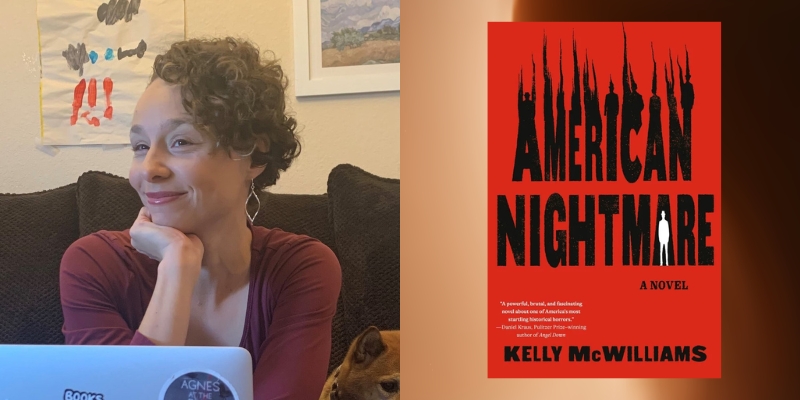
Kelly McWilliams on Racial Passing, Tulsa, and Reimagining the Spy Walter F. White
"[B]earing witness was surely the hardest, most soul-shrieking part of Walter’s work."
I first heard about Walter F. White, the spy, when I was in elementary school.
I grew up in a mixed and Black family, the lightest child in every bunch. Possibly the lightest child in history, I thought at the time. And once, another group of kids wouldn’t let me hang out. Tearfully, I came home asking if I was too pale to be who I felt I was. And my mother told me a story about a very real man named Walter White.
“This gentleman had blond hair and blue eyes,” she said. “And he worked for the NAACP.”
I am Negro, White wrote in his autobiography. My skin is white, my eyes are blue, my hair is blond. The traits of my race are nowhere visible upon me.
My mother explained that during Jim Crow, he dove headfirst into the Deep South to catch lynchers—and succeeded. He was famous, in his time.
Bolstered, I could see where I might carve a place for myself to exist.
As I grew older, I kept thinking of Walter. Movies rolled out of the theaters featuring the post-Reconstruction struggle; I kept waiting for his biopic. Especially after the wonderful Thurgood. In real life, Walter was Thurgood’s mentor, just as James Weldon Johnson had been Walter’s.
But no such movie was ever made. I wondered if it was because the name Walter White now belongs, in the cultural imagination, to the show Breaking Bad. Or if it’s because he’s tricky to cast in a major role. More recently, Walter F. White’s appeared in a few television productions, and some attention has been paid to the less-than-flattering final half of his life. He was far from perfect. But in his early years, when he was still just a spy, Walter was magnificent.
My book reimagines Walter White—in my novel, he’s called Clark White—in his brilliant, death-defying coming-of-age.
In 1906, the Atlanta riot came to the White family doorstep when Walter was just thirteen. In the prologue to American Nightmare, Clark White experiences a dramatized version of this moment. Walter’s father told him to shoot and keep shooting, just as soon as the white mob crossed the lawn. Though the mob passed them by, Walter knew then which side he had to be on.
As he grew, Walter—like my character—felt increasingly conflicted about his pale skin. He was at home in Atlanta. But in a segregated world, people were often suspicious of his color, knowing how easily he could disappear from the Black world if he ever decided to pass for white. This, too, I dramatized as one of Clark’s central wounds.
Ironically, the real Walter F. White was the farthest thing from an American traitor. His first investigation on behalf of the NAACP sent him to Estill Springs, Tennessee. Walter caught a fast train out of New York, and the infamous murder of Jim McIlheron became the first he ever investigated.
It would be far from the last.
White would investigate forty-one lynchings and eight race riots. He describes how perilous this became. Soon, southerners were on the lookout for a man like him. He had to jump a train; know southern routes like the back of his hand; get a tip from a porter to survive. And he never, ever carried a gun. The spycraft in my novel, while dramatized, has its basis in truth.
(If you’ve read the book, you might like to know that the “fingernail test” Clark passes is the same test Walter describes in his autobiography, A Man Called White.)
And here’s where Walter F. White, to me, becomes an American hero. His life-staking investigations bore fruit. Slowly, the tide of public opinion began to turn…and one of the most racist presidents of all time issued a speech against lynching.
Walter F. White was involved in all this and so much more. My own novel presents only a slender slice of his existence. Perhaps because we live in times where we once again need our heroes, I imagined my own version of him as a soldier in a covert American war—a striving soldier…and a wounded one.
All his life, Walter suffered for a lack of being seen, though he maintained a sense of humor about it. He wrote cheekily back to Klansmen who threatened him by mail, egging them on like it was a game. And when a white New York cabbie, mistaking him for the same, asked how he’d feel if his daughter married a Black man, Walter F. White grinned and said, “She probably will.”
Nevertheless, when he died, the New York Times wrote in his obituary that he was “a Negro by choice.”
He’d have hated that.
In life, the historical Walter White wanted many things, I’m certain, but Clark wants what I most understand: to be seen. And yet, to do his job, he can’t be seen. It’s the old spy problem. Only this time, the spy’s own skin is his best disguise. If it will be enough to protect his soul is the major question of the novel.
The other question is simply: how does one bear witness and live?
I’ve often thought that the historical Walter White and his NAACP colleagues experienced a level of first-hand horror usually reserved for war zones, right here at home. How did he sleep? Apparently, he didn’t much. How did it feel to carry what he did? Only the poets were discussing things like feelings.
And yet, bearing witness was surely the hardest, most soul-shrieking part of Walter’s work. There were nights I couldn’t sleep, researching this book, because of what was lurking on the back of my eyelids. There were writing days when I sat and cried. I still cry for what we’re all witnessing. Not in the summer of 1919 but in the summer of 2026. Even now, the NAACP runs its own independent investigations, trying to prevent any possible truth from being buried.
Luckily for me, I was taught to witness young—as Walter was—by a steady parent. During research for her own book on the Tulsa Race Massacre, my mother took me to Tulsa, where we saw the hooded Klan protesting outside the courthouse. I might’ve been ten or eleven.
“A field trip,” my mother called it, watching them with clinical, professorial interest. I’m sure those men have appeared in her books just as they have in mine. Though I stood in no massacre, the journey to write this book began where my own novel ends: in Tulsa.
In the chaos of the Tulsa Race Massacre, an undercover Walter appeared so white, pretending to be a newspaper man, that the mob deputized him.
You can imagine how helpful this was to his investigations—the findings of which he’d report to the NAACP and later to Congress, where he frequently testified on behalf of federal anti-lynchings laws. For the rest of his life, he would fight for these laws with his whole heart.
Tragically, no such law passed. Not until 2022.
It’s named in honor of Emmett Till.
***
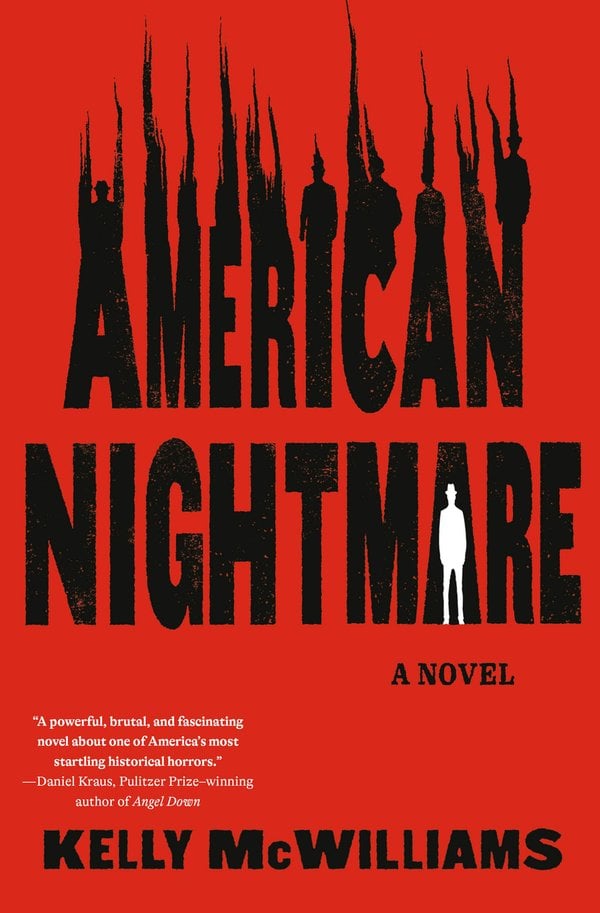

Kelly McWilliams
Kelly McWilliams is a mixed-race novelist whose work examines white passing, American history, and the uncanny. She is also the author of several acclaimed novels for young adults, including Mirror Girls, a Junior Library Guild Selection. American Nightmare is her adult fiction debut. She lives in Seattle with her family.