

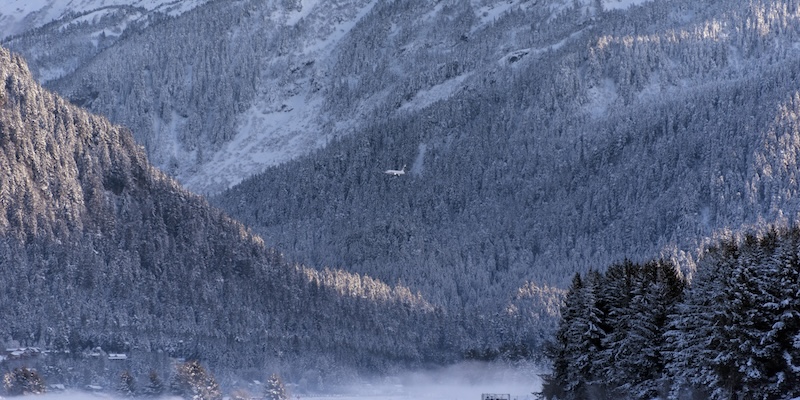
Kevin C Morris on Worldbuilding and Setting a Mystery in Alaska's Rugged Southeast
The author of Untamed Coast finds inspiration on Radioville Island
As I climbed out of the dinghy and hiked up the shore toward the crumbling shack with the red metal roof, I knew we’d found it: Radioville.
Hidden among innumerable islands dotting the rocky, untamed coast of Southeast Alaska, Radioville was just as the barfly back in the tiny fishing village of Pelican had described. The sand on the beach sparkled with tiny bits of colored ground glass, remnants of booze bottles discarded eight decades earlier by a solo radio operator who was the only communications link between the workers at the nearby mines and the rest of the world.
From that real-world moment on, I was embedded in a mystery, and Alaska was calling the shots. Soon, she would be the main character.
Alaska has played a starring role in countless fictional narratives. The stunning beauty, inhospitable terrain, abundant wildlife, and timeless indifference provide us with a rich sandbox for our murders, mysteries, thrillers, and quirky characters to ply their trades.
Most mysteries and thrillers take place in the real world. As crime writers, we can take advantage of readers’ knowledge of common places, tropes, and culture to make our writing task easier. Readers usually have enough understanding of places like New York, Chicago, and Los Angeles that we don’t have to spend a lot of extra words on worldbuilding.
Fantasy and science-fiction writers have a bigger worldbuilding job, but their readers arrive expecting it. It’s accepted that a good chunk of their stories are spent describing the environment, the rules of science and magic that play into the story, even the types of characters and creatures that inhabit the domain.
Southeast Alaska, a vast archipelago of over twelve hundred mostly uninhabited islands, sits in a tricky middle ground. It’s wildly different from anything most people have ever experienced, a real place requiring almost speculative-fiction levels of orientation inside a genre that wants to move fast. The three largest cities are Juneau, Sitka, and Ketchikan, with a smattering of smaller towns and villages. No road system connects them.
The wildlife is abundant and exotic: humpbacks, orcas, sea lions, otters, bears, eagles, ravens…the list is endless. The environment itself is unforgiving: rugged mountains, dense forests, ripping tidal rapids, treacherous seas, calving glaciers, icebergs, landslides, tsunamis, torrential rains, blistering winds. As a writer, you have a rich and awesome palette of peril to throw at unwitting characters.
I could describe the geography for days, but how much of that world does the reader need to understand? How do we establish that many destinations can be days apart by boat, that cell service disappears outside the towns, and cars are essentially useless? What happens when a glacier calves? How do tidal rapids work? Crime readers have limited patience for exposition, so the challenge is giving them enough information to understand the world without slowing down the story.
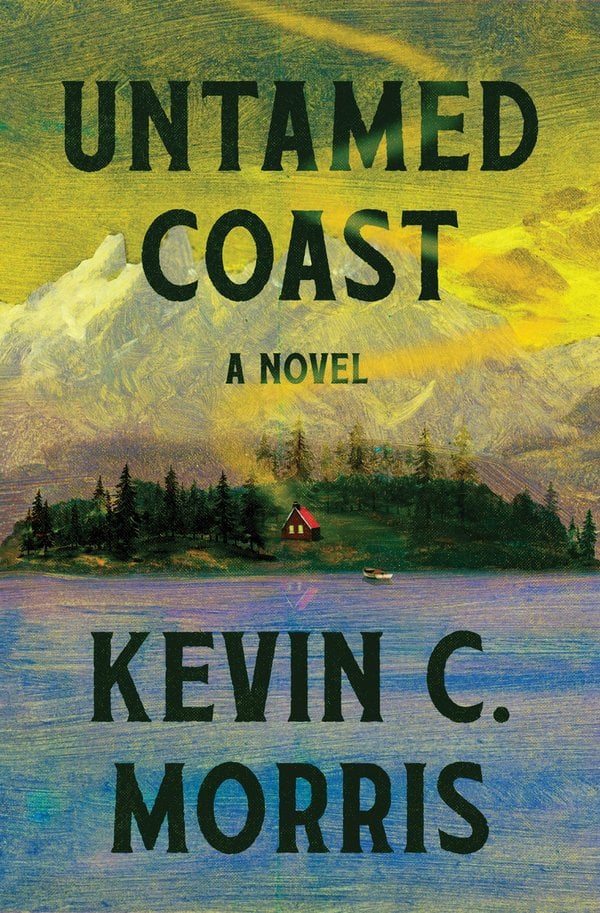
In my case, Alaska supplied the core mystery for my debut novel Untamed Coast. I stood on Radioville Island looking at the lonely ruins of Joe Bauer’s 1930s outpost and thought about his daily trips by rowboat through treacherous waters to and from the gold mines to gather and distribute the messages he sent by Morse code.
This little island perched on the edge of the Gulf of Alaska has no fresh water, no power, and no reliable food source. Why did he set up shop here instead of at one of the mines, which had living and working quarters, regular supply ships, power, food, water, and other people?
If you’re a crime writer, clearly he had something to hide.
From that point, Alaska provided the riches. Gold being mined? Yes, please. I’ll take the large gold nugget MacGuffin with fries. Unreliable narrator? Of course. I’ll have mine using Morse code. How about an enormous fjord with dangerous rapids guarding the entrance that you can only enter or exit at one time each day? Is that a trick question?
I didn’t want to write a purely historical novel, though. I was too connected with my own modern-day experience exploring SE Alaska by boat, walking through ruins of the mining camps, and finding Joe’s long-abandoned Radioville cabin.
Luckily, most of the elements of SE Alaska are timeless. Decades later the glaciers are still calving, whales are breaching, icebergs are menacing, and eagles are soaring overhead keeping watch over it all. Today’s boats plod along at about the same sloth-like pace that they did a hundred years ago. Floatplanes have been providing the same shortcuts between remote locations for the better part of a century.
Eighty years is still too long to span with just two timelines. Every adult from 1938 would be long dead today. I needed a bridge between the two, and found it with the story of a fisherwoman in an abusive relationship in the 1980s.
I would write a braided multi-timeline novel, and Alaska could be a main character in all three, with the same spectacular siren-song beauty and dangerously dispassionate temperament. Drop Chekhov’s gold into the Alaskan ground in 1938 and see where it pops up in 1982 and 2017.
To pull this off, I turned to the thriller toolbox: cliffhangers, close third person, unpacking action, holding tension by raising questions faster than you answer them. But most importantly, I tried to make the exposition do narrative work. When the plot requires a character to use real-world expertise, it creates a natural opportunity to explain what the character knows while revealing their competence at the same time.
Alaska gave me endless opportunities to do that. With three stories to tell in one book, the biggest challenge was immersing the reader in the environment while keeping the stories moving, and still slowing down enough to smell the devil’s club.
***

Kevin C. Morris
Kevin C. Morris is the author of the debut novel Untamed Coast, on sale September 1. He lives in Portland, Oregon, and spends his summers leading boating expeditions up the Inside Passage to Southeast Alaska.