
Kevin Moore on Femme Fatales, Tropes, and Learning from the Women of Noir
The author of Waking Sleeping Beauty plumbs the depth of a misunderstood character type
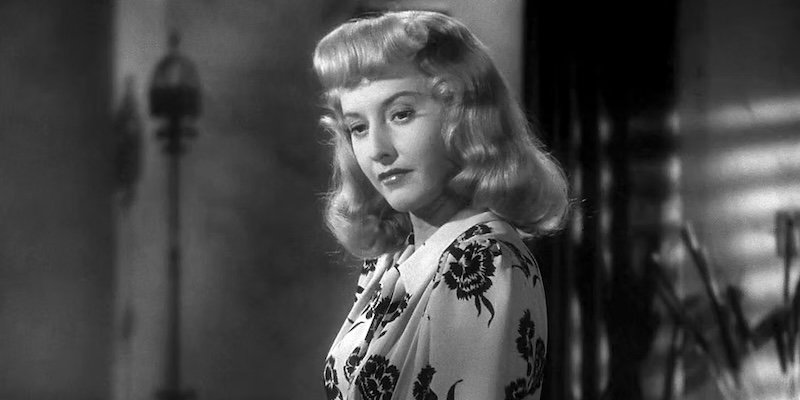
Barbara Stanwyck pauses at the top of the staircase in Double Indemnity. The camera lingers on the anklet around her ankle. In a single glance, both Fred MacMurray and the audience are lost. That may have been the moment I fell in love with noir.
Every generation seems convinced it has reinvented the genre or that it needs to. I don’t believe that’s true. I fell in love with women like Barbara Stanwyck’s Phyllis Dietrichson in Double Indemnity and Kathleen Turner’s Matty Walker in Body Heat. They were intelligent, seductive, dangerous, and unforgettable. They weren’t merely romantic interests waiting to be rescued. They drove the story, dictated the choices of every man who crossed their path, and often determined who survived.
Who could forget Miss Wonderly, the alias of Brigid O’Shaughnessy, an enigmatic, manipulative figure who hires Private Investigator Sam Spade? Spade moves through a world where everyone has an agenda, loyalty is negotiable, and morality lies somewhere between black and white.
It taught me something that has stayed with me as both a reader and a writer: the greatest noir stories are never really about solving the crime. They are about exposing human nature. Both Dashiell Hammett’s novel and John Huston’s film adaptation of The Maltese Falcon made such an impact on me that I used the names of Sydney Greenstreet and Peter Lorre, blending them with their characters’ names, in one of my novels (Kasper Greenstreet and Peter Cairo).
How could you not be fascinated by the femme fatale, one of noir’s greatest creations? Yet she’s often reduced to a stereotype, a beautiful woman who manipulates men and then vanishes into the shadows.
The truly memorable femmes fatales were always more complex. They embodied temptation, certainly, but also intelligence, ambition, survival, and power. They understood the rules of the world they inhabited and refused to apologize for playing the game better than anyone else. They were dangerous because no one fully understood them.
Barbara Stanwyck’s Phyllis Dietrichson wasn’t merely beautiful. She was fearless enough to gamble everything for the life she believed she deserved. Kathleen Turner’s Matty Walker carried that tradition into the modern era. Every smile concealed another layer of calculation. Long after Body Heat ends, she remains the character you remember, always one move ahead.
Then came Chinatown, where noir itself evolved. The greatest threat was no longer the gunman in the alley but the powerful man whose influence reached every corner of society. Corruption no longer hid in the shadows. It occupied the penthouse office or manipulated the City’s water supply.
It also reminded us that Los Angeles has always been noir’s perfect stage, a city where beautiful dreams coexist with darkness and where ambition and illusion walk the same streets. Hollywood sells fantasy to the world, yet just beyond the studio gates, noir quietly reminds us of the price some pay to chase those dreams.
Years later, Sharon Stone’s Catherine Tramell in Basic Instinct reminded audiences why the femme fatale remained one of fiction’s most compelling creations. Brilliant, fearless, and impossible to define, she became less interesting for whether she committed murder than for refusing to let anyone else define her.
I’ve always admired these women, not because they are role models but because they are unforgettable.
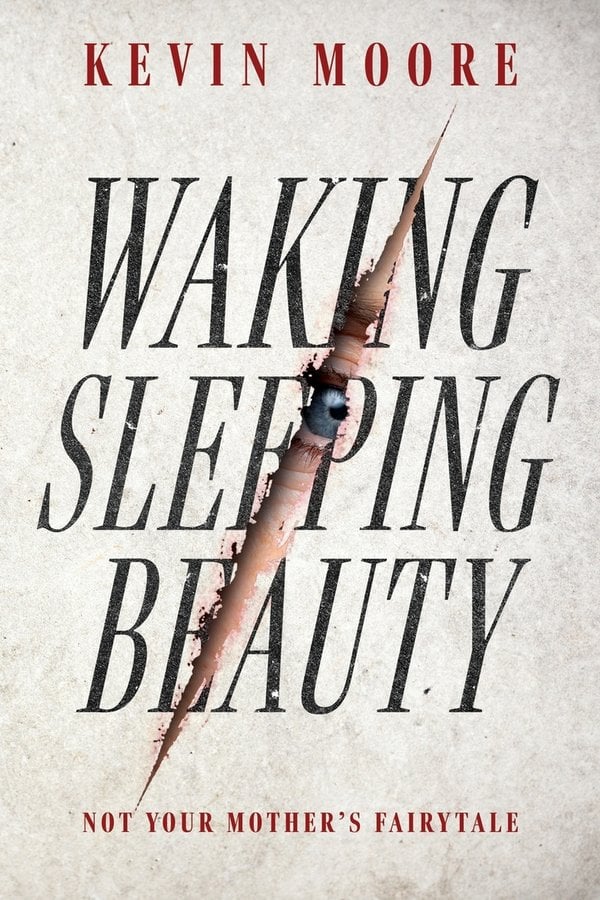
When I began writing Waking Sleeping Beauty, I wasn’t interested in replacing the femme fatale. I wanted to ask what she might look like today.
Mia More certainly carries the DNA of the women who inspired her. She is strikingly beautiful, mysterious, and comfortable among wealthy and powerful men. Like classic femme fatales, she understands that being underestimated can be a weapon. But I also wanted to give her something many of noir’s greatest women were rarely allowed: a fully realized emotional life.
Mia is capable of profound love…devastating grief…and may even be capable of murder. To me, those qualities don’t contradict each other. Both truths can coexist in the same person.
One of the relationships closest to my heart in the novel is Mia’s unexpected bond with Kiddy, a teenage hustler. Through him, she rediscovers what she believed she’d lost forever: the ability to love someone more than herself.
That awakening doesn’t erase the darkness within her. It complicates it. The question is no longer whether Mia is innocent or guilty. It’s whether someone capable of terrible things can also be capable of extraordinary love. That is the kind of moral ambiguity that first drew me to noir.
It also shaped the other women in Waking Sleeping Beauty. Detective Joanna Steele owes a debt to the hard-boiled investigators who defined the genre, yet she refuses to surrender her compassion in a city that constantly demands it. Lana DeMille lives on society’s margins, dismissed by almost everyone she meets, yet she sees truths others cannot.
In another era of noir, she might have existed only to be pitied. Instead, she becomes one of the story’s moral centers. Sometimes, those society overlooks see most clearly.
My admiration for noir runs so deep that I even created a fictional noir film for Mia’s Hollywood career, The Year of the Cat. It wasn’t just an Easter egg. It was my quiet nod to classics like Chinatown and L.A. Confidential, proving that Hollywood still has room for noir. I think that’s what every writer hopes to do. We don’t inherit great genres to dismantle them.
We inherit them to continue the conversation.
I still smile when Barbara Stanwyck descends that staircase, anklet in place. Kathleen Turner’s effortless command of every scene in Body Heat. Sharon Stone’s fearless performance in Basic Instinct. Those women remain among noir’s finest.
Mia More stands beside them not because she rejects what they represent, but because she carries their legacy forward. She reminds us that a woman, a femme fatale, can be dangerous without surrendering her humanity, wield power without losing her capacity for compassion, and awaken to love while still holding her own darkness.
Perhaps that’s why noir has endured for nearly a century. The shadows may have shifted. The cities may have changed. The crimes may have evolved. Yet the questions remain the same. Who are we when no one is watching? What happens when we lose our way?
After we’ve lost our way, is it still possible to awaken without losing the mystery, danger, and magic that made noir and the femme fatale unforgettable? I believe it is. Decades later, we still remember Barbara Stanwyck at the top of the staircase, and we’re still following her into the darkness.
***

Kevin Moore
Kevin Moore is the imaginative storyteller behind Jack Kelly’s gripping paranormal adventures. His debut novel, The Book of Souls, earned an Amazon Editors’ Pick for Best Science Fiction & Fantasy and a Global Book Award Gold Medal for Ghost Fiction. The sequel, The Book of Demons was chosen as a BookLife Editors’ Pick. Moore also explores new ground with Waking Sleeping Beauty, a neo-noir thriller about redemption and awakening. Beyond the paranormal and noir, Moore’s Christmas Stories: 7 Original Short Stories became an Amazon No. 1 bestseller, while Christmas Stories Volume II won gold in the Global Book Awards for Short Stories and was named a Christlit Book Award winner. See more at his website: kevinmoorepublishing.com.