Remembering Kevin, the KGB Officer Who Watched Us During a Secret Mission to the USSR
After watching the new movie 'Mayday', Dr. Merryl Goldberg recalls her own complicated relationship with a KGB minder.
They say truth is stranger than fiction. Whoever they are, I concur.
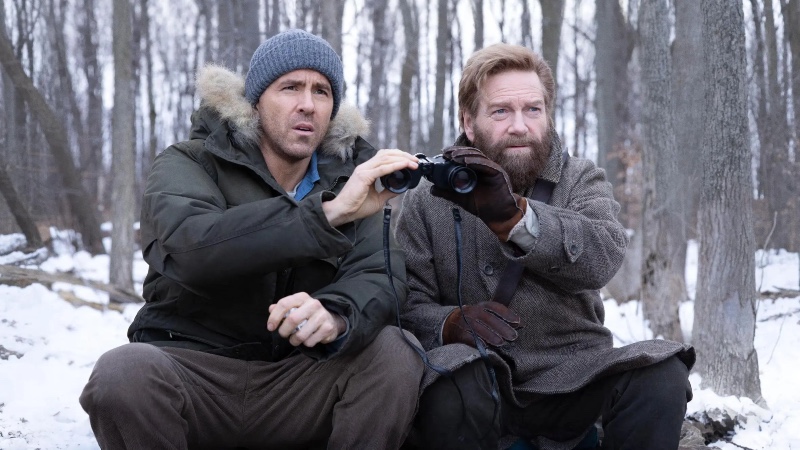
May Day, a Cold War-themed bromance starring Ryan Reynolds (spy pilot Troy “Assassin” Kelly) and Kenneth Branagh (KGB agent “Nick”) is filled with hijinks, treachery, betrayal, empathy, distrust of governments, and humor. But this fictional story of two men being thrust together and becoming frenemies in 1987 Soviet Union, is not as farfetched as you may think.
Two years before the movie took place, I had my own “buddy” relationship with a real KGB agent, Kevin (not his true name) which pretty much parallels Nick and Troy minus the bar room fight scenes and the high jacking of Soviet war machinery; I wrote about it in Notes of eception: How a Quartet of American Musicians Outwitted the KGB. Like in the fictional May Day, my encounters with Kevin included treachery, humor, betrayal, and a touch of frenemy bonding.
The year was 1985, the height of the Cold War, and one of the worst years ever for real spies. I was asked (along with three other young musicians) by a nongovernmental agency working on behalf of refuseniks to go on a super-secret mission to meet a remarkable group of human rights activists in the USSR. The activists sought to publicize their plight to the west through music—and we developed a cipher using sheet music to smuggle information into and out of the country. The top-notch group of musicians included the former concert master of an orchestra, rock musicians, folk singers, classical pianists, and more. They were Jewish and Catholic Refuseniks, Helsinki monitors, poets and dissidents, all of whom were bravely willing to risk their lives for freedom.
My first encounter with Kevin occurred deep within the bowels of the Moscow airport; at customs we were forcibly escorted into a small interrogation room, our passports confiscated and we were confronted with fist-banging angry KGB officers screaming in Russian. I don’t speak Russian. Enter Kevin, a plain-clothed KGB agent fluent in English. He looked to be about 30 years old (later confirmed), with thin dark hair which could have used a good washing. His polyester pinstriped three-piece suit was ill-fitting. He was soft-spoken; a dramatic contrast to the screamers and fist-bangers.
Kevin put his elbows on the desk, placed his hand under his chin and with a smirk said, “So, I suppose you wonder why we searched your belongings.” We sat silently. He piped up again, “So, well…perhaps you know the reason why and can tell us?”
The interrogation continued in earnest and we were eventually allowed to enter the USSR, with this caveat: we must follow the rules. “What were the rules?” we asked. The answer: to be good tourists. At the end of our rather unnerving interrogation, Kevin declared, “You will get a car and drive to your hotel.” I was confused, “We have to drive ourselves to the hotel?” Kevin realized what I was asking and started to laugh. The other KGB agents started asking a lot of questions in Russian before he could answer me. Kevin laughed harder while miming driving and turning a steering wheel left and right then pointing at me. We are still in the dark. Then, they all start laughing. We were to say the least, perplexed. Finally, Kevin says, “No, you are not driving. We will have a car take you to the hotel.” Relief on several levels, and my heart which had slipped as far down to the ground and across the room during the interrogation was now firmly back in my chest. I thought to myself, ok, then we are going to be ok?
As it turns out not so much. Our hotels rooms were bugged, we were tailed wherever we went, we encountered two more harsh interrogations, told our safety could not be guaranteed, we were “disappeared” twice, put in separate cars and driven for hours on end, and ultimately placed under arrest, held in a holding facility and deported.
On our last day with Kevin, we were escorted back to Moscow from Tbilisi, Georgia, a three-hour flight, and he informed us that one of us would need to sit with him on the way back. It was me.
“I was drinking last night, and I feel hot,” Kevin informed me. I looked at him with absolute disdain and murmured, “If you are going to be sick do it away from me.”
The flight healed Kevin’s stomach, and he became surprisingly talkative. He told me that Moscow authorities thought we were terrorists, “but after interrogating you, they knew you weren’t.” He said his presence was “a lot of nonsense.”
It occurred to me that with all his knowledge about the west, and fluency in English, had he ever thought about emigrating? He answered that it was impossible. He would have to get an invitation and then apply, but it wouldn’t matter because he would never be allowed to emigrate because of his job.
During our flight, we discussed taxes, prices for apartments, and even nuclear disarmament. He shared pictures of his family and his wife with me. He said he knew of the “other side.” His view, however, was shaped mainly by watching confiscated VCR tapes. He asked me what I thought of Rocky II and The Blues Brothers. He also enjoyed Porkies, of all movies, which left me speechless. Through his job he had access to Time and Newsweek and read them every week cover to cover.
By the end of the flight, Kevin truly did become my KGB frenemy, and I had a lot of sympathy for him. I often wonder what became of him. He made a choice, just like the fictional Nickolai and Troy, to reveal his humanity. Unlike Nick (spoiler alert), I doubt Kevin made it to the United States. Like Troy in the movie, when we returned to the US, we were able to call out human rights abuses. We engaged the help of Senator Ted Kennedy and members of nearly every congressional office on the Hill using the information we had enciphered. Ronald Reagan’s direct negotiations with Gorbachev led to the release of many of the musicians we met who were freed and allowed to emigrate.
Both in the fictional movie version and my very real encounter with KGB Kevin, a bond of what it means to connect authentically unfolded. In real life, as in the movie, deep down, life is messy, and yet, we are more alike than we imagine.

Dr. Merryl Goldberg
Dr. Merryl Golderg is the co-author with Vince Houghton of Notes of Deception: How a Quartet of American Musicians Outwitted the KGB. She is currently a Professor in the School of Arts at California State University San Marcos and Executive Director of Center ARTES.