
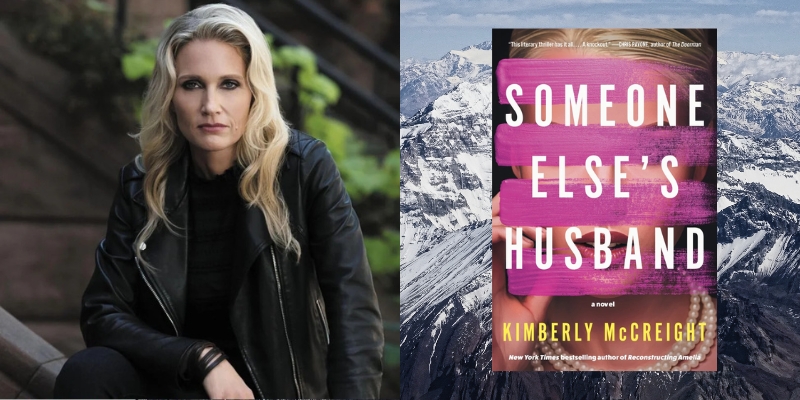
Kimberly McCreight on Memoirs, Cheryl Strayed's 'Wild', and Climbing Mountains
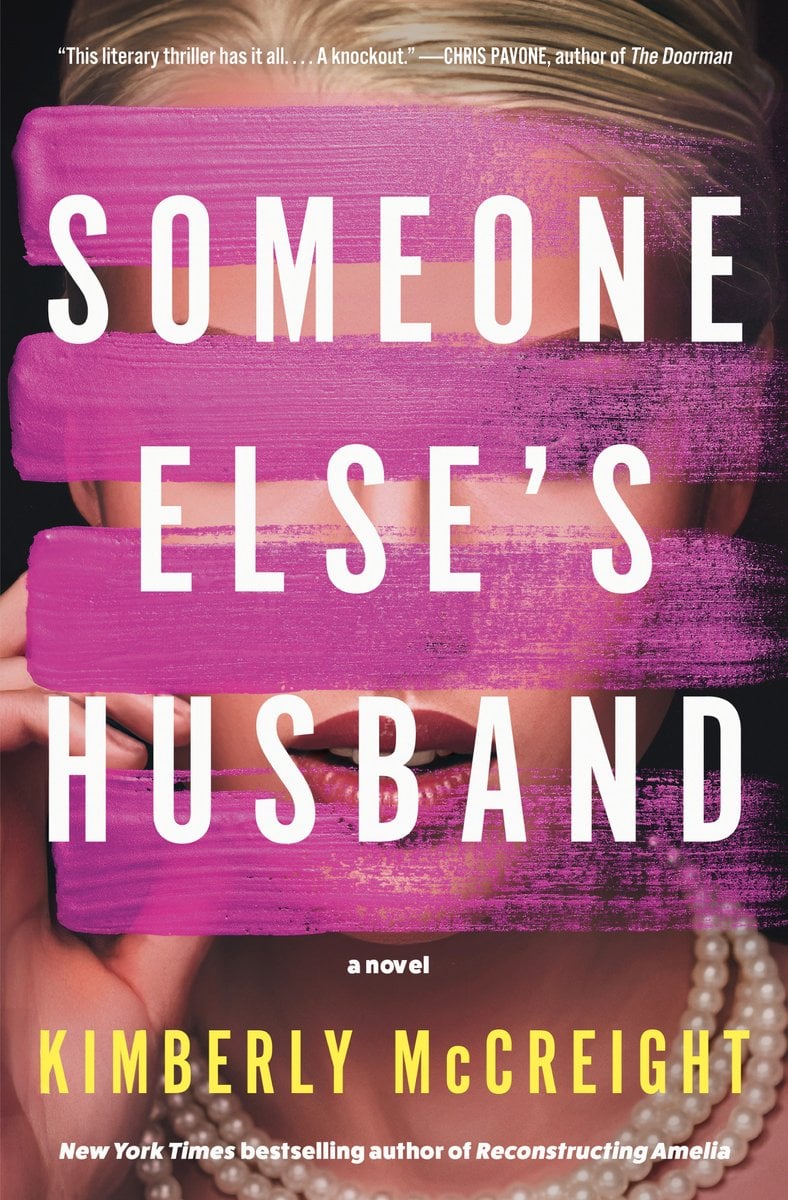
The author of 'Someone Else's Husband' takes an expedition to the summit of Aconcagua
“Get one that you know has a happy ending,” my friend Nicole advised.
We were on the phone as I circled Park Slope’s Community Bookstore in search of the perfect book. I could only bring one with me on my nine-day expedition to climb Aconcagua, because of the weight limit for the helicopter we had to take to base camp, and also because of pack weight.
Going to the bookstore for some travel reading was my last errand before I headed to the airport. I probably should have felt giddy. After all, I’d been planning to head to Argentina to climb Aconcagua for nearly two years. But it felt ominous, like some kind of grim, end-of-days task.
Aconcagua is an enormous mountain. Standing at 22,838 feet, it is one of the famed Seven Summits, and while not technical in an official mountaineering way, it is known for dangerous winds and punishing cold. I had been to mountain climbing school in Ecuador and had climbed Kilimanjaro, not to mention trained for endless hours and carefully bought all the gear.
And yet still, in those last hours, all I felt was afraid.
I have a tendency to throw myself headlong into daunting things, refusing to let myself even consider fear, my fear. If there’s a dream I really want to chase, I am often able to flip a switch and turn my fear off.
Most of the time, this has been a very effective strategy—given that there is much I am afraid of. Turning off my terror enabled me to go study in Japan when I’d never traveled anywhere in my entire life. Pushing past my trepidation allowed me to apply and eventually get into a highly competitive law school and thrive among the very talented students once there. Pushing past my fear kept me writing book after rejected book, until I was finally published, five books and ten years later. It allowed me to complete countless athletic endeavors that were well-beyond the scope my evident skillset.
But there have been times when this approach has quite nearly blown up in my face.
Like the time long ago when I went to Africa on my first honeymoon knowing full well I was utterly petrified of the tiny (read: three seats and open windows) propellor plane required to reach the already-paid-for safari. On that occasion, my fear roared back to life at the last minute, landing me in a mall doctor’s office in Cape Town begging for heavy-duty tranquilizers. (He took pity on me and prescribed two pills.)
Or, far more recently, the time I signed up for a Half Ironman in Utah knowing that the water was dangerously cold. In that instance, I took all the steps I could with thermal wetsuits and other preparations. Yet I still had to be pulled out of the swim when I suffered hypothermia-induced pulmonary edema. I was fine in the end and able to finish the other two, stunningly beautiful, legs of that Utah race, but it was a wake-up call.
Sometimes, fear is trying to tell you something. And you should listen. As I browsed the books, I tried to assess the knot in my stomach. Was this a wise knot? I had no idea.
But there was no way I was going to turn back now. I’d worked too hard (and spent too much time and money) preparing.
“Because a lot of memoirs don’t end well,” Nicole, a memoir writer, added. “And you’re going to be in a tent in the freezing cold, unable to breathe for nine days. Remind me why you’re doing this again?”
This was a fair question. And then there it was, face out, blinking at me like the answer: Wild by Cheryl Strayed.
I’d already decided on a memoir—fiction felt too close to my own work, and nonfiction maybe not immersive enough. And I’d seen the movie version of Wild and so I knew the contours of the story. I’d never read the book because I’d worried I’d find a story that was, in part, about the closeness between a mother and daughter too hard for me, given my fractured relationship with my own mother.
But I also knew that the expedition Strayed had taken—hiking the Pacific Coast Trail—had been outside her comfort zone. I’d also read Tiny Beautiful Things and thought it was stunning, so I knew there was much about the writing itself that would be extraordinary. And so, that was that, Wild was coming with me.
And it stayed with me for the entire grueling expedition. Every time we weren’t on the move, I was carrying it with me, trying to sneak a few pages in—in the dining tent, on a rock in the sun on that one day it was warm enough to be outside, in my -20°F sleeping bag with my headlamp on before falling asleep.
At base camp, I was gripped immediately as the story effortlessly toggled between the gritty, suspenseful realities of the hike and recollections of the past, which felt incredibly comforting. After all, if Cheryl Strayed had made it through all of that, then surely I could make it through those nine days.
They were different kinds of hiking adventures, of course. I didn’t have to worry about food or clean water or bears. Hiking the Pacific Coast Trail doesn’t involve the challenges of ascending at dangerously high altitudes. Still, I found resonance in every sentence, even as I had the capacity to read less and less. I was just too exhausted by the time we ascended to Camp 1 on Aconcagua to read much before passing out in my tent at night.
And then came the perilous day of the climb to Camp 2 when we finally came face to face with Aconcagua’s infamous winds. We did, ultimately, make it up and into camp and the winds dropped and all was okay, but we still had a long way to Summit Day. Not to mention the summit itself.
And I started truly wondering, why? From that moment forward, I was reading Wild not as a companion but as something akin to a book of spells. I needed answers, now. As in: “Cheryl Strayed, you need to tell me right now: why are we doing this?”
Her answers are complex and layered and every human on the planet should read the book themselves to understand the full scope—whether or not you will ever hike anywhere in your entire life. For me, I realized that the answer lay also in grief in some ways, which was hard for me to understand given that I hadn’t experienced the death of a person.
But, I now realize, you can grieve many different kinds of things. And so I now understand that is at least part of my story, my why. Even if it wasn’t triggered by the same kind of loss, it was Strayed’s words and her journey that absolutely allowed me to understand it as such and to begin to work on letting it go.
In the end, I didn’t actually finish Wild until I returned home after summiting Aconcagua—despite the long odds against me, and my many, much younger, teammates who did not. It was absolutely the hardest thing I’d ever done and it shifted something important inside me. But by then I was struggling intensely to make sense of what.
It became something of a fixation that started to detract from the experience itself.
[Spoilers Ahead]
And then, as I was lying in bed in a hotel room in LA, a view of the Hollywood Hills in the distance, Cheryl Strayed offered me the answer to this final question on my mind, on her very last page: “It was all unknown to me then, as I sat on that white bench on the day I finished my hike. Everything except the fact that I didn’t have to know. That it was enough to trust that what I’d done was true.”
And so, that is exactly what I have decided to do. To accept that, for now at least, I don’t know. And maybe it’s exactly the way it’s supposed to be.
Thank you, Cheryl Strayed. For everything.
***

Kimberly McCreight
Kimberly McCreight is the New York Times bestselling author of Reconstructing Amelia, which was nominated for the Edgar, Anthony, and Alex Awards; Where They Found Her; and The Outliers young adult trilogy. She attended Vassar College and graduated cum laude from the University of Pennsylvania Law School. She lives in Brooklyn with her husband and two daughters. Her new novel, A Good Marriage, is now available from Harper.