
Margrét Ann Thors on How Writing Thrillers Helped Her Overcome Lifelong Fears
A reflection on motherhood and crafting Icelandic suspense as a self-styled scaredy cat
I’m a scaredy cat. That’s why I wrote a crime novel.
On Langjökull glacier in the Icelandic highlands, it’s windy and white. As opaque as a blank page. Gales grip the Super Jeep I’m seated in, rattling the hulking metal, and snow blows from every direction, in every direction. I need to pee. I tell the driver.
He flicks his gaze to the rearview mirror. “Can’t you hold it?”
I’ve been in the backseat for hours. “No.”
He sucks his teeth. Glances out the driver’s side window, which, like the windshield, like the rest of the windows, is white. He puts the mammoth vehicle in park. It jitters in place.
“Listen,” he says.
He tells me not to swing the door open; the wind will rip it clean from the car. He tells me to be as quick as I can. “No matter what,” he tells me, “do not let go of the jeep.” If I let go, he explains, I will lose sight of the parked vehicle, and they will lose sight of me, and we might not be able to find each other. I could vanish.
I do as I’m told, knees shaking, teeth hammering each other from the cold, one gloved hand holding the side of the jeep so tightly my joints cramp. This is why you’ll never survive the zombie apocalypse, my brother has told me more than once. You’ll always need to, like, pee or something.
For the rest of the ride, I stare out the window, at all the white. I roll the driver’s words around in my mind, feeling for the edges of this strange sequence: Blink, disappear. I know I’ll replay his warning all night.
When I watched Home Alone for the first time as a child, I became so terrified of burglars that I slept on the floor of my parents’ bedroom until an age I am embarrassed to admit in print. My partner sometimes falls asleep listening to true crime podcasts, and part of me worries that mere proximity to his headphones will haunt my dreams.
I have always been quick to cry, easily overwhelmed, deeply sensitive—and over time, I adopted a strategy of avoidance. Watch only rom-coms, close my eyes and cover my ears if a trailer for a horror film comes on, read coming-of-age literary novels.
This worked for a good while. Then I became a mother.
About a decade after peeing on the glacier, I gave birth to my daughter, during a whiteout blizzard in Reykjavík. When I woke in the middle of the night to nurse her, I learned I had been fitted with a different brain: a brain that was loud, crowded, incessant, and very afraid. I held her dumpling-body, almost unable to fathom that she’d taken shape inside me. I placed a hand on her warm head and took silent vows: I will love you forever. I will take care of you. I will protect you.
There was—is—so much to protect her from. A few weeks after she was born, the pandemic arrived in Iceland. In those early months, fear cut through me like wind, chilling my thoughts with all the things that could go wrong, all the ways I could do everything right and still somehow get it wrong, how precious the gift of her was, how delicate.
Blink, disappear.
In the coming years, I nursed her nightly to sleep in my bed. In the dark, I would lie on my side, and she on hers, facing each other, and when she closed her eyes, I would stretch my arm over her small body, holding my e-reader where I could see it. Despite what felt like chronic all-day exhaustion, I would lie there reading for an hour or two, her chunky fingers resting on my chest.
I was raised on the canon—so much so that I believed if I were ever to write a novel, the protagonist would need to be a man, otherwise it wouldn’t be real literature. But when I became a mom, writers I’d always admired (and still do)—William Faulkner, Graham Greene, Cormac McCarthy—felt planets removed from me. I was raw—my nipples chapped, my attention frayed—and I craved different stories. I needed a book that dared me to look away, giving me a mystery to unravel, a pursuit to follow. An imperative to keep turning the page, even in my postpartum stupor.
While my daughter slept, while I roved a nervous finger under her nose every now and then to confirm she was still breathing, I discovered books like Tana French’s The Likeness, Liz Moore’s Long Bright River, Julia Phillips’s Disappearing Earth, Danya Kukafka’s Notes on an Execution, and Oyinkan Braithwaite’s My Sister, the Serial Killer. They evoked in me suspense and wonder in equal measure, and placed women’s experiences at the center.
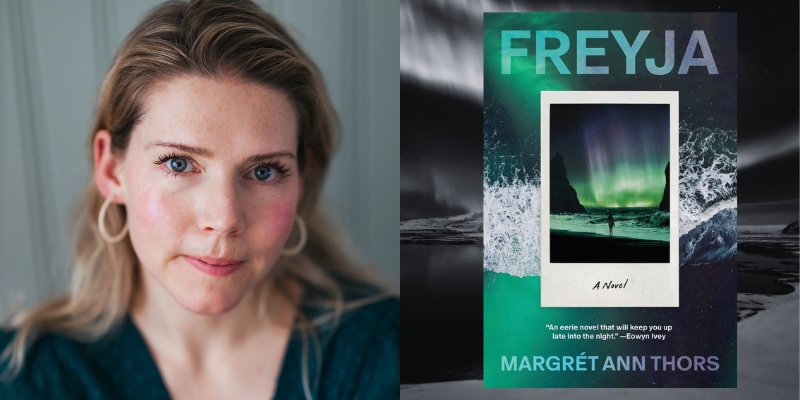
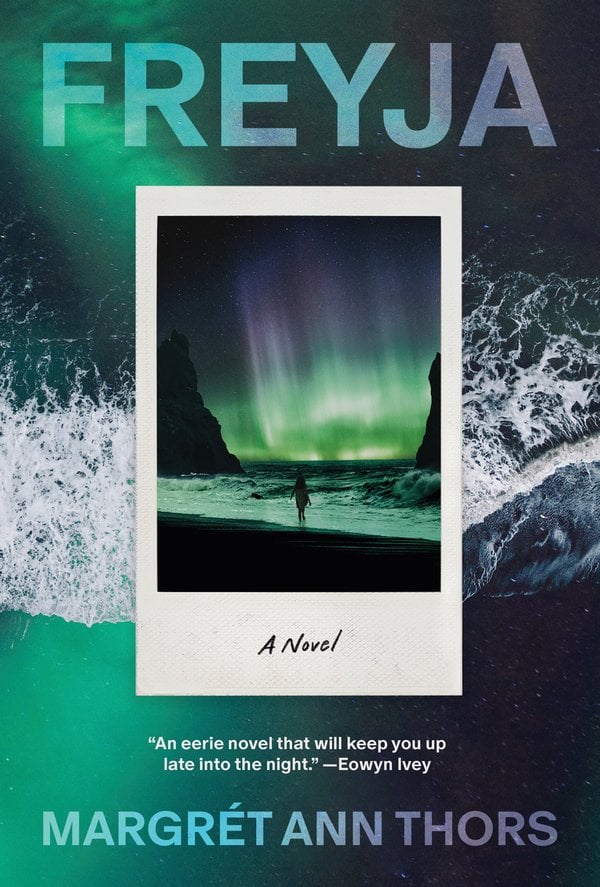
The books I now reached for surprised no one more than myself. As my reading changed, so did my writing. While I was drafting the prologue of what would become my debut novel Freyja, the narrator shocked me with an unsettling, potentially violent admission: perhaps she’d been responsible—willfully responsible—for her best friend’s presumed death. Where had that come from? I wasn’t sure, but I went with it.
When it occurred to me that maybe one of my secondary characters could be a detective, I leaned into the possibility, playing out how this change could further stack the deck against my protagonist—which, in novel writing, tends to be a good thing. Each choice pulled the novel farther from the coming-of-age story I had imagined and deeper into the terrain I had spent most of my life avoiding.
In Plainwater, Anne Carson—whom I often spot around Reykjavík—writes: “I wanted to find one law to cover all of living, I found fear. A list of my nightmares is the map of the way out of here.” I kept a hand on these words as I wrote my way toward what would become a suspense novel, a crime novel, a novel about a young girl who vanishes one night on a black-sand beach. Blink, disappear. A novel about an anxious single mother filled with immeasurable love and therefore immeasurable terror for her young daughter.
I wrote not just what I know, as the adage goes, but what I fear. In the rest of my life—in motherhood, during the pandemic—my fear was amorphous, spooling endlessly into an unknowable future. But in writing, I shaped the course of the story, playing out different nightmares and redemptions on the page. I felt my protagonist’s fear personally, viscerally, but I was not blinded by it. I was authoring it, mapping it.
In fiction, fear has edges, contours. A beginning, middle, and end. Someone vanishes; someone goes looking. The whiteout is still there, but so is the jeep beneath my hand.
***

Margrét Ann Thors
Margrét Ann Thors is an Icelandic-American writer based in Reykjavík, Iceland. She received her MFA from Columbia University and teaches at the University of Iceland. Her writing has appeared in Glamour, Creative Nonfiction, Ós Pressan, Storychord, and other outlets. Freyja is her debut novel.