Max Doty on Concepting, Erasure, and Building a House in His New Novel
The author of The House That Eats the Dead imagines the narrative possibilities of a destructive setting
If you want to see a room of writers roll their eyes, it’s easy. Just ask them, “Where do you get your ideas?”
Personally, I don’t find the question asinine at all. I just think that the real question behind what’s being asked is, “How did you go from that first initial seed of an idea to the actual concept you executed in your book?”
Now that’s a question.
I want to talk a little about concepting a book today, especially the way a premise can develop into something radically different than the initial seed that inspired it.
*
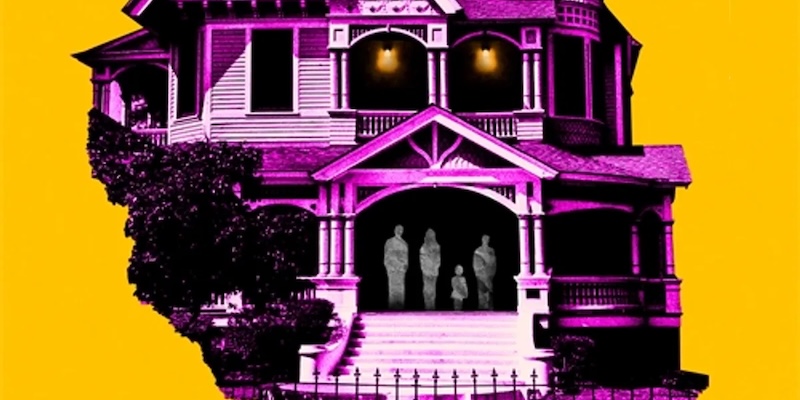
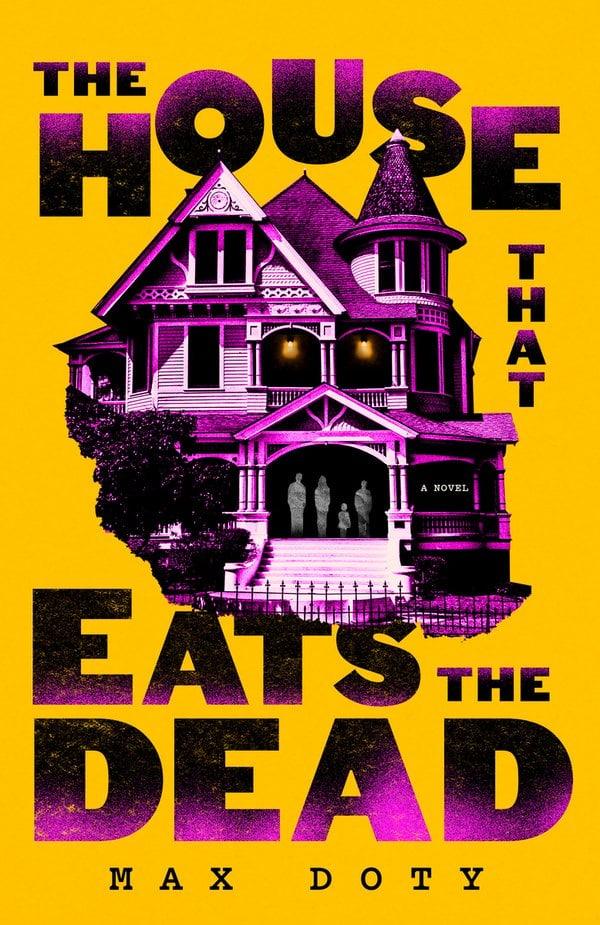
In August, my novel The House That Eats the Dead will hit bookshelves. The monster inhabiting the book is self-evident from the title: a house that consumes dead bodies, making them disappear. Of course, that by itself isn’t much of a power. The same thing could be accomplished by a volcano or a couple of hungry pigs.
But the true power of my house is much more potent: when it eats dead things, it erases them from existence. Only the couple that owns the house remembers the people the house has eaten—to everyone else, it’s as if they never were.
That’s where I ended up. There’s more to it than that, but that’s the basic concept, and I think it’s a good one. It’s also a million miles from where I started.
*
I have the good fortune to live a block away from a cemetery, a nice location for a guy whose fiction features a lot of dead bodies. I do a lot of my brainstorming walking around there.
A few years ago, trudging through snow I had this great idea for a first scene: a guy is in his house, brushing his teeth, getting ready for bed when someone—maybe his son, his best friend, his ex—comes barging in. The friend is bruised and battered and tells a wild story about an abusive lover, a fight gone wrong—and ultimately, a body that now needs to be eliminated.
The fun of this—to me, gleeful sicko writer, walking between graves as my mental gears were turning—was that the main character is just your average person. They’ve never thought about getting rid of a body before, but now they’re suddenly thrust into a situation where they’ve got to figure it out. In a way, it’s something that might happen to any of us, right?
I crunched home and opened my laptop. Questions popped up, naturally. How might a person in such a situation get rid of a corpse? Dump it in the woods, and a hiker will find it. Buy a bunch of acid at Home Depot and people might start asking questions.
So I began to research.
Geography was a biggie. If my characters had access to a large body of water, it could help. I imagined them boarding a boat, heading off to sea. Maybe that was why the main character had been recruited in the first place—she had a boat! I could throw a storm at them, too, make it dangerous to go out. I pictured them fighting black waves, arguing about whether they were far enough from short to safely dump the corpse.
Other options surfaced: a desert, sure, but I’d seen that a hundred times in Goodfellas, and Breaking Bad and others. A volcano seemed exciting but probably too Hollywood.
Soon I was back in the snow, brainstorm again. It occurred to me that getting rid of the body was just the first step. There would also be all of the additional evidence to clean up, depending on how the killing had happened. Would the car need to be sanitized? Clothes burned, a weapon thrown into the sea?
What else had to be considered? Cameras? Other digital evidence? Was there anything on their cell phones that needed deleting?
As these questions mounted, it occurred to me that what someone in this situation would truly want it for their victim to be eliminated entirely, like if they could cast some kind of magic spell that not only scrubs away all evidence of the crime but actually erases the memory of the deceased.
Wasn’t that kind of erasure what history’s greatest monsters lusted after? I thought of the hundreds of rulers who tried to blot out all memory of their predecessors. Historians even have a name for it: damnatio memoriae (“condemnation of memory.”) I thought about Stalin erasing old buddies from photographs, ancient pharaohs ordering hieroglyphs of their uncles chiseled out of monuments.
For a moment, my idea took a sharp turn. Forget the whole story so far. What if the new idea was about a ruler who got their hands on such a power? What havoc might they wreak?
But no. That wasn’t the story I wanted to write. It felt utterly boring to watch some petty tyrant erase his enemies. Maybe it felt too close to reality.
I circled back to the germ of the story, the thing I’d liked in the first place: the everyman protagonist suddenly thrust into a completely unexpected situation. But now I started to wonder…what if someone like that got the power to erase people. That was more interesting.
We all fantasize about revenge from time to time. But very few of us do anything about it. But what if you took away all the consequences? That was interesting. Still, I felt like readers might not get on board with a common joe who decided to start bumping off annoying coworkers and bad neighbors.
Then it hit me: what if my main character wasn’t doing it for themselves.? What if it was a mom, one who needed to protect her children? Surely, a reader would be on board with a mama bear doing something drastic to any adult who threatened her child. They might even want her to take care of a couple of school bullies.
Thus, Claire, the protagonist of The House That Eats the Dead, was born. Equipped with a house that can erase her family’s adversaries, Claire was ready to enter some extremely interesting ethical territory.
*
Thanks for following me on this exploration of how the concept for The House That Eats the Dead developed. As you can see, the final concept ended up a million miles from where I started.
I suppose that’s a lot of the fun of being a writer—the way ideas can start in one place, and then careen into a totally different place that surprises even you.
***

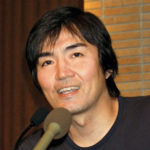
Max Doty
Max Doty is a veteran game-writer who served as the head of content for Choices: Stories You Play and Surviving High School, for which he also wrote two spin-off novels. His screenplay Almost Kings won Netflix’s inaugural "Find Your Voice" award and was made into a feature film. Max regularly contributes to reddit’s NoSleep forum as scarymaxx, where his works often appear at the top of the charts. He holds a BA and an MA from Stanford University as well as an MFA from Arizona State University.