
Melissa Anderson Sweazy on Gifts, Magical Inheritances, and Defying Expectations
The author of The Sisters of Crimson House shares the palm-reading experience that shaped her debut
“Some are born great, some achieve greatness, and some have greatness thrust upon ’em.”
–William Shakespeare, Twelfth Night
*
I was thirteen the first time I visited New Orleans. It would be two years before Anne Rice’s The Witching Hour became my entire personality for a summer, but Interview with the Vampire was already dog-eared and stashed away like a secret underneath my bed. I was primed for a New Orleans teeming with witches and curses and ghosts lurking in the above ground cemeteries known as cities of the dead.
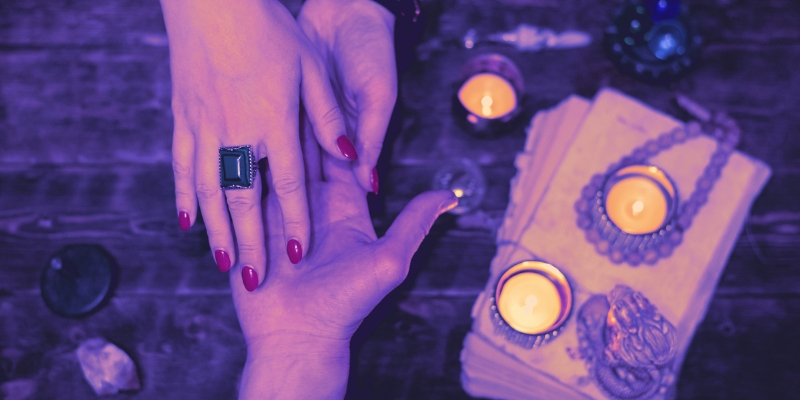
The palm readers were out en force in Jackson Square, and my mom gave me the go-ahead to sit with a woman wearing a head scarf who told fortunes for tips. I was wearing my favorite orange V-neck blouse and matching, dangly orange and gold earrings. I looked like a Halloween pumpkin. I looked like a mark, and she responded in kind, gazing very seriously at my palm before telling me the lines crosshatching my hand came together in the shape of a star. That star indicated that I possessed serious psychic ability.
It was the thirteen- year-old’s equivalent of Willy Wonka’s golden ticket. It didn’t matter that I couldn’t see any star regardless of how many times I squinted at my palm. I had been given a magical gift. An adult in Jackson Square told me so.
Many years later I returned to New Orleans with my mom, and chasing the same magical high, I convinced her we needed to visit a tarot reader. My mom went first. She emerged from the session giddy; the tarot reader who was also an intuitive (not mutually exclusive!) had divined that my mother was descended from a long line of women with formidable psychic ability.
This didn’t seem all that surprising. Long before the days of caller ID, my mom always knew it would be me calling before she picked up the phone. A favorite apocryphal tale: one afternoon my mom was driving down a residential street and glanced at a house out the window. In her mind’s eye, she saw it erupting in flames. The very next day, the house burned to the ground.
I couldn’t start my tarot session soon enough. I reminded the reader that he had just done a session with my mom; she—therefore I—was descended from a long line of powerful psychics. What follow up information did he have for me? He glanced down at my cards and then looked up at me with a dismissive sneer and said “You? Not so much.”
I was mortified. I don’t remember anything else about the session or what he saw in those cards. I mumbled my thanks and tried to work out how if the women in my family were given the gift, what was wrong with me? Wasn’t my hand literally stamped with a sign from the universe saying I’d been set on a magical path?
It wasn’t until many years later I realized the magic for what it was. I had just met the protagonist of my book. But I would have to walk a very long path full of many twists and false starts before we found each other again.
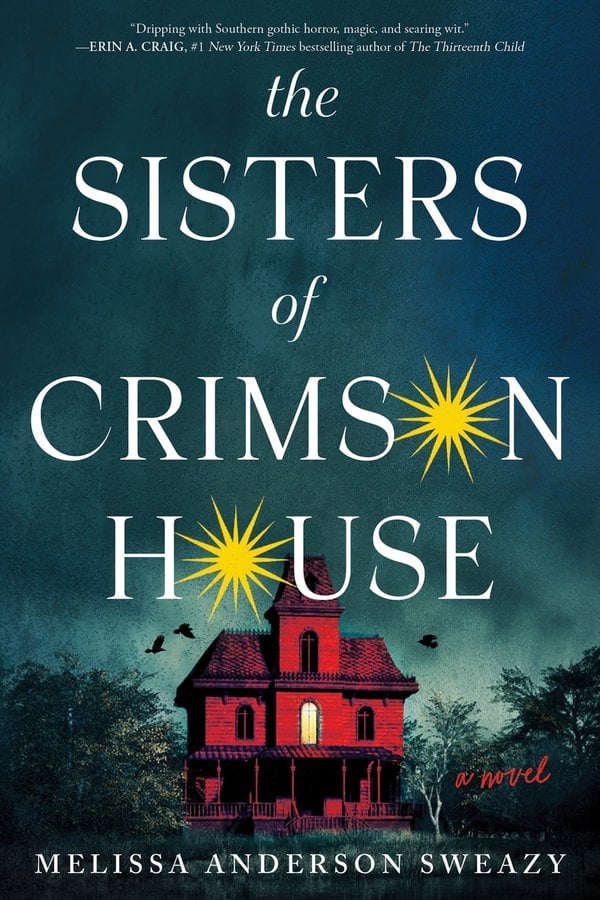
In my debut novel The Sisters of Crimson House, my main character Charley Bryde was born into a family of powerfully psychic women. Their skills are flashy; it allows them to throw fabulous parties and perform for a captivated audience. Charley inherited their flair for the dramatic and a snappy comeback; unfortunately for her that’s the extent of her ancestral gifts. The resentment runs deep, and she spends a very long time wrestling with this inequity but not realizing she was putting in the work of manifesting her own gifts.
How magical inheritance (or its perceived lack) becomes its own defining character trait is one of my favorite dynamics to explore in literature. In the speculative lit space, the Chosen One trope has become its one subgenre. But some of these protagonists initiated into magical service—whether they asked for it or not—learn to be very, very careful what they wish for.
The Familiar by Leigh Bardugo finds protagonist Luzia Cotado living a life of drudgery as a kitchen maid in 1500s Madrid. Her pleasures are few; as an orphan with no agency, she largely entertains herself by whispering prayers that become minor spells: restoring the burnt bread into fresh loaves, mending a torn dress with a song.
But when her tiny acts of magic make her the star attraction for her social climbing employers, she must decide if stepping into a deeper, more powerful magic is worth the many, many dangers she will face. This is a heartbreaking inheritance with an equally heartbreaking choice; stay small but connected to her mother via simple magic, or embark on her hero’s journey whose risks might mean destroying her family legacy once and for all.
Weyward by Emilia Hart arguably showcases two different kinds of inheritance; three different timelines are connected by three women who find their magic by necessity due to an additional unwelcome inheritance—a patriarchal system that would keep them in line, controlled, and potentially killed for stepping out of line.
The current-day protagonist is on the run from her abusive boyfriend, and her introduction to magic is equally strange and frightening. But stepping into this magic means learning about the powerful women whose magic now runs in her veins; this knowledge – the literal embodiment of women who existence would otherwise be lost to history—is arguably the more valuable inheritance.
Our Share of Night by Mariana Enriquez traces the history of a family of extremely powerful but persecuted mediums. Their inheritance marks them for a life in servitude to The Order, a power-hungry secret society obsessed with immortality. Juan’s abilities afford him great power, but he is desperate to protect his son from following in his footsteps. Any magic that could bring them freedom is quickly traced and exploited; Night is a gorgeously written warning to be careful what one wishes for when it comes to wanting to take possession of magical gifts.
It’s an outlier on this list, but in How to Sell a Haunted House, the siblings of Grady Hendrix’s thriller receive a literal inheritance in the form of their deceased parents home that holds a dark magic bait and switch. A murderous puppet named Pupkin is on the loose, but as they grind through the painful and thankless task of packing up their parents home, they are confronted by the versions of themselves they’d hope to bury along with that rampaging killer puppet.
The surprising gift bequeathed to both of them is the chance to forge a new bond—if they can only make it out of the house alive.
*
While working on this essay, I considered the lines on my palm, wondering about my withheld magical inheritance and what that fortune teller had seen that led her to pitch such an obvious lie. Of course it had been a con. I was begging for magic and the fortune teller dutifully played her part. The tarot reader was actually trying to set me straight.
And that’s when I saw it.
I had been so fixated on her literal words that I’d missed it. There was a star on my hand, almost directly above the center of my palm on what is known as the Mount of Saturn. According to the internet, having a star on the mount of Saturn meant I was marked for a particular destiny: many delays, obstructions, heartbreak, and disappointment. But the possessor of that star would alchemize these hardships into wisdom. Or a debut novel many decades later.
***

Melissa Anderson Sweazy
Melissa Anderson Sweazy is a screenwriter, podcaster, and filmmaker based in Memphis, Tennessee. Her creative sweet spot is haunted houses and haunted people, best evidenced by You Can See Me in the Dark, her monthly true ghost story podcast with listeners around the globe. The Sisters of Crimson House is her debut novel.