
On the Feast of Saint Lucy, in the fourth year of the reign of King Richard
Was it a dream or madness, the promise of freedom and home? For a day or two, Jean of Picardy, a minstrel by trade, had dared to believe the gallant words of his master, allowing himself to envision green French fields and days without the perils of the sea, embarkments under the cover of night, assassins, pirates, and spies. But over a hundred leagues of ocean lay between him and their next moorage, and countless more after that, each one bringing its own particular set of dangers, exhaustion and hunger the least of them.
Hasn’t the war been enough? he’d asked the grinning Hugo upon hearing his latest madcap plan, but his master would not be dissuaded. The Holy Land, it seemed, had taught him naught—all desert, swords, and glory, a dream that had turned out to be anything but. Against all counsel, for they sailed on the very threshold of winter, the Vlasta had slipped out of the Port of Ragusa to chance the tides of the Mare Adriatic, the great narrow sea that lay between Italy and the Dalmatian coast. Hugo had his mind set on a wild ambition, to skirt the perilous, rock-strewn shore, up past the Isle of Hvar and the looming mountains, then a ride by land across the breadth of Europe to reach distant Saxony. And from there, a swift sail home. First, the ship must speed through these waters for the Port of Pula, a coastal stronghold in the hands of King Béla III of Hungary, who might lend their plight a kindly ear, the right of passage, and aid.
To Saxony. And safety.
For two long years, Jean and the knights had been away from home, called by God to the holiest of duties. There wasn’t one among them who didn’t yearn to return. To country halls. Warm hearths. Wives and children and no sound of battle ringing in their ears. To France, aye, but more so to Aquitaine. But there was no simple route home and that meant a long overland trek to Saxony, and the shelter of a well-disposed court.
Flaxen-haired, youthful, yet lean from the many battles of a crusade that he’d never rightly held a place in, Jean was callow enough to stand on the deck with the others come noon, those in the select company of Hugo Mathgriffon. For once, he could think himself their equal, if only in their shared hope. The salt spray glittered in the sun, a musk in the lungs to revive the gloomiest of souls, quell the deepest of doubts. But there was scant warmth in it. Winter was on the air, a breath of frost threaded in the wind. At their backs, the bora and the loss of a welcoming land, a gracious council of burghers and a rare, brief, and pleasant harbour. Ahead, there was naught but a blue horizon, fair billows in the sails of the galley, the steady drum and heave of sixty oarsmen and every reason for faith. Aye, Jean would see Aquitaine again, green, beloved Aquitaine. Perhaps there he’d discover a way to forget all the dust and the blood, and mend the crack in his heart.…
He should have known better. A vaunter at the best of times, Hugo was sure to babble during his fevers, the so-called merchant presently sequestered below, sweat-drenched, vomitous, and pale. The Templars, the stout Odo, and his ill-bred squire, Pons, guarded his cabin door grim-faced and shoulder to shoulder, cold, cramped and out of sorts. Jean would have found the two amusing if not for the sneering regard of the gangling squire, his piggish eyes looking down the stump of his nose at one he clearly viewed as surplus baggage, a Frankish vagabond who had somehow wormed his way into Hugo’s good graces. And if not for the older knight’s grumbles at his frequent, troubled visits: “Ah, the nursemaid again,” Odo had said, tutting. It wouldn’t be long before the minstrel found good cause for concern, as the winds rose and the skies grew dark, and he realised that Hugo would have said anything, anything at all, to keep his men buoyant and the Vlasta heading north. For now, the lot of them revelled in their master’s bold assurance that God watched over them as he did all those who’d taken the cross, and the hundred odd leagues between them and their destination were naught but a blink in the span of things, that courage would see them through.
Guillaume, the famed Knight of Orléanais, should have known better.
Guillaume, the famed Knight of Orléanais, should have known better.
“We have horses aboard,” said he, leaning with gilded sinews on the railings of the prow, showing naught of the blustering chill. “Strong Dalmatian coursers, a saddle for each of our rumps—and even one for the priests.” His golden locks, whipped by the wind, were belied by the scars of his face, the leavings of his countless triumphs. But the sunlight shone in his eyes and Jean could not but love him for his conviction, love him for the hero he was, as they all did. “They will see us swift to Saxony, I swear it. Why, if Poseidon would but grant me a boon, I’d saddle one presently and gallop across the waves, fleet to herald our return.”
Baldwin of Béthune, his second-in-command (and not a man for fancies), laughed at the heresy, his bullish frame rumbling. The priests of which Guillaume spoke, the old chaplain Philip of Poitou and the chronicler Anselm, attended their ailing master belowdecks so neither could chastise them for such talk. Instead, Baldwin clapped the other knight on the back and offered an expected leer.
“You cheer me, friend. Did I gripe about turning back from France? Why, when such glory awaits us? And perhaps there shall be a hinterland wife like Agnes with the same ripeness of—”
“A song, my lords?” Jean cut in, prompting the two to turn and regard him, the grey mouse in their midst.
Guillaume gave a hearty laugh. Baldwin, by nature, scowled.
“As long as it describes the magnificent tits of the Nereids, lad. And first we should seek some rum.”
The knight peered down the deck where sailors made busy in the rigging, swabbed boards or scraped barnacles, the business of a glass-smooth sea. Better to stay busy; a way to stave off the icy air. The city burghers of Ragusa, glad of the gold for their new cathedral, had gifted Hugo Mathgriffon the lot, a galley and a crew to man it, the steeds in question, and many provisions, and sent them off on this harebrained voyage with cheers on the dock and a prayer.
Finding none in earshot to heed his whistle, Baldwin huffed into his beard, steaming. Jean, at a loss, smiled in the usual tight manner, shifting his boots. He did not wish to betray his shivers, his ratty cloak scant shield against the cooling weather. His admiration fell short at Baldwin, for he had never much fondness for the man’s ribald talk, despite the respect he had earned as a soldier.
But Jean was not about to douse the mood nor his own welcome sense of brotherhood, his imagined kinship with the knights aboard.
Excerpt continues below cover reveal.
“I have a tune of my own making, which concerns the god in question.” With this, Jean swung his lute from his back and strummed a brisk tremolo. “This concerns the clash between Poseidon and Athena when both had a mind to rule Cecropia, that famed, ancient city of Attica. The sea god struck his trident into the ground, shattering the rock and a river sprang forth. In return, Athena planted an olive tree, staking her claim. Then Great Zeus, the King of Olympus, had cause to intervene. He elected to grant the city to the goddess. Furious, Poseidon flooded the surrounding plains and submerged the entire country under the raging sea…”
“Perhaps not.” This from Thurnham, the seaworn and dour Lord Robert, the only Englishman among them and, as the erstwhile admiral of the crusader fleet, the only one with any worthwhile ken of the waves. And the weather, capricious at the best of times, let alone in winter. He turned from surveying the horizon, tall and gaunt in his gambeson, and fixed Jean with a reproving eye. “Let us not tempt fate, eh?”
Caught between Guillaume, Thurnham, and Baldwin, the most esteemed in Hugo’s band, the minstrel was not about to argue. The whole of his wish was to please them, to justify his presence on the ship, just as he had over all the long miles and years of the campaign, enduring many a jest and gibe aimed in his direction. Jester. Greenhorn. Nursemaid. Instead, he traced the line of Thurnham’s finger, stiff and pointing northward where a darkness gathered and swirled at the very limits of vision. The frown on the admiral’s face, far from unusual, looked graver than any Jean had marked before. But the sky remained blue. The tide calm. The wind gentle, ruffling the sails.
“Gulls, man,” Baldwin grunted. “You’d spy thunderheads in the bottom of a jug.”
Thurnham and Baldwin tended to vie as seconds in the company after Guillaume, the ranking commander, which at times bubbled into arguments. Yet all were aware of their bond, a friendship lasting years. The insult, gentle as it was, came as no surprise. And it was true that they had known ill winds before. A squall had all but seen them onto the reef of Ragusa, the company aboard the Franchenef then, their former vessel of flight and one that by God’s grace alone had reached the blasted shore.
“Nay, not gulls. And that’s passing strange. I assume the gulls have swept inland, as the wise say they are wont to do.”
At this, Baldwin cocked an eye at Guillaume, earning a smirk from the champion, albeit a furtive one. Neither had a clue of what the older man was muttering and plainly deemed it fanciful. Jean himself was nonplussed. They had all heard the grumblings of old salts, of course, in many a dockside tavern and under the masts of galleons at war, and a host of superstitions besides. Talk of sunsets to signify the best time for moorage. Sailors who wore talismans around their necks and tattoos on their arms, keen to secure good fortune. Great monsters that dwelt undersea, betentacled, giant and fanged. Why, only the other night an oarsman, a dark, wiry youth from Dioclea, had spoken in the mess of his dread of the shore to the north of them, calling it the “witch coast” and enduring the laughter of the knights, who in return called him drunk. And then, when the lad coloured, assured him that it was not the shore for which they were bound and such fears bootless.
Squint as he might, all Jean could make out through the scattering foam was a vague flurry on the horizon, a swarm like flies under the sun, gyring. Bless Thurnham’s eyes, it must have been leagues away. Then he forgot all about gods and songs as he caught the admiral’s meaning.
“Land?”
As if he’d uttered a magical charm, Guillaume straightened at once, his hand falling to the hilt of his sword, all valiant expectation. Baldwin, despite himself, vented a gasp. A handful of days out from Ragusa, and the both of them had had their fill of the sea, lamenting the idle pleasures left in their wake. Trembling, for the bell of home rang clearer now, Jean peered at Thurnham in anxious hope, but the man remained sullen, his jaw set against the waves and the fervour of his fellows.
“Aye, land.” He did not sound glad of it. “Have you ever seen such a dark-winged gull? Those are crows, or I’m a blind fool. And crows won’t brave the open sea in winter. The flock must be close to shore.”
“Cry hoy! then, Robert,” said Baldwin, gripping Thurnham by the shoulder. They were old copains de boire, downing flagons from Calais to the brothels of Jaffa, equals on the road. “And let’s break open a barrel.”
Guillaume, thus roused, turned on his heel to do just that. A hiss from Thurnham checked him.
“Hold! And spare me your lubber prattle! Heed me now and heed me well. When crows gather in such raucous numbers, they say it serves as a warning.”
Jean, gazing at the distant birds, a black, whirling spire, sensed a shift in the mood at once. Even the air seemed to him changed, an edge to it not there before, chill through his tunic. A shadow flitted over the sun, stirring him to look up and spy a passing cloud, frayed and inky over the mainmast. In that moment, the hope in his breast guttered a degree, the thought of fields and days of peace slipping from him along with the forsaken song. He forgot all about impressing the men. And when he alone dared the question, he loathed the warbling timbre of his voice.
“A warning of what, my lord?”
Thurnham deigned not look at him, gaze fixed to the horizon.
“Storms,” said he.
***
Barrels rolled across the quarter deck, the rudder creaking in the tide. Sailors were bustling under the masts, cursing and taking in the sails like washerwomen before rain. The winds had risen so swiftly, threatening to tear canvas and break mast, it had left the Vlasta unprepared, the great jibs snapping and rippling in furious red billows. It was cold. So cold. The ship’s bell clanged like Judgement Day, spurring every hand to alarm, struggling to batten hatches, fasten gear, and coil mooring ropes under the claws of the beast roaring out of the south. Lions prowled upon the ocean, invisible and hungry for blood. Strong it came, the bora, blustering, howling out of nowhere, and no friend to galley or crew.
Locks bound back in his hood, the chill of it sank into Jean’s bones. True to the admiral’s words, black clouds had swallowed the sun, the murmur of the sea became a bellow in what had seemed a matter of moments. Salt stung eye and throat, the stench of brine a smothering pall. A broiling wyrm slithered through the sky, the clement noon shattered by its coming, a sight to wound every eye. Like a Saracen fleet, the thunderheads weighed anchor in the heavens, a looming wall set against them. The pummelling air and needling spray, fierce over the bowsprit, gave Jean reason to regret his talk of gods, so glib and blasphemous.
Waves, once calm, now chopped and slapped against the yawing hull, the shoving of a crowd at market and the Vlasta the most prized wares of all. Each lurch travelled through the minstrel’s guts in a wash of queasiness and dread, threatening to unman him, see the dregs of his midday meal ooze across the boards. Borne on the gale, fear went rippling through the ship from aft to bow and omens rode astride it, promising ill. Where were Guillaume and Baldwin? The Templars? The priests? They must be making busy below, keen to beg counsel of Hugo, beseech the warring skies, and protect the treasure in their keeping…. By the stern, he spied Yolant tugging on a brail, lending her strength to the fight. Grair had taken shelter under the lantern, the cavorting flame illuminating the blur of his lips as he prayed all the harder. Hapless, no more a sailor than a knight, all Jean could do was cling to the chattels that remained bound, observing the peril unfold. He’d begged to join the oarsmen below, quick to show willing, but the steersman had advised him that there was no room for him, every bench taken as the ship strained to ride the current, outpace the squall, and make for the dubious shelter of land. Land, wherever it might be.
God save us.
Somewhere behind him, Thurnham was yelling fit to burst, in his element but no more free of the threat. “Onward!” cried he, hands on hips as he gave the command for greater haste. At once, his Dalmatian lieutenant went hastening down the ladder to deliver it, the call to pound harder on the drums. The Englishman, peering northward, clenched his teeth against the wind. Against winter, the blasts of which might freeze him where he stood. Even a glance told Jean that he was taking joy in it, perhaps reliving the day when he’d taken Cyprus the spring of the year before, won his honour in the fray. Was the man truly commanding the vessel to spear its way through, plunge into the deepening troughs ahead and the infernal barrier before them?
Onward… Horses whinnied below, panicked. The rigging rattled and sang. Loose items, bucket, jug, and sailor’s scarf, took to the shrieking air, carried out to sea. Jean knew better than to share his misgiving with the admiral, loath to cast doubt on his rank, for the minstrel himself had none to speak of beyond the favour of his master. What did he know of seafaring? Only the ordeal of it, the endless days, the maggot-ridden food, the stale water and the ever-present threat of enemy ships, infidel or pirate. And drowning too, aye. Instead, he bellowed over the spindrift and spume, doing his best to keep the terror from his voice.
“Pula! Where lies Pula? We cannot be far away.”
That earnt him a bark, one that might’ve been laughter.
“Lord knows, songbird. Likely leagues at our backs.”
The admiral kept his gaze fixed on the bowsprit, a lance held high in a joust, though Jean could have told him he would never manage to unhorse the wind. And the diresome news conspired with his guts to bring bile to his throat, bending him double with a spluttering cough. No. Fans of water slopped over the rail, drenching him from head to foot, his locks straggling in his face. The kiss of it startled him, a spray of ice keeping him sharp. Judging by Thurnham’s grim stance, there was no chart that could help them now. There were surely no stars to guide them, the hours between noon and night blending into one and all horizons shrouded. They were adrift. Adrift! The gale had blown the Vlasta off course, flinging her far out to sea.
There were surely no stars to guide them, the hours between noon and night blending into one and all horizons shrouded. They were adrift.
Jean offered a prayer of his own, bitter between his lips. There was no god, Christian or pagan, that was coming to save them. Winter held them in her grip with all her wildness and whims, and thought of faith only reminded him of its weakness. How many days had he shirked church? How many rituals unheeded? And then there was the matter of his sins, ranging from the libertine to the murderous if one counted his part in the war.… That way lay despair and naught to aid him, either.
Clinging to a jostling crate, his knuckles white on the net, Jean grasped that he might be in his last moments. His heart sought the scant light available to him, all that mattered in the storm.
Hugo. Should I go to him?
The clouds boomed in answer, thunder rolling overhead. Shaken, sodden, the minstrel looked up with a wince. A coruscation lit the billows, the smothering churn of black, and he knew then that they were in the midst of it, caught in the tempest and advancing, advancing thanks to the damnable admiral. The skies split, shattered, and a tongue of lightning came forking down, hissing, igniting the waves. The vague stench of burning joined the scattering spray. Foxfire, motes of azure, sparkled in the depths. In the afterglow, he spied the oddity, wheeling yards above the mast, and all else fled him, confusion gripping his heart. Nay, he knew little of the sea, yet he could not account for the flock up there, flapping, gyring in a thick, clamorous spiral under the bellies of the clouds. Did the gale not trouble their wings? The fulminations not daunt them? The flock moved in a swift circle, round and round the ship, a second tide of darkness. At once, Jean marked them as anything but gulls, just as Thurnham had told them. He knew further that the lot were drawn by carrion, the Vlasta and all aboard, for he’d seen the birds aplenty in the aftermath of battle, of slaughter, feasting under the Levant sun.
Land. We’re close to land…and doom.
Out there, through the mist, fangs loomed. It took Jean a moment to place them, picking out their shapes from the shifting brume, great spears of rock. Lashed by the waves, the keel scraped the shoals of some nameless shore. None would last long in these waters, the heat sucked from them in moments. And Thurnham, keen-eyed as he, was already bellowing, his curse fierce under the sails, a warning come too late. Lost to the wind.
There came a splintering then, a breaking of oars. Circling, the crows cawed in welcome. The horses screamed, hooves striking sundering wood, and all the valiant claims in the world would not see a man aboard go galloping over the waves.
__________________________________
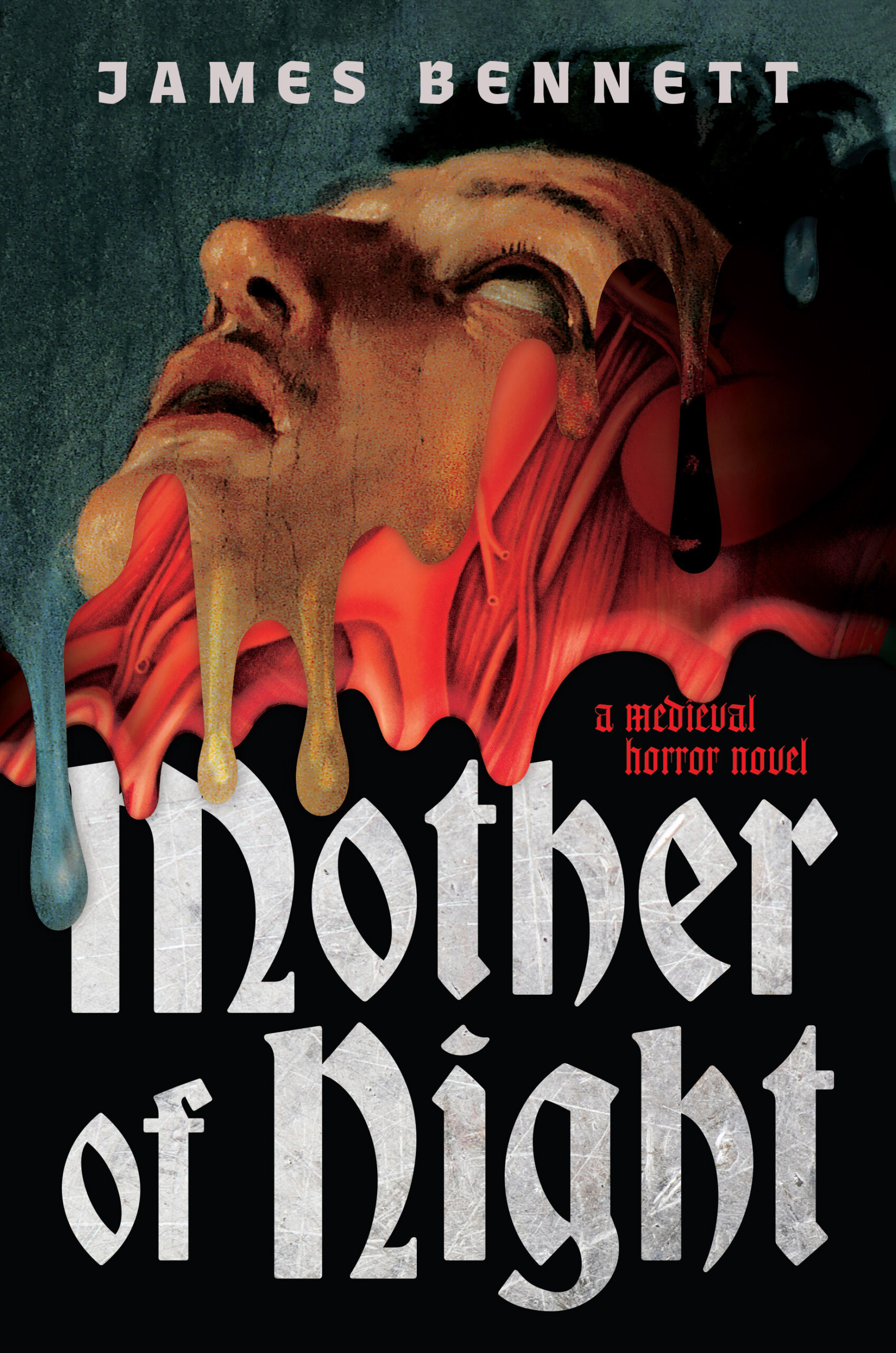
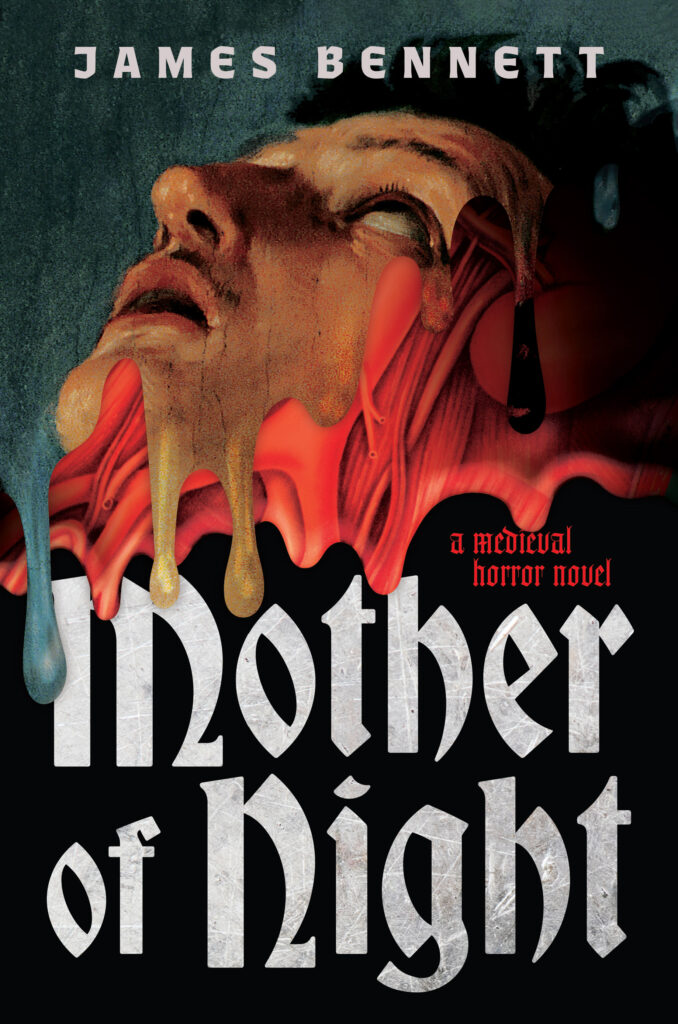
Excerpted from Mother of Night: A Medieval Horror Novel by James Bennett. Copyright(c) 2026 by James Bennett. Reprinted by permission of Evil Twin, an imprint of Zando, LLC.