One Trucker's Quest to Capture the Everyday Heroes of an Oft-Forgotten Industry
Ryan Lowell pays homage to the long-haul laborers on which our society depends with his debut heist thriller
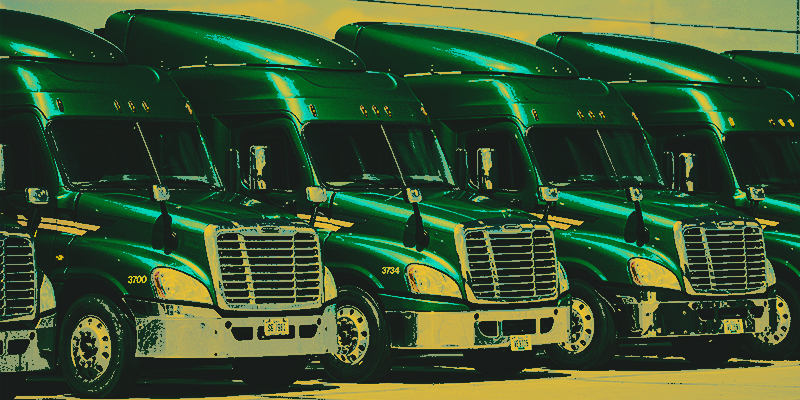
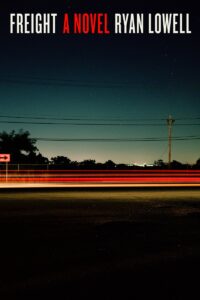
There is a saying amongst truckers: If the dispatcher’s lips are moving, then they’re lying. But that’s not always the case. I have worked in the trucking industry for over a decade and I have tried to tell the truth about what I’ve seen in my novel Freight, a story about a tractor-trailer heist. The trucking industry is a huge sector of our economy that is both pervasive and invisible at the same time: most of us have little regard for those behind the wheel of big rigs, nor the freight they are hauling. But we depend on them so much for all the stuff we consume—truckers move three-quarters of the freight in this country—and this was most evident during the pandemic. And while I have tremendous respect for those men and women out there criss-crossing the country, I can say with certainty that there is no such thing as a stereotypical truck driver.
*
We all know somebody who drives a truck. Your cousin in Ohio or maybe your father, who followed in the footsteps of his father, because it used to be a great way to make a solid living. And in many cases, it still is. The spectrum is wide and varied. There are OTR (over-the-road) trucking jobs at Walmart that pay well over a hundred-thousand dollars a year, with the appealing (to some) work schedule of two weeks on, two weeks off. I work with P&D (pickup and delivery) drivers—those are the tractor-trailers you see bopping around town—and they are generally paid a healthy hourly rate (upwards of $40/hour) and they are home every night. Or you can run your tail off for a nationwide carrier, stay out for weeks on end living in the truck cab, and be lucky to take home seventy-five grand annually. And to a certain extent, drivers are able to dictate the money they make because they are paid by the mile. But I have worked at companies on both ends of the spectrum and I have learned that not all truckers are treated equally.
Truckers spend a lot of their time alone, and most of them like that. When I first started, I asked a driver why he liked what he was doing and he shrugged and said, “Because I’m loner.” And we are all loners sometimes. Truckers often like that they don’t have a boss hovering over their shoulders and their scenery changes. There is a growing population of health-conscious truckers — fueled in part by social media and podcasts, employing easy-to-make recipes and motivation for getting out of the truck and avoiding a diet of fast food. Some will even take advantage of the mobile housing situation: I know a married couple who ran as a team—meaning someone is almost always driving, as they switch back and forth every eleven hours or so — and lived out of their truck as they saved for a hefty down payment on a house.
The constant media chatter around AI taking away jobs at all levels has not escaped the trucking game. But you know who I don’t hear worrying about this supposed inevitability? Truck drivers.
*
There are drawbacks. For one, it’s not easy to maintain a healthy diet being on the road all the time. And while there is no boss stopping by the cubicle to check on your progress, in the past few years many companies have equipped their trucks with driver-facing cameras. They can track your location at all times and they do. And because most truckers are paid by the mile, they do not get overtime, even though they will often work up to the federally allowed seventy hours per week. Most truck drivers do not get paid to wait, so if you are sitting in line at a warehouse, you are probably working for free.
Truckers do not work bankers hours, and the divorce rate is understandably high among truck drivers. They are away from home for weeks at a time and the words: “I know when I’m going out, I don’t know when I’m coming home,” is an oft-repeated line in the industry.
The Smith System is comprised of five keys to safe defensive driving. Most professional truck drivers can recite these keys — some do it religiously, as part of their routine—and it’s easy to argue that, generally speaking, truckers are the safest drivers on the road. But accidents happen. It’s not easy for a forty-ton rig to come to a complete stop, and the results can be ugly—some drivers never recover. During my first week of dispatching, one of our drivers was sideswiped but a drunk driver on I90 en route to Albany. The aftermath was horrific. The truck driver wasn’t hurt but the other guy was strewn about the median, and our driver couldn’t unsee what he’d seen that night. He hung up his trucker hat and found another vocation.
*
Truck drivers are great storytellers, and maybe it’s because they have so much time to talk to themselves. I remember working as a night dispatcher years ago, listening to stories told about life on the road, scribbling down quotes that were often funny and sometimes wise, summarizing their crazy tales for fuel somewhere down the road. Freight was born on that pavement, and while it is a novel about a heist, the story itself is an inside job: an honest look at the men and women in an industry that is often forgotten. The best compliment a writer can receive is that the work made the reader think. My hope is that the reader will close the book with a better understanding of a fascinating world in which the heroes are no longer regarded as the blue-collar renegades of the highway. Often they are not regarded at all. But we depend on them for most of our basic goods, maybe now more than ever. So the next time that end table or pallet of tile winds up in your driveway, keep in mind there were several professional truck drivers that had a hand in getting it there.
***

Ryan Lowell
Ryan Lowell’s fiction has appeared in Portland Monthly Magazine, Worker’s Write Journal and other publications. His story “Things Fall Apart” was a Glimmer Train short story award contest finalist. Freight is his first novel. He lives in South Portland, Maine, with his wife and two sons.