
Pen as Sword: Elizabeth Kostova on Killing Off Characters
The author of 'Mystery Play' mulls the difficulties of murdering one's darlings
I’ve never been a violent person, except perhaps in my nearly violent love of literature. In fact, I’m a practicing Buddhist, so I’ve taken vows to try to do as much kindness and as little harm as possible, a day at a time. But as a writer, I’m occasionally called on—by myself, by an editor, or by my story—to kill someone. It always (well, usually) wrings my heart.
The first time I encountered this exigency was more than twenty years ago, after I’d turned in what I thought was the final draft of my first novel, The Historian, near the very end of the editing process. My wonderful editor at that time–Reagan Arthur of Little, Brown—had gone over it with me very carefully, but I could tell she was still hesitating about whether it was ready.
Then an email arrived from the book’s editor in the U.K., the equally wonderful Antonia Hodgson, who had something shocking to say: she wanted me to kill a major character. Reagan Arthur passed the email on to me, strongly agreeing with it. The characters who were on the side of good, in a story that pitted good against evil, had to make more of a sacrifice, they both felt.
I immediately knew that they were right, and I didn’t like it one little bit.
Writers famously talk about how you sometimes have to “kill your darlings,” echoing a phrase used by Sir Arthur Quiller-Couch in a 1916 lecture. He advised doing it in order to make a piece of work stronger. (He actually used the word “murder.”) The phrase was misattributed for a while to William Faulkner and has been reused by myriad others—including, appropriately, Stephen King.
When we utter that phrase as advice, it refers to the idea that we may have to cut out aspects of our writing we’re attached to but that simply aren’t serving the work. In other words, deep revision is painful but worth it.
However, in the situation I’m now describing, my editors meant that they wanted me to kill one of my darlings—one of my darling characters–and not just to edit one out but to commit a murder. In that draft of my novel, the laudable characters had all survived the final clash of my story with just a few scrapes and bruises.
I didn’t have to kill one of the main characters, my editors reassured me—just a secondary one, someone we’d miss but could spare in terms of the plot. The nice thing was that they were going to let me choose which character.
I was devastated. This exchange took place on a Friday, and I thought all weekend about which darling it was to be. On Monday morning I killed the one I’d chosen. It’s a death that occurs during the climax of the published version of the novel: in fact, I stove in the person’s head.
That act sickened me. I was also saddened by the reality that it had taken me ten years to develop this character, whom I’d loved dearly, and fifteen minutes to do the deed. Alas, I was instantly glad I’d done it; my story pulled taut with an almost audible snap.
Obviously, I’m not going to tell you who it was, in case you’ve yet to read the book.
My second novel, The Swan Thieves, was mostly milder, although it did touch on some violence at the barricades in the Paris Commune revolt of 1871. In my third novel, The Shadow Land, I covered deep real violence, the (fictionalized) experiences of victims of the Soviet gulag in Bulgaria. There was such atrocity already written into that historical setting that I had no need to make it up, only to get through the writing of the book over eight years, and to portray the characters’ struggles with respect.
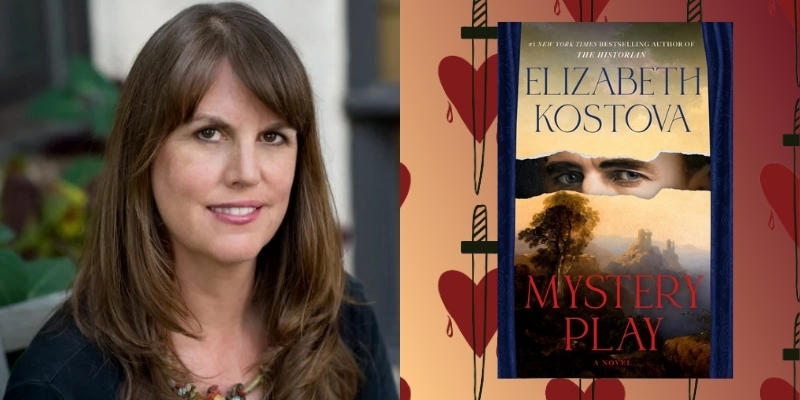
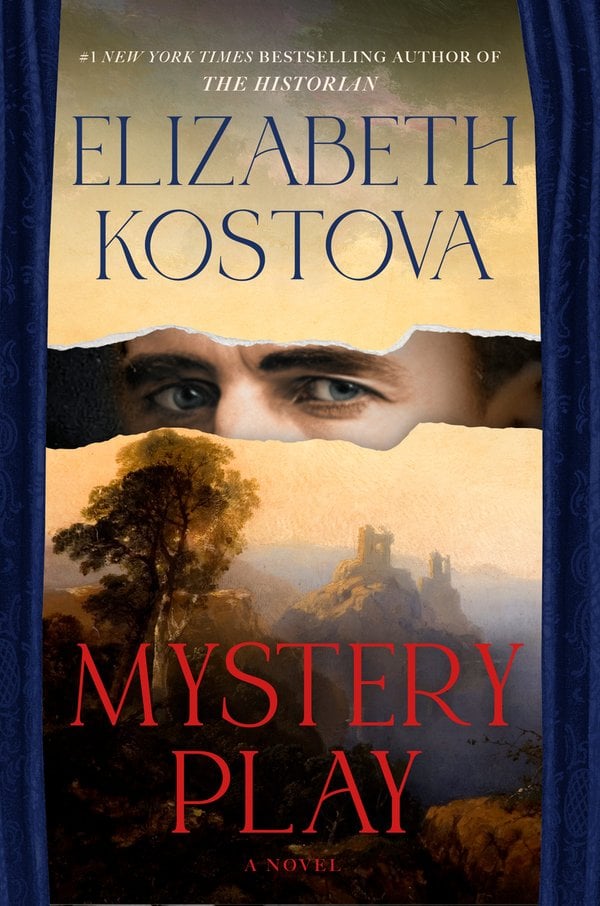
Then I began my new novel, Mystery Play, which took me nine years to compose. It’s loosely a sequel to The Historian, something I never thought I’d attempt. As so often happens to me with a book, I first “saw” my main character, and once I’d seen him, I couldn’t look away.
Mystery Play is the story of twenty-nine-year-old Jay Turner, whose mother was the narrator of The Historian. She’s recently dead of a rapid illness and he’s now almost alone in the world. As he cleans out the apartment where she raised him, he finds an item he’s never seen before. This object is connected with both his mother’s life and the history of the theater, and he makes the classic mistake of keeping it.
When I understood what Jay Turner was about to bring down on himself, I knew I couldn’t abandon him. Hence the unexpected sequel. I just couldn’t leave such a thoughtful, trusting young man alone with those dangers.
This time, vis-à-vis the necessity of violence, things were different. My characters were new—not the ones I’d protected in The Historian—but so were my own intentions. I picked up my dagger even before I began the book, and I kept it right on my desk.
The story of Mystery Play swirls partly around the figure of Lady Macbeth and a nineteenth-century actress who portrays her. It also contains a villain so monstrous I knew he would have to commit really terrible violence against several other characters in order to earn his keep. How would we hate him as much as we needed to if he didn’t show the ultimate disrespect for life, hope, and humanity?
Of course, that actually meant that I, the author, had to do the killing. Forgive me, Lord Buddha. Forgive me, former self. There’s already enough violence in our very difficult world to last us millennia more.
What I learned from writing Mystery Play, however, is that sometimes as writers we have to choose the horrifying quite deliberately—not gratuitously and not as entertainment, but because we need it to bring forward the radiance of other characters’ courage and integrity. I knew I wouldn’t be able to help Jay Turner grow, or to properly honor his rage over his mother’s death, if I didn’t wield the dagger a few times in the course of the larger story.
Next up: a quiet tale set in my hometown, I hope. Although that could be complicated, too….
***

Elizabeth Kostova
Elizabeth Kostova is the bestselling author of The Shadow Land, The Historian, Mystery Play, and The Swan Thieves. She holds a B.A. in British Studies from Yale University and an M.F.A. in Creative Writing from the University of Michigan, where she won the Hopwood Award for the Novel.