Rebecca Stafford on the Entrancing Moral Quandaries of Dark Academia
The perennial appeal of challenging elite insiderism in life and literature
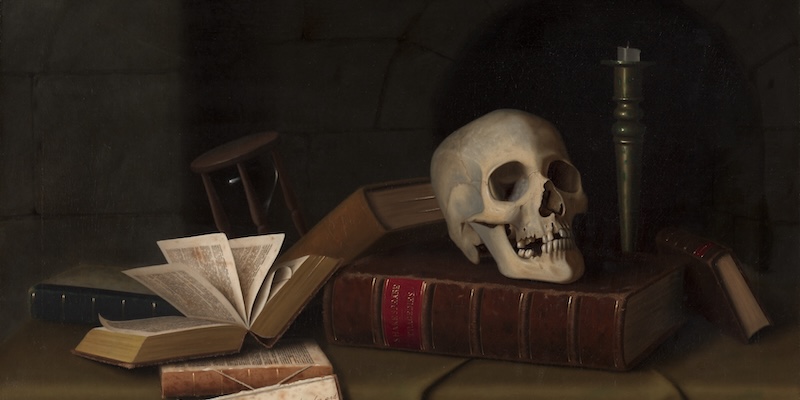
For some time now, my Instagram feed has been awash with the imagery of “dark academia”: oak paneled rooms and vaulted ceilings, the glow of solitary reading lamps, and row upon row of packed bookshelves receding into infinity. Shadows abound, and it’s always raining beyond those mullioned windows. I love it.
I regularly fantasize about transforming my bedroom into what I can only describe as Sherlock Holmes’ Fancytime Boudoir. My bookshelves are from IKEA, however, and I recently discovered a colony of ants living between my bedroom window and the screen. I don’t have the money or the time to pursue what these images offer, which is part of their appeal. If they were attainable, I wouldn’t want them.
Dark academia novels are also concerned with the unattainable. Whether realist, like The Secret History by Donna Tartt, or fantastical like Ninth House by Leigh Bardugo, these books tend to involve outsider protagonists, intense friendships, intellectual obsession, and the gradual discovery that the institution (or its members) conceals something darker—secret societies, forbidden knowledge, or worse.
But their most important shared feature is institutional. By and large, these books are not set on state school campuses or struggling, small colleges with meager endowments. Instead, the action takes place at an exclusive boarding high school, a prestigious private college, or a secret magical academy.
Elite institutions do more than educate. They also provide a way for like to recognize like. The phrase “You can always tell a Harvard man”—supposedly a joke from a Yale graduate, the full version being “but you can’t tell him much”—speaks to the stamp an institution puts on its students in terms of dress, behavior, and ways of moving through the world. That stamp makes him legible to others as a member of the elite class, long after graduation.
Under the cover of meritocracy, students from privileged families form connections that carry forward into the future, a burgeoning network of future CEOs, startup founders, and—God help us—thought leaders. Whether Ivy or magical, these institutions are built by money and power, and perpetuate both.
Money and power are things many of us feel lacking in our lives. We are in a time of ever-increasing economic inequality. A financial aristocracy has arisen in America, who, unlike the “captains of industry” of the past, make no pretense of caring for the public.
They are not building libraries or establishing philanthropic institutions. Instead, they happily plan to replace us with a harder-working, more compliant AI workforce. The environmental impact of this hardly matters since their exit strategy is to scorch the planet with the departing flames of their Mars bound rockets anyway. Meanwhile, here on Earth, the price of ground beef is outpacing minimum wage.
Unlike us, the protagonists of dark academia are not locked out of the elite power structures. Their admittance to the institution is a disruption to the status quo, allowing us to imagine access to everything we lack. But the appeal of dark academia isn’t solely this glimpse of wealth and power, though that matters. More so, these narratives offer the opportunity to feel simultaneously included in that world and superior to it, the paradoxical pleasure of hating the upper class while being one of them.
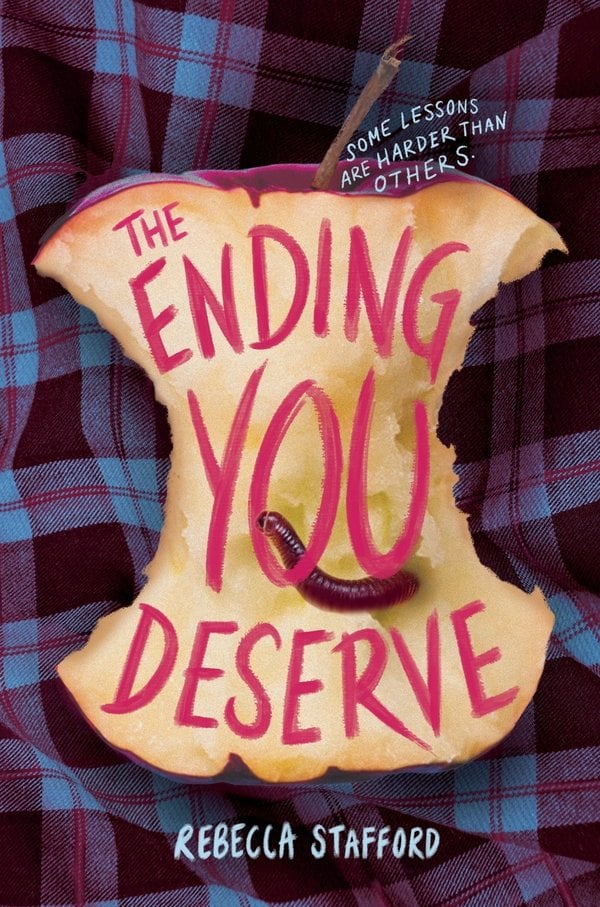
In my novel The Ending You Deserve, scholarship student Ava envies the ease with which her wealthier classmates move through life just as much as she disdains them for it. They are careless with their laptops, speak casually of ski trips and summer houses, and are perplexed that Ava has a part-time job.
The psychological cost of that disparity grinds her down and forces her into a series of bad choices. She alienates her classmates by being judgmental and rude, even as she steals an expensive coat to look like them. When her scholarship is in jeopardy and her advisor offers her a deal—spy on a fellow student and her place at school is assured—she takes it.
She knows it’s wrong, but ethics feel like a luxury she can’t afford. It’s only when she’s forced to confront the consequences of her choices—for herself, and for the girl she’s come to love—that she realizes that playing the game requires her to treat the people around her like pawns.
As Ava discovers, no scholarship, mysterious benefactors, or inexplicable magical ability is ever enough to make the protagonist a true insider. At least not while remaining who they are. The promise—and the threat—of the elite academic institution is that it can transform you into someone who belongs. All it requires is sacrificing who you were before: erase your rural accent, drop your old friends, set aside your previous morals and values. Join the dark side and accept that attaining money and power means that others lack it. It’s a Faustian bargain, and the cost is yourself.
Most dark academia protagonists are made of sterner moral character than I am, since I like to think that if offered vast affluence and influence (or at least a decorating budget) I’d be the exception to the rule that power corrupts. Won’t someone trust me with inordinate wealth? My moral failings aside, it’s rare that a protagonist takes this Faustian bargain. Instead, the genre offers a kind of hope, inspiring us to dismantle inequitable systems.
In The Ending You Deserve, Ava and her friends reform their school by exposing its rot. In Legendborn by Tracy Deonn, Bree joins a seemingly heroic Arthurian magical order and then uncovers its racist origins by reconnecting with the ancestral magic of her Black female ancestors. In books like R.F. Kuang’s Babel and Naomi Novik’s Scholomance trilogy, elite power structures aren’t just temporarily defeated but utterly destroyed.
These upheavals are possible because the protagonists remain outsiders, and that painful status lets them see the moral capitulations required to belong. Stories like these show us that while we may be tempted by a life of power and luxury, we can and should choose to want something better. The central question of these novels ultimately isn’t whether you can become an insider; it’s why you would ever want to be.
***

Rebecca Stafford
Rebecca Stafford is a Pushcart Prize award–winning poet, writer, critic, and editor whose work has been published in the New Yorker and reviewed in the New York Times. Her debut novel, Rabbit & Juliet, was named a best book of the year by Kirkus Reviews and School Library Journal. The Ending You Deserve is her second novel. To learn more about Rebecca’s distinguished body of work, visit her online at rebeccastaffordauthor.com.