
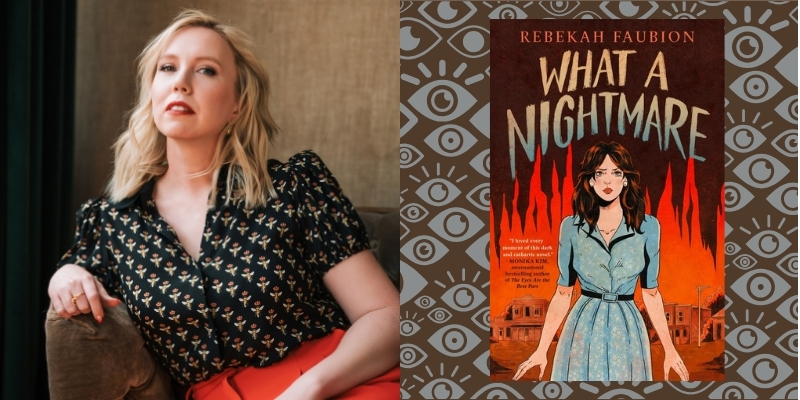
Rebekah Faubion on the Male Gaze, Patriarchy, and Women Writing Horror
The author of What a Nightmare welcomes a genre moving beyond male dominance
We’ve all used the term male gaze to talk about a piece of media with a male at the helm, usually pointing out ways it fell short in representing anyone who wasn’t a dude. And while I’m always happy to critique the art of men, I’m not actually convinced that the male gaze is solely about the gender of the creator.
The term was first coined by John Berger in the 1972 series of BBC films called Ways of Seeing, but it was British feminist film theorist and filmmaker Laura Mulvey’s 1975 essay Visual Pleasure and Narrative Cinema that brought the term into common use. Mulvey explains the male gaze as “phallocentrism through looking.”
Under the male gaze, whatever is not male is objectified, their role viewed as submissive through sex, status, or violence. They are othered because they are not what society has deemed most important—male stuff. All kinds of male stuff.
When we’re talking about the male gaze, what we’re really talking about is patriarchy—which we can all define now thanks to the Barbie movie. It’s easy to compress this big idea and all its fallacy into a man-hating diatribe. Which, again, I’m actually all for. But if we do that, we lose the plot and miss out on a lot of juicy, good stuff happening today.
Which brings me to the horror genre, and why now is one of the most exciting times to be part of it.
Women have always written horror. Mary Shelley is credited as the mother of the genre; Frankenstein was published 79 years before Bram Stoker’s Dracula. Shirley Jackson should be considered a national treasure for all she has contributed to the genre. Lady filmmakers, cinematographers, executive producers, and writers have actively shaped the cinema landscape for decades. But horror is also not historically immune to prioritizing the male gaze in all its objectifying, misogynistic glory.
Men telling stories about women and girls has dominated the genre. The creation of the slasher film is credited to Alfred Hitchcock’s Psycho, in which Marion’s infamous shower scene murder blurs the line between violence and pleasure, objectifying her naked body as she is slashed to bits. The problematic final girl equals good girl trope grew from the characterization of Marion and Lila Crane and later solidified in releases like Friday the 13th and Halloween.
One of my favorite examples of the disconnect between the male gaze and the material’s intended purpose is the 2009 horror comedy Jennifer’s Body, which was a flop at the box office largely because the marketing campaign for the movie didn’t accurately reflect the material. The male gaze was heavily applied, accentuating the hotness of Megan Fox rather than the unhinged nature of a film that was essentially about a girl who becomes a monster because of a brutal assault. Girlhood at its finest. The film has since gained a cult following and long second life thanks to the rebranding of the story by fans and film theorists.
The horror genre is rapidly expanding its market share, and stories about feminist themes have emerged with prevalence. This push has resulted in not only more woman telling their own stories, but a new explosion of nonbinary and BIPOC voices taking control of the narrative.
In 2025, powerhouse author Rachel Harrison’s Play Nice debuted as an instant New York Times bestseller, and I was there to watch the horror readers of Threads scream in joy, celebrating this accomplishment of a woman who has been shaping modern horror for the last six years—steadily and with incredible humor and grace. Nonbinary author Saratoga Schaeffer’s Trad Wife debuted on the USA Today bestseller list, stepping into a heated topic and giving it a juicy, sexy twist.
Tananarive Due’s The Reformatory, which explore systemic racism in Jim Crow era Florida, won major literary awards including the Bram Stoker Award for Best Novel and the Shirley Jackson Award for Best Novel, while also hitting the USA Today bestseller list.
What stands out among all of these titles—and so many more I could write a whole other essay to discuss—is the nature of the gaze. It’s not just that these authors are not men, it’s that these authors are all writing from their authentic perspective, which is not the male gaze, and they are finding commercial success. Stories that actively challenge who has traditionally held power are what the horror genre is all about.
Horror is the safe space of people on the fringe.
It is the space where grief becomes a monster we can slay, where trauma is a weapon we can use, where all the things society has told us are bad or wrong are explored in safety, with empathy and as little judgment as possible. Horror holds up a mirror to the culture and demands accountability.
The male gaze cannot exist without being in direct opposition to that cause. It is the lens of a society that honors male dominance. It is the patriarchy telling us what matters, reinforcing our subservience to it, and keeping us in line with a cis-normative, compulsively heterosexual agenda.
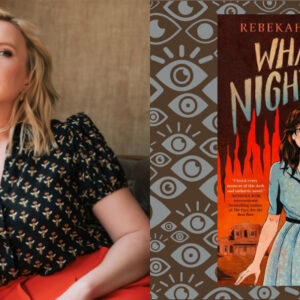
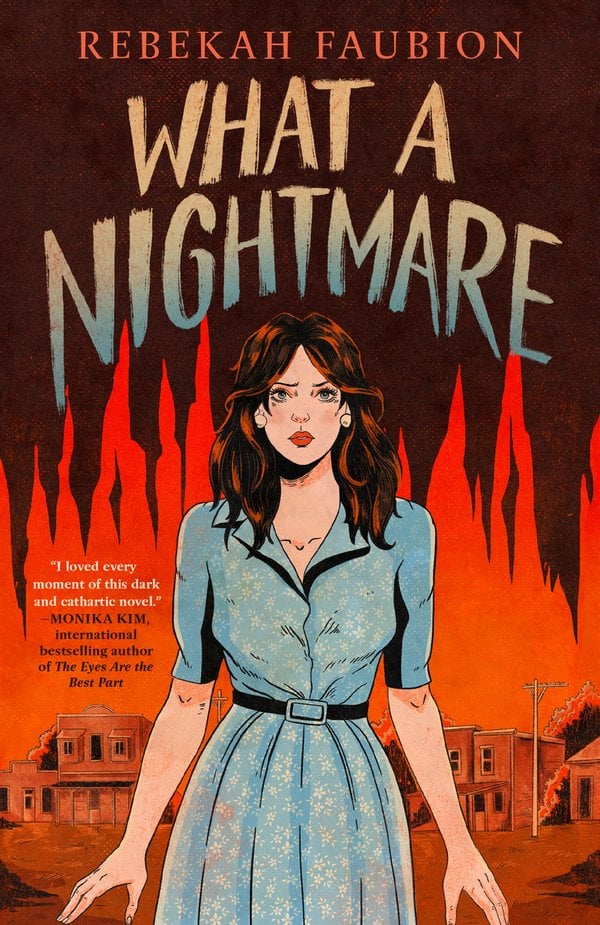
My upcoming novel What a Nightmare is comped to Stephen King’s Carrie, and it was my intent to tell a revenge story in a way that felt inherently different than the male gaze revenge stories that have dominated media for so long. By keeping the reader within the mind of protagonist Haven Powers, I was able to turn the lens around on the systems of power she is actively reckoning with, rather than objectifying her pain or the violence inflicted on her.
As the genre continues to expand in response to the current demand, I’m excited to see how the narrative shifts to broaden our understanding of the complex, demented themes we expect horror to explore, and how all of this will transform the culture we’ve been forced to accept for so long.
***

Rebekah Faubion
Rebekah Faubion is the author of queer rom-coms with tons of heart and more than a little steam. She is also the author of the young adult horror novel Lost Girls and What a Nightmare. When she isn’t writing books that make her bi soul sing, she enjoys watching anything romantic or scary (or, better yet, both), hiking in the Hollywood Hills, and reading tarot by candlelight.