
Recession Comforts and the Gothic Resurgence
"we return to classic monsters every generation because some fears are inherited, cyclical."
In economics 101, you may have heard of things like “lipstick indicators” or “men’s underwear index” to predict recessions and expansions. These indexes are plentiful across industries, but my favorite is the Gothic Resurgence.
In times of distress, some turn to familiar comforts. A cozy blanket you’ve had since childhood, visiting a museum your parents used to take you, frequenting your old neighborhood. Nostalgia is sometimes the best way to cope. The same can be true of visiting familiar horrors.
Born in the eighteenth century during times of great unrest, the Gothic continues to haunt our subculture to this day. Gothics, to me, are the comforting kind of horror, a place to confront fears both mundane and ingrained. This raises a question: how can gothics, or horror in general, be in any way comforting?
The past few years have been steadily dominated by gothic revivals in literature, and subsequently, film and tv. Nosferatu, Frankenstein, Wuthering Heights, Sinners, and a growing number of modern gothics across the literary landscape have arrived against a backdrop of rising fascism, crimes against humanity, and war. It is easy to feel helpless in such a tumultuous time, and art often is our greatest weapon for either inspiring hope, or issuing warnings.
Why do we find comfort in bringing back the same monsters? Vampires, werewolves, zombies and other folklore – they all are the embodiment of a specific fear. Vampires have conjured many types of symbolism each time they’re adapted. Whether it be sexuality, colonialism, autonomy, or erasure of individuality – I believe we bring them back to slay them again. Each rendition is a product of its time, but from Sheridan De Fanu to Ryan Coogler, we take comfort in knowing, no matter how horrifying, the monster can be defeated. This resolution grants hope in an unconventional way, bringing discomfort, strong feelings, and inspiration – even if only the inspiration to simply keep going. Horror becomes a love letter from the past, a reminder: “we’ve overcome this before, we can do it again.”
A new fascination and current moral panic centers on a subgenre called Dark Romance. To me, this is the next generation of bodice rippers, born from the love of gothic themes but for modern sensibilities. In my novel The Poisoner, the vampires have no magic, no powers, but they are an evolved species of humans that split from the family tree some time ago. Forked tongues, poison blood, creature features below the belt, and a predatorial clicking sound. They feast on blood (some have a preference for specific blood types) and have the privilege of collecting generational wealth through selective family class intermingling and extended lifespans, and they fund “ethical” careers for blood donors that target underprivileged young men and women. Minus the blood, I’d assume this is about billionaires or politicians. Overall, my novel is about the complex dynamics of toxic relationships—professionally, romantically, sexually, platonically, and even societally.
But also, sometimes it’s nice to see a woman who poisons bad men along with her commune of deadly women, a way to take back something when you feel powerless in a world that isn’t built for you. At the end of the day, they are more human than they are not, and the series revolves around becoming the monsters you feared the most because the world beat you into that mold. Rage and grief can drive us to take extreme action when what’s at stake is losing your humanity completely.
Gothic and horror fiction has always been political, whether you recognize it or not. If you look back 5 years before the story was released, you can usually find its inspiration, in a headline or a scandalous affair. But when you explore the fears of the ages, it can be hard to understand what so scared past audiences. In a way, it’s a blessing, because we no longer share that fear as a community. Just look at how purity culture shaped horror cult cliches. Sure, it isn’t completely gone from society, but it’s adapted.
Make no mistake, there is a thrill in fear. But it isn’t only cathartic as a new experience. The opposite can be true. A well-done horror can make someone feel relief that they aren’t alone, take the weight off their shoulders when someone recreates a feeling so perfectly that they could never put into words.
I believe we return to classic monsters every generation because some fears are inherited, cyclical. And our ability to adapt them for modern audiences is innately human. It’s how we connect with each other, not only through joy, but fear. Because when we aren’t alone, the monster feels killable. The horrors persist, but so does art.
***

I. V. Ophelia
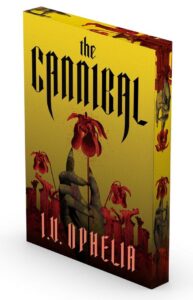
USA TODAY bestselling author I.V. Ophelia is known for her gothic vampire series The Poisoner. Born in small-town New England, she now haunts the streets of New York City, writing the most unhinged tales she can conjure. When not crafting gothic romance, she works as a full-time artist, hoards 19th-century gowns and antique furniture, dotes on her menagerie of pets, and plots her next literary transgression. Her latest novel, The Cannibal, is now available.